
 The University of Pennsylvania is punishing law professor Amy Wax with suspension and half-pay for her off-campus speech.
Wax has reportedly said in a podcast interview that “as long as most Asians support Democrats and help to advance their positions, I think the United States is better off with fewer Asians and less Asian immigration.” She also reportedly said that “Given the realities of different rates of crime, different average IQs, people have to accept without apology that Blacks are not going to be evenly distributed throughout all occupations. They’re just not, and that’s not a problem. That’s not due to racism.” Wax is certainly provocative to a fault. Some see her statements as Socratic provocation, others as racist. For these infractions in her speech outside of the classroom, Wax has been given that one-year suspension at half pay as well as stripped of an academic chair in her name. What is our take? Let us quickly admit that our ideal law professor would not be such an academic version of Don Rickles. But two things bother us about this case. First, does academia deal with troubling remarks with an even hand? Would anyone in today’s academy have raised an eyebrow if Wax had instead said that America has too many Jews influencing U.S. foreign policy? Or if she had called for the end of Israel, as some professors have done? Compare Wax’s treatment to that of Carol Christine Fair, the Georgetown law professor who in 2018 called for conservative Supreme Court Justices to die “miserable deaths” while being laughed at by feminists as “they take their last gasp.” Fair called for the dead Justices to then be castrated and to have their corpses fed to swine. Fair tweeted that she was merely trying to provoke thought by making people “UNCOMFORTABLE.” Georgetown reacted by dispatching Fair on an international journey for “university research” while things cooled down. Fair is now back teaching at Georgetown’s School of Foreign Service where, presumably, she is not making the men in her class UNCOMFORTABLE. By comparison, after scholar Ilya Shapiro issued an ill-worded tweet about President Biden considering only black women to fill a Supreme Court seat. Georgetown responded by squeezing out Shapiro for an offer to lead the Georgetown Center of the Constitution. Secondly, the principle of academic freedom should confer broad protection for speech outside of the classroom. The Academic Freedom Alliance recently warned against the dangers of this kind of “selective protection of academic freedom” and urged Penn not to sanction Wax. We agree. Penn’s Statutes of the Trustees permits discipline for “flagrant disregard of the standards, rules, or mission of the University, or the customs of scholarly communities.” The Statutes also say that “when speaking or writing as an individual, the teacher should be free of institutional censorship or discipline.” Wax’s provocations should fall well outside of the university’s wide standard. Such controversies highlight the need for university and college leaders to quit hiding behind their desks and be bold in standing for free speech and academic freedom – even when it means defending the disagreeable. Stanford, Penn, and Wisconsin Go Viewpoint Neutral  Stanford University, the University of Pennsylvania, and the University of Wisconsin have all embraced a viewpoint neutral stance that refrains from speaking out on the issues of the day. Protect The 1st hopes they will become national trendsetters for higher education.
The pitfalls of the old approach were made clear when the University of Wisconsin-Milwaukee, bedeviled by pro-Palestinian protests, cut a deal to end the protests in May. The administration agreed to consider severing ties with Israeli firms and to put the university’s prestige behind a call for a ceasefire in Gaza. This was only a recent example of how university administrations became opinion factories, spitting out one declaration after another on the issues of the day. For example, the University of Pennsylvania put out a statement denouncing the U.S. Supreme Court’s ruling that overturned Roe v. Wade. Stanford spoke out on Israel and Gaza. The outspokenness of universities to take positions on the crisis of the day was a hard turn from the standards of the 1967 University of Chicago Kalven Report, forged in the crucible of the Vietnam era. The Kalven Report advocated that universities be true to their stance as fora for free speech by refraining from commenting on issues that don’t affect them as institutions. This is partly out of concern for allowing maximum range for free thought and free speech on campus. A professor, after all, might legitimately believe that Israel has the right to prosecute the war against the terrorists of Hamas, or that the Supreme Court’s Dobbs decision was correctly decided. There are costs when universities negate opinions, as they did with their stance on Israel. These costs can be tangible when they offend the sensibilities of donors, as well as lawmakers who approve budgets for public universities. In the case of UW Milwaukee, the administration seemed panicked into trying to appease groups that used force to seize part of the campus. Such appeasement often encourages more pressure, turning the university into a mouthpiece for anyone willing to take over a quad or university building. It is no coincidence that Harry Kalven, who chaired the committee that produced the University of Chicago’s report on university neutrality, also coined the term “heckler’s veto.” Appeasing the most animated and sometimes violent activists on campus with official statements is a guaranteed way to get more of the same. The challenge for universities is to be neutral without seeming heartless. “The neutrality of the university as an institution arises then not from a lack of courage nor out of indifference and insensitivity,” the Kalven Report declared. “It arises out of respect for inquiry and the obligation to cherish a diversity of viewpoints. And this neutrality as an institution has its complement in the fullest freedom for its faculty and students as individuals to participate in political action and social protest.” Here’s a tip for administrators: When a university is confronted with the next burning moral question, the best answer – after making clear that the university is a neutral forum – is have at the ready a list of professors and student groups willing to speak to the media. Let the university community speak out on the issues of the day. And let them disagree.  In a major win for free speech, a federal judge reinstated Maud Maron to the Manhattan Community Education Council 2 after she was removed for speaking against an anonymous student article she deemed antisemitic. Judge Diane Gujarati ruled the regulation used to remove her was unconstitutional, stating, “Securing First Amendment rights is in the public interest.”
Maron’s removal followed her public criticism of that anonymous student article that ran in a school publication, which she called antisemitic in an interview with The New York Post. Her comments, made as a concerned parent, drew the ire of Schools Chancellor David Banks, who invoked Chancellor’s Regulation D-210 to justify her ousting. Banks claimed her statements crossed a line, but Judge Gujarati found this regulation itself overstepped constitutional bounds by suppressing free speech. The ruling also overturned another rule that prohibited parents from criticizing the conduct of school officials, affirming their right to speak freely at board meetings and online. Maron, celebrating the decision, declared: “Free speech rights protect parents when they speak up about our children’s education — on matters routine and controversial.” The case highlights how policies like Chancellor's Regulation D-210 have been used to suppress dissent under the guise of maintaining order. Introduced during New York City’s de Blasio administration, these regulations have been criticized as overly broad and punitive toward those challenging the status quo. By ruling in Maron's favor, the court affirmed that parents and community members must be free to discuss and debate educational policies. The decision is a reminder that such discourse is protected by the First Amendment, which allows open discussion on issues impacting children’s education. Maud Maron's case sends a powerful message to school boards and education officials across the country: in America, the right to speak freely, even when the speech is uncomfortable or controversial, is fundamental. For those in authority, the lesson is clear — silencing critics isn’t maintaing order. It’s undemocratic and unconstitutional.  Earlier we compared the First Amendment records of Sen. J.D. Vance and Gov. Tim Walz, finding the two vice presidential candidates problematic with notable bright spots.
So how do the two candidates at the top of the ticket compare on defending speech? Answer: Even more problematic, but also with some bright spots. Vice President Kamala Harris As a U.S. Senator, Harris in 2017 co-sponsored an amendment with her fellow Californian and leading Democrat, the late Sen. Dianne Feinstein, that would have required federal agencies to obtain a probable cause warrant before the FISA Court could allow the government to review the contents of Americans’ emails. Protecting Americans from warrantless surveillance of their private communications concerning personal, political, and religious lives is one of the best ways to protect speech. As a senator, Harris also defended the First Amendment rights of social media platforms to moderate their content. This is not surprising given that she was from California and big tech is one of her best backers. The Washington Post reports that Karen Dunn, one of Google’s top attorneys in against the Biden administration’s antitrust case, is a top Harris advisor. This closeness suggests a danger that a Harris administration might lean heavily in support of using friendly relations with big tech as a backdoor way to censor critics and conservative speech. Consider that Harris once called for the cancellation of former President Donald Trump’s then-Twitter account, saying: “And the bottom line is that you can’t say that you have one rule for Facebook and you have a different rule for Twitter. The same rule has to apply, which is that there has to be a responsibility that is placed on these social media sites to understand their power … They are speaking to millions of people without any level of oversight or regulation. And that has to stop.” Why does it have to stop? Americans have spoken for two centuries without any level of oversight or regulation. You might find the speech of many to be vile, unhinged, hateful, or radical. But unless it calls for violence, or is obscene, it is protected by the First Amendment. When, exactly, did liberals lose their faith in the American people and replace it with a new faith in the regulation of speech? Worse, as California Attorney General, Harris got the ball rolling on trying to force nonprofits to turn over their federal IRS Form 990 Schedule B, which would have given her office the identities of donors. Under Harris’s successor, this case went to the U.S. Supreme Court. Protect The 1st was proud to submit an amicus brief, joined with amici from a coalition of groups from across the ideological spectrum. We demonstrated that the likely exposure of donors’ identities would result in various forms of “cancellation,” from firings and the destruction of businesses, to actual physical threats. A Supreme Court majority agreed with us in Americans for Prosperity Foundation v. Bonta in 2021 that the same principle that defended Alabama donors to the NAACP extends to all nonprofits. The Biden-Harris administration has also been mum on worldwide crackdowns on speech, from a Brazilian Supreme Court Justice’s cancellation of X, to hints from the French government that this U.S.-based platform might be the next target after the arrest of Telegram CEO Pavel Durov. Former President Donald Trump This is a harder one to judge. It’s long been said that Donald Trump wears better if you turn the sound off. On the plus side, President Trump took a notably strong approach in supporting surveillance reform. A victim himself of illicit surveillance justified by the FBI before the FISA Court with a doctored political dossier and a forged document, President Trump was sensitive to the First Amendment implications of an overweening surveillance state. To his credit, he nixed the reauthorization of one surveillance authority – Section 215, or the so-called “business records provision.” During the pandemic, Trump issued guidance in defense of religious liberty. He said: “Some governors have deemed liquor stores and abortion clinics essential but have left out churches and houses of worship. It’s not right. So I’m correcting this injustice and calling houses of worship essential.” He backed up his defense of religious liberty by appointing three Supreme Court Justices – Neil Gorsuch, Amy Coney Barrett, and Brett Kavanaugh – who have been strong defenders of religious liberty. But turn the sound back on and you will hear Donald Trump call the American press “the enemy of the people.” Call the media biased, corrupt, in the bag for the Democrats, whatever you like … but “enemy of the people?” Trump’s rhetoric on the media often edges toward physical hostility. As president, he mocked a CNN reporter who was hit with a rubber bullet while covering the 2020 riots in Minneapolis. “Remember that beautiful sight?” Trump asked. At a time when journalists are under threat in America and around the world, this is a decidedly un-American way to confront media bias. Donald Trump has also called for a loosening of the libel laws to allow elected officials to more easily pursue claims against journalists without having to meet the Supreme Court’s “actual malice” standard. We agree that there is room for sharpening libel law in the age of social media amplification, but allowing wealthy politicians to sue news outlets out of business would be one effective way to gut the First Amendment. So what should we conclude? Both Harris and Trump have mixed records. Both have taken bold stands for speech. Both have treated the opposition as so evil that they do not deserve legal protections. Both seem capable of surprising us, either by being more prone to censorship or to taking bold stands for free speech. Whatever your political leanings, urge your candidate and your party to lean on the side of the First Amendment.  Daron Djerdjian is a popular economics professor at Occidental College in Los Angeles, highly rated by students on online review sites. He is also reportedly the last full-throated proponent of free-market economics at Occidental. And yet Djerdjian was, after years of exemplary reviews, released from his contract.
This is just one more sign of how, at many leading universities, an ideological monoculture has taken root. This is not to say that academics with conservative or “classically liberal” views are being routinely expelled from the academy, as Djerdjian was. In the economics, law, and humanities departments of many leading universities, conservatives have simply not been hired in the first place. More than one-third of Americans identify as “conservative.” Yet the best jobs in academia are off limits to them. Liberals, no less than conservatives, should find this replacement of intellectual diversity by an ideological monoculture a sign of moral and intellectual rot in higher education. But what to do about it? Indiana lawmakers believe they have the solution. Indiana has passed a new law that requires professors to demonstrate “intellectual diversity” in order to retain tenure at public universities and colleges. This law relies on university trustees, often politically appointed, to enforce this vague mandate. This approach is rooted in the state's argument that professors lack First Amendment rights in their classrooms because their speech is “government speech.” This law not only won’t have the intended effect. It is as misguided as it is dangerous. Defenses of this law echoes similar arguments made in Florida, where that state seeks to control university curricula through legislative measures like the Stop WOKE Act, which restricts discussions about gender and race. Despite their stated aims of promoting diversity of thought, such laws ultimately threaten to erode the very foundation of academic freedom. By framing professors’ classroom speech as merely “government speech,” the state reduces educators to mouthpieces for the state, stripping them of their role as independent thinkers. The Indiana law, much like Florida’s Stop WOKE Act, risks creating a chilling effect on academic discourse, where professors may self-censor to avoid jeopardizing their careers. This would not only harm educators but also deprive students of the robust education that comes from engaging with challenging and diverse ideas. There are better ways to counter ideological uniformity in academia than through constitutionally questionable laws that undermine academic freedom. First, efforts should focus on protecting faculty and students, designating campuses as open for expressive activity of all kinds, as New Hampshire just did. Occidental College is a private, liberal arts institution. If it were located in Indiana, it would be unaffected by this new law. But it is perfectly valid for donors, both wealthy individuals and institutions, to press private universities and colleges, as well as the fundraising arms of public universities, to accept more intellectual diversity in the hiring of professors. The university ideological monoculture cannot – and should not – be strongarmed out of existence. The answer to the policing of speech on campus in not more policing. Protect The 1st will keep an eye on this Indiana law and how it unfolds.  The resignation of Minouche Shafik as president of Columbia University closes the tumultuous months since the congressional hearing that has now led to the resignations of three Ivy League presidents. Many conservatives, led by Rep. Elise Stefanik, accused Shafik of foot-dragging in her response to violent campus protests.
But there is much more to this story. And it is not what many conservatives think. Inside Higher Education reports that the real catalyst for Shafik’s resignation was not timidity in the protection of free speech. It was a faculty backlash over Shafik’s recent conciliatory remarks before Congress and her eventual crackdown on students violently occupying buildings. In doing so, Shafik upheld the rule of law and the openness of the Columbia campus to all but was condemned by those prioritizing ideological conformity over free speech. The irony here is stark. The very people who purport to defend free speech have effectively silenced a university president for enforcing the law in defense of free speech. This contradiction is reminiscent of the twisted logic that characterized the 1960s Berkeley “Free Speech” Movement. Originally, this movement began as a fight for the rights of students to engage in political activities on campus. But the Free Speech Movement quickly turned to speech coercion. Today, Columbia’s situation shows how this mentality has morphed into a bizarre inversion of free speech principles. Apostates are silenced or threatened. Physical intimidation and the disruption of university operations – effectively silencing the speech and association rights of the many in the service of the few – are now tolerated or even celebrated as legitimate forms of expression. This shift is not just confined to Columbia. Universities, once bastions of free inquiry, are now becoming environments where only certain viewpoints are deemed acceptable. This creates a chilling effect, where students and faculty may feel pressured to conform to prevailing ideologies or risk facing social or professional consequences. The very essence of academic freedom – exploring, challenging, and debating diverse perspectives – is being eroded in favor of a narrow, ideologically driven discourse. This troubling development reflects the growing influence of Herbert Marcuse’s “Repressive Tolerance,” an essay that has increasingly shaped contemporary academic thought. Marcuse argued that true tolerance should not be extended to ideas or actions that reinforce the status quo, and that society must suppress regressive elements to allow for progressive change. The forced resignation of Shafik appears to be a real-world application of this philosophy. “I am still an employee of Columbia University, and she’s not,” one faculty member crowed on X. By ousting a leader who defended law and order, as well as the proper functioning of the university, Columbia’s faculty has, in effect, endorsed a selective approach to free speech – one that tolerates only those forms of expression that align with their ideological preferences. Shafik’s subtly forced departure represents a loss for the fundamental principles of free expression and academic freedom. The fact that she was pressured to leave for doing the right thing – cracking down on students breaking the law – shows how far the academy has strayed from its commitment to open discourse. Her departure is not a victory for free speech. It is a clear manifestation of the Orwellian doublethink that now pervades higher education.  New Hampshire Gov. Chris Sununu (R) recently signed a new law that protects free speech on that state’s public campuses. HB 1305 declares all outdoor portions of public college and university campuses to be open to expressive activity, while allowing administrators to impose reasonable time, place, and manner restrictions.
This is in keeping with the Supreme Court opinion in Ward v. Rock Against Racism (1989) that allows the government to impose such restrictions. Critically, the Court majority also held that such restrictions must be content-neutral and narrowly tailored. New Hampshire is hardly the epicenter of the campus speech wars. The Foundation for Individual Rights and Expression (FIRE) rates the University of New Hampshire as one of the best campuses in the country for respecting speech. Perhaps that is why lawmakers took notice when students at the University of New Hampshire Franklin Pierce School of Law started a “Free Exercise Coalition” only to receive pushback from the Student Board Association in granting it official recognition as a school club. The group says it is “an open member coalition of religious students and their allies, all with a passion to see America’s foundational religious freedoms be restored and respected.” The Student Board Association blocked recognition of the Free Exercise Coalition – as well as the student Christian Legal Society – for being discriminatory by holding traditional beliefs about sex and marriage. A faculty advisor for the coalition reportedly withdrew his name, making the group’s application to receive official recognition incomplete. It took considerable lobbying, with the backing of the First Liberty Institute, for the Free Exercise Coalition to be officially recognized. Now, thanks to Gov. Sununu’s signature, the Supreme Court’s standard is codified into New Hampshire law. The new law also prevents harassment – “expression that is so severe, pervasive, and subjectively and objectively offensive, that a student is effectively denied equal access to educational opportunities or benefits.” In other words, it allows campuses to crack down on those who would exercise a heckler’s veto by creating an unsafe environment. On New Hampshire’s public campuses, advocating hate and violence against individuals is now prohibited. Administrators must counter any antisemitic event that targets Jewish faculty and students, as has happened at Columbia and UCLA with “Jew Free Zones.” Restricting those who would shut down speech and students’ freedom of movement is fully in the spirit of the First Amendment.  We’ve already heard a lot of rowdy speech from the two vice-presidential candidates, Democratic Minnesota Gov. Tim Walz and Republican U.S. Sen. J.D. Vance. Would they be as generous in applying the First Amendment to others as they do to themselves?
Tim Walz, who, despite correct opinions regarding the tragedy of Warren Zevon being left out of the Rock and Roll Hall of Fame, hasn’t been as on the money when it comes to which types of speech are protected and which are not. In 2022, Walz said on MSNBC: “There's no guarantee to free speech on misinformation or hate speech, and especially around our democracy. Tell the truth, where the voting places are, who can vote, who's able to be there….” As PT1st senior legal advisor Eugene Volokh points out in Reason: “Walz was quite wrong in saying that ‘There's no guarantee to free speech’ as to ‘hate speech.’ The Supreme Court has made clear that there is no ‘hate speech’ exception to the First Amendment (and see here for more details). The First Amendment generally protects the views that the government would label ‘hateful’ as much as it protects other views.” Legal treatment of misinformation is more complicated. In United States v. Alvarez, the Supreme Court held that lies “about philosophy, religion, history, the social sciences, the arts, and the like” are largely constitutionally protected. Libel, generally, is not – though, in a defamation case, a public official can only succeed in their claim if they can show that a false statement was published with “actual malice” – in other words, “with knowledge that it was false or with reckless disregard of whether it was false or not.” Categories of intentional misinformation that are patently not protected include lying to government investigators and fraudulent charitable fundraising. Walz may be on firmer ground when it comes to lies about the mechanics of voting – when, where, and how to vote. Thirteen states already ban such statements. As Volokh writes, “[I]f limited to the context that Walz seemed to have been describing – in the Court's words, ‘messages intended to mislead voters about voting requirements and procedures’ – Walz may well be correct.” On freedom of religion, Walz’s record as governor is concerning. During the pandemic lockdowns, the governor imposed particularly harsh restrictions on religious gatherings, limiting places of worship to a maximum of ten congregants, while allowing retailers to open up at 50 percent capacity. An ensuing lawsuit, which Walz lost, resulted in an agreement granting religious institutions parity with secular businesses. Walz also signed a law prohibiting colleges and universities that require a statement of faith from participating in a state program allowing high school students to earn college credits. As the bill’s sponsor conceded, the legislation was intended in part to coerce religious educational institutions into admitting students regardless of their beliefs – diluting their freedom of association. That controversy is currently being litigated in court. Little wonder the Catholic League declared that “Tim Walz is no friend of religious liberty.” The Knights of Columbus might agree – at least as pertains to the broader ticket. In 2018, during the federal judicial nomination hearing for Brian Buescher, then-Sen. Kamala Harris criticized the organization for its “extremist” (read: traditional) views on social issues. Harris also sponsored the “Do No Harm” Act, which would have required health care workers to perform abortions in violation of their religious beliefs. Regarding Vance, the former Silicon Valley investor is hostile to the speech rights of private tech companies (who certainly enjoy the same First Amendment protections as any other person or group). In March, the senator filed an amicus brief in support of the State of Ohio’s lawsuit against Google, which seeks to regulate the company as a common carrier. In his brief, Vance argues Google’s claim that it creates bespoke, curated search results that directly conflict with its past claims of neutrality. Sen. Vance writes: “[Google’s] functions are essentially the same as any communications network: it connects people by transmitting their words and exchanging their messages. It functions just like an old telephone switchboard, but rather than connect people with cables and electromagnetic circuits, Google uses indices created through data analysis. As such, common carrier regulation is appropriate under Ohio law.” Vance’s argument creeps in the direction of Texas and Florida laws that seek to regulate social media companies’ internal curation policies. Both laws were found wanting by the Supreme Court. The Court in a strongly worded remand on both laws wrote: “[I]t is no job for government to decide what counts as the right balance of private expression – to ‘un-bias’ what it thinks is biased, rather than to leave such judgments to speakers and their audiences.” Yet Vance also attempts to “un-bias” social media platforms, leaving little to no room for independent curatorial judgment. On the plus side, Vance has cosponsored numerous bills aimed at curtailing government censorship, including the “Free Speech Protection Act,” which prohibits government officials from “directing online platforms to censor any speech that is protected by the First Amendment.” He also sponsored the PRESERVE Online Speech Act, which would force social media companies to disclose government communications urging the censoring or deplatforming of users. As the election season progresses, we can hope for more clarity on the candidates’ positions regarding our First Amendment freedoms. It is already clear, however, that both candidates are far from purists when it comes to protecting other people’s speech.  Aristotle wrote that anybody can get angry. The hard task is to “be angry with the right person, and to the right degree, and at the right time, and for the right purpose.”
We don’t know if Judge Mark Scarsi of the U.S. District Court for the Central District of California is a student of Aristotle. But when he issued a preliminary injunction on Tuesday ordering UCLA to not allow parts of its campus to be off-limits to Jewish students, his order came out hot. Judge Scarsi wrote: “In the year 2024, in the United States of America, in the State of California, in the City of Los Angeles, Jewish students were excluded from portions of the UCLA campus because they refused to denounce their faith. This fact is so unimaginable and so abhorrent to our constitutional guarantee of religious freedom that it bears repeating. Jewish students were excluded from portions of the UCLA campus because they refused to denounce their faith.” The plaintiffs in the case are Jewish students who have a religious belief about the importance of the State of Israel. Several students, under threat of violence, were barred from the path to UCLA’s Powell Library. Others could not access the university’s Royce Quad because to do so they would either have to denounce their faith or meet those who promised violence. As the judge notes, UCLA does not dispute these facts. Instead, it argues that it has no responsibility to protect the religious freedom of its Jewish students because the exclusion was engineered by a third party, in this case student and off-campus protesters angry about the tragedy in Gaza. Judge Scarsi responds: “But under constitutional principles, UCLA may not allow services to some students when UCLA knows that other students are excluded on religious grounds, regardless of who engineered the exclusion.” A preliminary injunction is usually a tell about where a court is going. In this case, it is more like a bullhorn.  Following the Oct. 7th atrocities committed against Israeli citizens, retaliatory attacks against Hamas with many innocents caught in the crossfire led to protests on campuses nationwide that shut down students’ freedom of movement and learning. Whatever one’s view of that conflict, it is undeniable that many anti-Israel protests turned into antisemitic persecution of students and faculty. Nowhere were these attacks as dark or troubling as those that occurred at the University of California, Los Angeles.
From April 25, 2024, to May 2, 2024, UCLA permitted a group of protestors to set up barricades in the heart of campus, creating what was widely termed a “Jew Exclusion Zone.” Activists locked arms, racially profiled students and faculty presumed to be Jewish, and refused to allow them access to campus or educational buildings unless someone vouched for their belief in the anti-Israel cause. The university, for its part, facilitated this occupation by failing to break up the blockade for a full week. Administrators even went so far as to hire private security to direct Jewish students away from the encampment, where calls for “death to Israel” and “death to Jews” were commonplace. As Chancellor Gene Block testified before Congress, events at UCLA reflected “the disturbing rise of antisemitism across our country since October 7th,” which placed Jewish students in “a state of anxiety and fear.” Now, the Becket Fund, representing three Jewish students from UCLA, is bringing suit against the university. As the plaintiff’s memorandum correctly alleges, the university’s acquiescence to the creation of a disruptive, discriminatory, and dangerous environment right in the heart of campus – in turn, preventing Jewish students from accessing public facilities – constitutes a violation of the Free Exercise Clause, the Free Speech Clause, and the Equal Protection Clause. It also implicates Title VI, which provides that “[n]o person in the United States shall, on the grounds of race, color, or national origin, be excluded from participation in, be denied the benefits of, or be subjected to discrimination under any program or activity receiving Federal financial assistance.” The requested preliminary injunction would require that a plaintiff “establish[es] that he is likely to succeed on the merits, that he is likely to suffer irreparable harm” without issuance of an injunction, “that the balance of equities tips in his favor, and that an injunction is in the public interest.” The plaintiffs plainly meet those criteria. Without judicial intervention, there can be no guarantee that Jewish students will be able to safely access the public educational benefits to which they are entitled when they return to campus next month. As Becket Fund president Mark Rienzi said last month in congressional testimony, these episodes sound more like 1930s Germany than 2020s America. But there is a way forward. Rienzi said: “Together, we can defeat the scourge of antisemitism in our institutions of higher learning and society by ‘giving to bigotry no sanction, to persecution no assistance.’ Together, we can live up to George Washington’s promise that in this country, none shall be made afraid on account of his faith or ancestry. And together, we can ensure that the promises of our Constitution and our civil rights laws are kept and safeguarded.” Kudos to the Becket Fund for taking a stand against ignorance and intolerance. We’ll be following this case closely.  There are tens of thousands of after-hours student groups in high schools across the country – from those celebrating film, music, chess, or drama to those of a more political or religious nature. At Noblesville High School in Indiana, for example, you could join the Young Democrats, the Young Republicans, the Fellowship for Christian Athletes, or the Gender and Sexuality Alliance. The one group students can no longer join is the Noblesville Students for Life (NSFL).
In August 2021 a freshman at Noblesville received initial approval to start a Students for Life chapter, which attracted 30 student sign-ups at the school’s fall activities fair. The following month, the student organizer prepared a poster advertising a club meeting, which featured a photograph of students outside the U.S. Supreme Court holding up life-affirming protest signs. Then Noblesville’s principal “derecognized” the group, calling the poster “inappropriate” and too “political.” Noblesville, apparently, has a policy allowing administrators broad authority to issue prior restraints on student speech, barring “anything political in nature” as well as specific “political stance[s].” What constitutes “political” is entirely undefined and left up the whims of the individual administrator. In December 2021, in coordination with Charitable Allies, the group’s student organizer brought suit against the school district, alleging First Amendment retaliation. The suit also claimed violations of the Equal Access Act, which prohibits discrimination against the political content of student groups meeting outside of class. School administrators have every right to prevent students from engaging in disruptive conduct, but students have every right to express their First Amendment-protected viewpoints after hours. Schools are limited public fora, which may issue viewpoint-neutral restrictions on groups. What they should not do is bar targeted political speech and then make ad hoc, biased determinations of what is unacceptable on a case-by-case basis. How the school found NSFL overly political when the Young Democrats and Young Republicans are permitted to meet and advertise their meetings is unfathomable. The administrators, of course, now claim they derecognized the club because of the student’s behavior, an argument contradicted by the evidence and the many contextual clues pointed out by the plaintiffs. It seems pretty clear that the principal simply doesn’t want the pro-life viewpoint represented at Noblesville High. Ultimately, a District Court bought the school’s argument. Now the student is appealing to the Seventh Circuit, and this case is receiving legal backing from the Alliance Defending Freedom. We hope that the court will recognize that rules must be neutral and that students don’t relinquish their First Amendment rights at the schoolhouse door – no matter how much some administrators might wish it were so.  The double standard in academia is reaching sickening levels.
At Rutgers, as at many universities, students who wear some outward sign of adhering to the Jewish faith, such as a kippah or a Star of David necklace, are often stopped and interrogated by self-appointed ideological vigilantes. At the same time, Jewish students are denied the right to hold a peaceful event on campus – including the forced cancellation of a peaceful, pro-Israel barbecue on the Rutgers University campus – out of fear of provoking violence from pro-Hamas protestors occupying the campus. When rhetoric gets violent and confrontation becomes intimidating, viewpoint discrimination edges into persecution. Yet many elite universities flirt with such danger. We would be justly outraged if a young woman on campus was harassed for wearing a hijab, or a young Sikh man was stopped and interrogated about his turban. Yet administrators at Rutgers and other institutions are often missing in action when the targets are Jewish students. A recently filed lawsuit by student Rebecca Schafer against Rutgers University shines a light on how escalating antisemitism on America’s university campuses shuts down speech and free inquiry. Schafer, an Orthodox Jewish student, sued the university after enduring months of harassment, intimidation, and discrimination, which she claims the administration failed to address. Schaffer recounts that eight days after the October 7th Hamas attacks on Israel, a student meeting at Demarest Hall took a dark turn when a student expressed joy over the high death toll in Israel, a sentiment that was met with approval from others. The dust had barely settled from this attack in which elderly Israelis were murdered and babies killed in their cribs. This disturbing incident was compounded when a mezuzah, a Jewish prayer scroll affixed to the doorposts of Jewish homes for protection and blessing, was torn from a student's door and discarded in a bathroom. Schafer left the meeting scared and shaking, feeling deeply threatened by the aggression toward her faith. Rebecca Schafer next became a personal target when posters with her photograph and pro-Palestinian slogans appeared outside her dorm room. This act of intimidation was terrifying for Schafer, leading to a police investigation and charges against two students. The chilling message was clear: “You aren’t safe anywhere at Rutgers.” At a recent House hearing in which Rutgers University President Jonathan Holloway and the presidents of other universities were grilled by Rep. Elise Stefanik (R-NY) and other Members, it came to light just how frightening campus occupations are for Jewish students. In a particularly egregious incident, a student directed the remark “Hitler would have loved you” at Schafer during an encampment. Schafer recounts that Jewish students were forced to flee out the back door of university buildings to escape the hostile environment. The portrait painted by Schafer’s lawsuit is of a spineless university administration leaving Jewish students to fend for themselves in the face of violent rhetoric and threats. The slow and methodical approach by Rutgers and other universities would never be tolerated if another ethnic or religious group were persecuted in such ways. When the fall semester begins in a few months, parents, students, and donors must demand college administrators react with alacrity to the persecution of Jewish students or be ready to give up their jobs. Protect The 1st will monitor this story as it develops.  The U.S. House of Representatives recently passed the Antisemitism Awareness Act, a well-intentioned response to a genuine concern: escalating antisemitism, particularly on college campuses. While the motives behind this bill are commendable, the legislation, as it stands, threatens to infringe upon the free speech rights that are fundamental to American values and academic freedom. We recommend a more nuanced approach. We urge the Senate to refine the bill to effectively combat hateful conduct without compromising constitutionally protected speech – even if that speech is occasionally heinous.
The Antisemitism Awareness Act seeks to update the definition of antisemitism used in enforcing federal anti-discrimination laws, employing the International Holocaust Remembrance Alliance's (IHRA) definition. This definition includes criteria such as “denying the Jewish people their right to self-determination” and “drawing comparisons of contemporary Israeli policy to that of the Nazis.” While these examples identify antisemitic speech and attitudes, their inclusion in legal statutes brings the government squarely into the business of policing and outlawing speech. This act in its current form has the potential to suppress First Amendment-protected speech. The IHRA definition, though useful as a guideline and for private criticism of antisemitic speech, is too expansive for legal application without risking the suppression of protected political expression. Legal scholars and civil rights activists have noted the dangers of such overreach, which could chill discussions on Israel and Palestine, particularly within academic institutions where vigorous debates are necessary. Worse, the act's broad language risks transforming universities into environments in which administrative caution stifles debate and discussion out of fear of legal repercussions. This could have a chilling effect on academic freedom on many subjects, as educators may become reluctant to address or discuss hot topics. From here, what effectively would be the legal suppression of speech would inevitably spread to protect other groups. A private university has the free-association right to fire a professor or suspend a student for intemperate speech. Frankly, there have been some high-profile examples of academics – glorifying the abduction and rape of women and the murder of babies on Oct. 7 – who richly deserve to spend the rest of their academic careers lecturing squirrels in the park. But the broader legal consequences of this bill in all universities for academic inquiry and the free exchange of ideas – cornerstones of higher education in the United States – are profoundly concerning. The Senate should carefully scrutinize this legislation. It is essential that any law aimed at curbing antisemitism be precise enough to target hateful behavior without punishing speech. Senators should consider amendments that clearly distinguish between hateful acts that single out people by religion and speech, no matter how intemperate, ensuring that the legislation protects individuals without compromising the robust civil discourse essential to a free society. While calling out antisemites is vital and necessary, it must not come at the expense of the constitutional rights that define American democracy and academic freedom that defines the university. We urge an approach in the Senate that robustly defends both Jewish students and free speech. And we politely suggest to supporters of the House bill that once you start to police speech, don’t be too surprised when the speech police come for you.  Sometimes it seems as if the left and the right are in a contest to see which side can be the most illiberal. With each polarity defining the other as a “threat to democracy,” restrictions on political opponents are rationalized away as a necessary act of public hygiene. Recent events in Europe, from Budapest to Brussels, should serve as a warning to Americans who want to use police power to make their opponents shut up.
In December, the U.S. State Department warned that a new Sovereign Defense Authority law in Hungary “can be used to intimidate and punish” Hungarians who disagree with Prime Minister Viktor Orbán and his ruling party. No less an observer than David Pressman, the U.S. ambassador in Budapest, said: “This new state body has unfettered powers to interrogate Hungarians, demand their private documents and utilize the services of Hungary’s intelligence apparatus – all without any judicial oversight or judicial recourse for its targets.” So how are left-leaning critics responding to the rise of the Europe right? By also using intimidation to shut down speech. In Brussels, police in April acted on orders from local authorities by forcibly shutting down a National Conservatism conference. This event, which was to host discussions among European conservative figures, including Prime Minister Orbán and former Brexit champion Nigel Farage, was terminated hours after it began. The cited reasons for the closure included concerns over potential public disorder linked to planned protests. Such a policy, of course, gives protesters pre-emptive veto power over controversial speech, backed by the police. The conference had earlier faced official meddling to prevent the selection of a venue. Initial plans to host the event at the Concert Noble were thwarted due to pressure from the Socialist mayor of Brussels. Subsequently, a booking at the Sofitel hotel in Etterbeek was canceled after local activists alerted that city’s mayor, who pressured the hotel to withdraw its support. Finally, the organizers settled on the Claridge Hotel, only to encounter further challenges including threats to the venue’s owner and logistical disruptions orchestrated by local authorities, culminating in the police blockade that effectively stifled the conference. The good news is public response to the shutdown of the National Conservatism conference was vocal and critical. Belgian Prime Minister Alexander De Croo voiced a strong objection, stating that such bans on political meetings were unequivocally unconstitutional. British Prime Minister Rishi Sunak also responded that canceling events and de-platforming speakers is damaging to democracy. The closure in Brussels is particularly ironic given the city's status as the capital of the European Union, a supposed bastion of liberal democratic values. The forced closure, threats to cut electricity, and the barring of speakers are tactics that betray a fundamental disrespect for democratic norms. What transpired was a scenario more befitting a "tinpot dictatorship," as Frank Füredi, one of the event's organizers, put it. Speech crackdowns seem to be a European disease. This aggressive move to silence a peaceful assembly under the guise of preventing disorder echoes the same illiberal impulses driving Scotland's Hate Crime and Public Order Act. That law broadly criminalizes speech under the expansive banner of “stirring up hatred.” Americans would do well to look to Europe to see what cancellation and criminalization of speech looks like. As the cities and campuses of the United States face what promises to be a hot summer of protest over Gaza, Americans need to keep a relentless focus on protecting speech – even speech one regards as heinous – while preventing tent city invasions, vandalism, and violence that compromises the rights of others. 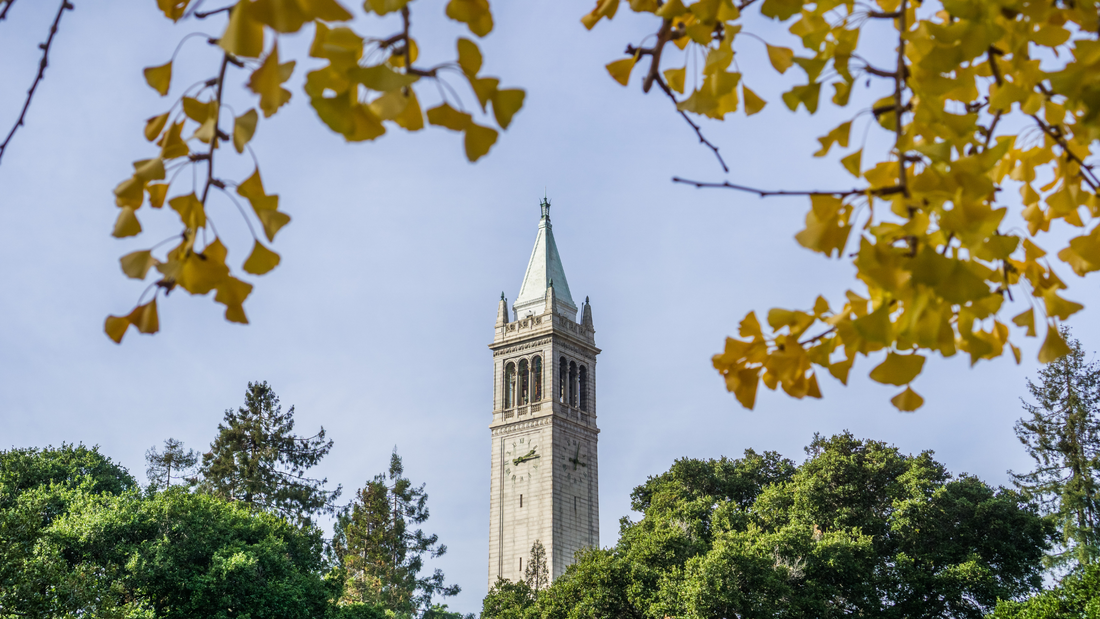 A group of pro-Palestine student activists recently hijacked a private dinner at the home of Erwin Chemerinsky, dean of Berkeley Law School, disrupting one of several such events intended to honor the graduating class of 2024. It’s a lesson in decorum, which these students clearly lack. More importantly, it’s a lesson that Chemerinsky himself might cover in one of his constitutional law classes or legal tomes: You have no First Amendment right to public speech on private property.
Chemerinsky himself summarized the disruption in a written statement: “On April 9, about 60 students came to our home for the dinner. All had registered in advance. All came into our backyard and were seated at tables for dinner. While guests were eating, a woman stood up with a microphone, stood on the top step in the yard, and began a speech, including about the plight of the Palestinians. My wife and I immediately approached her and asked her to stop and leave. The woman continued. When she continued, there was an attempt to take away her microphone. Repeatedly, we said to her that you are a guest in our home, please stop and leave. About 10 students were clearly with her and ultimately left as a group.” Alarmingly, the incident followed the publication and display of a poster calling for a boycott of the dinner events, with accompanying cartoon imagery depicting the dean holding a knife and fork covered with blood. The caption read: “No dinner with Zionist Chem while Gaza starves.” The link between Chemerinsky and Israel’s military campaign in Gaza is nebulous, to say the least. Chemerinsky is an American constitutional scholar, not an Israeli war planner. The only inference to be made is that the dean was targeted solely due to his Jewish heritage. For their part, the protestors (seen here in a video of the incident) asserted a First Amendment right to their interruption. To parse the legitimacy of such claims, we might turn to an actual First Amendment scholar, Eugene Volokh, who wrote about the dinner in a recent The Volokh Conspiracy post. He wrote: “Some people have argued that the party was a public law school function, and thus not just a private event. I’m not sure that’s right – but I don’t think it matters. “Even if Berkeley Law School put on a party for its students in a law school classroom, students still couldn’t try to hijack that for their own political orations. Rather, much government property is a ‘nonpublic forum’ – a place where some members of the public are invited, but which is ‘… not by tradition or designation a forum for public communication.’ (Minnesota Voters Alliance v. Mansky (2018) ...” Outside of the protestors’ erroneous legal argument, one might also consider the efficacy of their outburst. Above the Law founder David Lat contrasted the Berkeley protestors’ behavior with that of protestors at the University of Virginia, who recently turned out against a speech by Justice Jay Mitchell of the Alabama Supreme Court (author of the infamous IVF case). There, the protestors “didn’t heckle or harass Justice Mitchell, me, or anyone else who went into his talk. They stood outside the room, quietly holding signs. And once his talk got underway, they left to attend a counter-event …” How refreshing. Inasmuch as the protestors got it wrong here, Berkeley (for once) got it right. In a statement to Law 360, UC Berkeley Chancellor Carol T. Christ said: “I am appalled and deeply disturbed by what occurred at Dean Chemerinsky's home last night. I have been in touch with him to offer my support and sympathy. While our support for free speech is unwavering, we cannot condone using a social occasion at a person's private residence as a platform for protest.” UC Board of Regents Chair Rich Leib, meanwhile, said: “The individuals that targeted this event did so simply because it was hosted by a dean who is Jewish. These actions were antisemitic, threatening, and do not reflect the values of this university.” Berkeley’s reputation as the home of the Free Speech Movement (the name became somewhat Orwellian), continues a decidedly spotty record in recent years. The university’s unequivocal embrace of actual, settled First Amendment doctrine in this instance represents an encouraging development. Naturally, the protestors have since hoisted the banner of victimhood, claiming “pain, humiliation, trauma, and fear” following the incident. With time, we hope they learn the lesson that, in the words of Ronald K.L. Collins in a FIRE blog: “the First Amendment is a shield against government suppression. It is not an ax to swing at compassionate and freedom-loving people in their own homes.” Law schools might further promote First Amendment education by turning to disciplinary action for law students who refuse to learn the nuances of this central principle of American life.  The U.S. Supreme Court recently set aside a Fourth Circuit decision in Speech First v. Sands, declining to wade into a snowballing collection of campus speech controversies. Washington Post columnist George Will called this a “passive dereliction of duty.” We wouldn’t go that far. Given the ongoing circuit split regarding campus speech policies, the Court will have to address the issue eventually. They may just need a better avenue – or moment – for doing so.
This case concerns Virginia Tech, which created a “Bias Intervention and Response Team” policy that encourages students to anonymously report to school officials any perceived expressions of bias amongst their cohorts, after which the accused may be referred for discipline. Virginia Tech defined “bias incidents” as “expressions against a person or group” based on “age, color, disability, gender, gender identity, gender expression, genetic information, national origin, political affiliation, race, religion, sexual orientation, veteran status, or any other basis protected by law.” In 2021, advocacy group Speech First sued Virginia Tech on behalf of several students, arguing that the policy unconstitutionally chills speech by creating “a literal speech police” and forcing students to self-censor. The Fourth Circuit ruled for the university in May, siding with the Seventh Circuit (which ruled similarly in another case) and against the Fifth, Sixth, and Eleventh Circuits (which found that campus policies chilling speech constitute sufficient harm to support standing). Speech First estimates that more than 450 colleges have bureaucratic thought police operations similar to Virginia Tech’s – though, likely expecting a negative result in the Supreme Court, Virginia Tech recently modified its policy, leading to the March 4 holding, rendering the controversy moot. Still, Justices Thomas and Alito didn’t hold back in their dissenting opinion urging a resolution in the circuit split. Thomas writes: “This petition presents a high-stakes issue for our Nation’s system of higher education. Until we resolve it, there will be a patchwork of First Amendment rights on college campuses: Students in part of the country may pursue challenges to their universities’ policies, while students in other parts have no recourse and are potentially pressured to avoid controversial speech to escape their universities’ scrutiny and condemnation. We should grant certiorari to resolve this issue.” Until the Court acts, colleges and universities in much of the country will be free to pursue Orwellian surveillance operations against students who fail to embrace predominating dogmas. When another case ripens, the Supreme Court should step in. 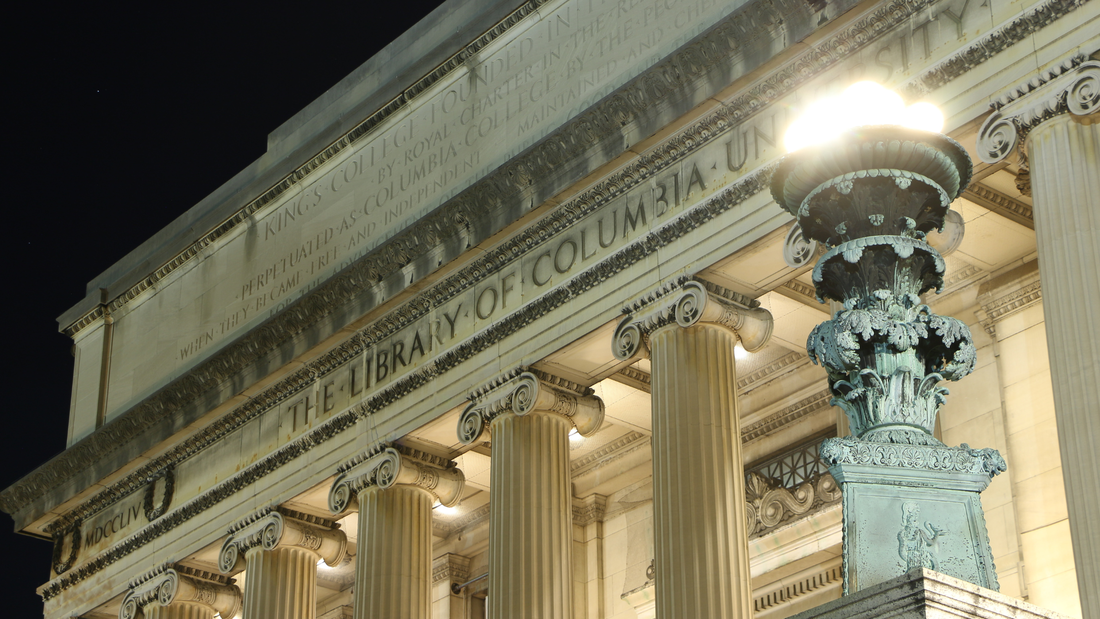 Earlier this year, the student senate at Columbia Law voted to deny official recognition to Law Students Against Antisemitism, a student group seeking to “raise awareness and educate about both historical and contemporary antisemitism.” Nine other organizations requested official recognition this year, with LSAA being the only group to be denied so far. The reason? According to FIRE, “the rejection appeared to rest on objections to LSAA’s definition of antisemitism, which some pro-Palestine students opposed.”
Although the student senate quickly reversed course, the American Bar Association took it as an opportunity to formalize speech protections. This month, the ABA House of Delegates passed a resolution to adopt Standard 208, a new rule requiring law schools to “protect the rights of faculty, students and staff to communicate ideas that may be controversial or unpopular, including through robust debate, demonstrations or protests.” ABA accreditation requires adhering to Standard 208, or else law schools could be denied accreditation or have it revoked for failing to protect free speech. The importance of this rule should not be missed. As the ABA Journal states, Standard 208 is “the first accreditation standard to address free speech for the entire community within law schools.” Protect The 1st Senior Legal Advisor Eugene Volokh said: “the standard is another tool in the toolbox of a dean who wants to protect free speech and academic freedom … The dean can tell student activists, ‘Look, do you want us to lose our accreditation?’” Nevertheless, Standard 208 is only a Band-Aid to the broader cultural decay for the respect of free speech and intellectual diversity in law schools. “I’ve had a lot of students complain to me that they are reluctant to speak out in class – not because they’re afraid of discipline, but because they’re afraid their classmates will ostracize them,” Volokh said. “But you can’t have a rule to stop that.” The past few years have seen no shortage of campus incidents that would certainly have gone against Standard 208 had it been in effect. Stanford Law students shouted down Judge Stuart Kyle Duncan of the Fifth Circuit Court of Appeals when he came to give a talk in March of last year. Similarly at Yale, Kristen Waggoner of the Alliance Defending Freedom was harassed by an ugly protest over a (irony alert) panel discussion about free speech. Law schools increasingly resemble the hostile and immature playgrounds that undergraduate institutions have become. While Standard 208 will help, we have a long way to go before free speech will be fully restored.  The Foundation for Individual Rights and Expression, in collaboration with the Academic Freedom Alliance and the Heterodox Academy, has penned an open letter urging the trustees and regents of American universities to “put neutrality above politicized institutional statements that threaten open debate on college campuses.”
The letter is specifically addressed to the trustees of universities, who wield considerable power to set institutional policy. “It is time for those entrusted with ultimate oversight authority for your institutions to restore truth-seeking as the primary mission of higher education by adopting a policy of institutional neutrality on social and political issues that do not concern core academic matters or institutional operations,” the letter says. “In recent years, colleges and universities have increasingly weighed in on social and political issues. This has led our institutions of higher education to become politicized and has created an untenable situation whereby they are expected to weigh in on all social and political issues." The letter specifically calls on every university to adopt an institutional neutrality policy, much like that espoused by the Kalven Report of the University of Chicago authored in 1967. The letter quotes that report, noting that institutional neutrality is necessary “to pursue truth through ‘the discovery, improvement, and dissemination of knowledge.’ And to accomplish this mission, ‘a university must sustain an extraordinary environment of freedom of inquiry and maintain an independence from political fashions, passions, and pressures.’” Greg Lukianoff, President and CEO of FIRE, said that “a top-down, father-knows-best mentality is absolutely no way to support the next generation of free thinkers. Students and faculty deserve the freedom to experiment with different perspectives and explore entirely new ways of thinking without the college claiming to have done all the thinking for them.” The open letter follows on the heels of FIRE’s annual college free speech index, in which not a single university received a score higher than 79 out of 100. If this were a college class, that would be a C+ ranking. Many of America’s most prestigious institutions receive abysmal rankings. Harvard received a score of zero, which was rounded up because the index couldn’t accommodate negative numbers. Protect The 1st applauds FIRE’s open letter to university trustees and regents. The state of free inquiry in American universities is dire. We need bold leadership to right the course. We look forward to further developments in this story. 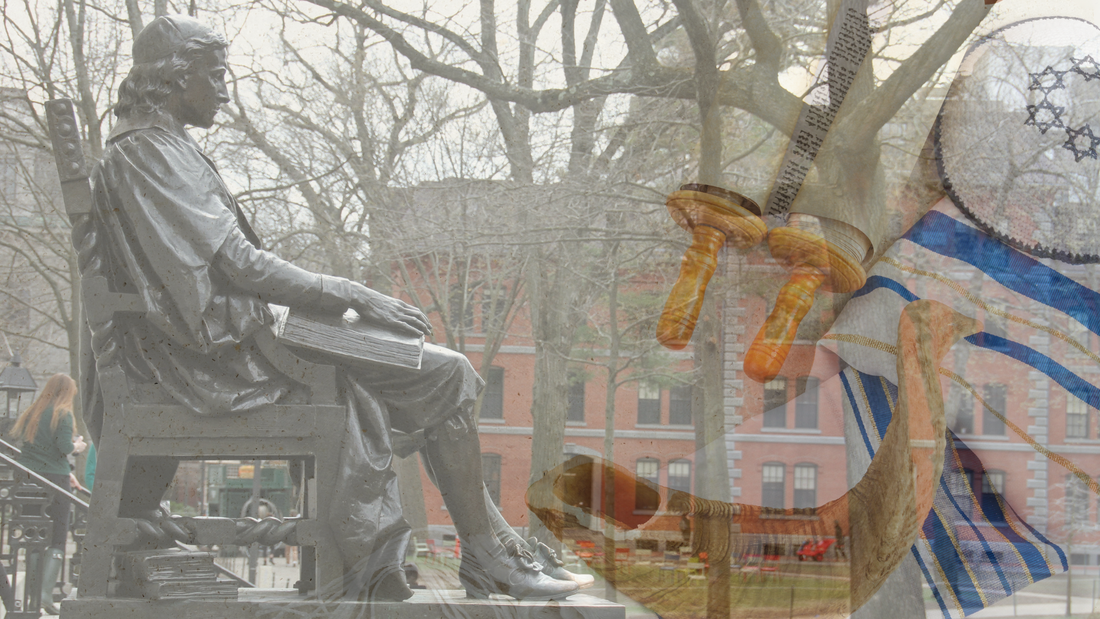 Jewish students at Harvard are suing the university for failing to address rampant antisemitism on campus. Their case, Kestenbaum v. Harvard, raises sharp questions about free speech and the responsibilities of a private university. Harvard is not required by law to observe the principles of the First Amendment the way a state-sponsored school would. But Harvard must live up to its self-proclaimed commitment to open discourse.
The plaintiffs, Students Against Antisemitism, contend that “since October 7, 2023, when Hamas terrorists invaded Israel and slaughtered, tortured, raped, burned, and mutilated 1,200 people – including infants, children, and the elderly – antisemitism at Harvard has been particularly severe and pervasive.” One of the central claims of the case is that “Harvard selectively enforces its policies to avoid protecting Jewish students from harassment, hires professors who support anti-Jewish violence and spread antisemitic propaganda, and ignores Jewish students’ pleas for protection.” This, combined with the university's reluctance to discipline students engaging in antisemitic behavior, paints a disturbing picture. The lawsuit points out a stark contrast: while Harvard mandates training classes to address various forms of discrimination – including “sizeism,” fatphobia, racism, and transphobia – it seems lackadaisical about antisemitic incidents. This was memorably captured by former Harvard President Claudine Gay who suggested “that calls for the genocide of the Jewish people do not necessarily violate Harvard’s policies.” Furthermore, the case highlights instances where Harvard faculty members have not only condoned but actively participated in rallies characterized as antisemitic. The suit claims the university's response to a student mob taking over a campus building for antisemitic purposes was not disciplinary action but the provision of burritos and candy. The suit alleges that while the university aggressively enforces policies against bias towards other minority groups, it turns a blind eye to antisemitic incidents. The plaintiffs propose disciplinary measures, including the termination of faculty and administrators involved in antisemitic discrimination, as well as suspension or expulsion for students engaged in such conduct. It also calls for antisemitism training for all members of the Harvard community and the rejection of donations implicitly or explicitly conditioned on the promotion of antisemitic views. We commend Students Against Antisemitism for their bold stance against Harvard’s obvious double standard, but some of the lawsuit’s remedies might deepen Harvard’s problematic relationship with free speech – a serious concern for the university with the lowest-ranked commitment to speech in the nation, according to the free-speech organization FIRE. This ranking could actually get worse with the further expansion of diversity, equity, and inclusion (DEI) programs. Under the DEI banner, expansive bureaucracies have already cast a pall over campus speech. We need less of this, not more. Consider how DEI was used at Harvard to defenestrate Carole Hooven, a distinguished author and longtime Harvard lecturer on evolutionary biology who committed the thought crime of asserting that there are two biological sexes. We need fewer such codes, not more, for speech to thrive again on campus. The critical distinction to be drawn is between harsh language and justifications for what constitutes a just war, and the celebration of outright hatred, violence, and heinous acts. As we previously wrote, “if someone is highly critical of Israel, the bombing of Gaza, or is pro-Palestine, they are well within the parameters of a fair debate. But if someone can respond to the murder of babies and find it ‘exhilarating,’ (as one Cornell professor did), they may be within the bounds of the First Amendment, but we have to ask if it’s just the speech that’s evil. At some point, for private entities in particular, the heinous uses some make of free speech rights raise serious questions regarding the freedom of association (or disassociation) choices of the institutions themselves. Educational institutions cannot always hide behind the laissez faire ethos of free speech when choosing the administrators and the professors that represent them, or even the students who form part of the community the university actively creates. Public institutions, like all of society, are challenged to adapt principles spelled out by the U.S. Supreme Court in its 1968 Brandenburg v. Ohio opinion, which gave maximum berth to speech – even hate speech. How do the principles of this ruling apply given the new technological reach of speech and the ability to use social media to incite others to violence in the form of swatting, anthrax, bombs, or doxing? How do we apply that ruling’s maximum respect for speech in modern circumstances so that if only a tiny percentage of followers is responsive to incitement, it still amounts to a high probability of violence? Or, as former U.S. Senator and current University of Florida President Ben Sasse told The Wall Street Journal, the U.S. Constitution “draws a deep, deep line at speech and action,” that “threats are the front edge of action,” and that “orchestrated plans, or getting to a definable way of targeting specific people, is when speech ceases to be deliberation.” The risk with such speech is unlawful violence, not just war or self-defense. On the other hand, universities must accept much controversial but benign speech today, even if it might “trigger” someone. For Harvard, better approaches to free inquiry are emerging from the Council on Academic Freedom, a faculty organization dedicated to expanding respect for speech on campus. For society at large, perhaps the principles of Brandenburg need to be updated for the digital age. In the meantime, when the murder-adjacent speak out and self-identify, they should suffer the social and career consequences. 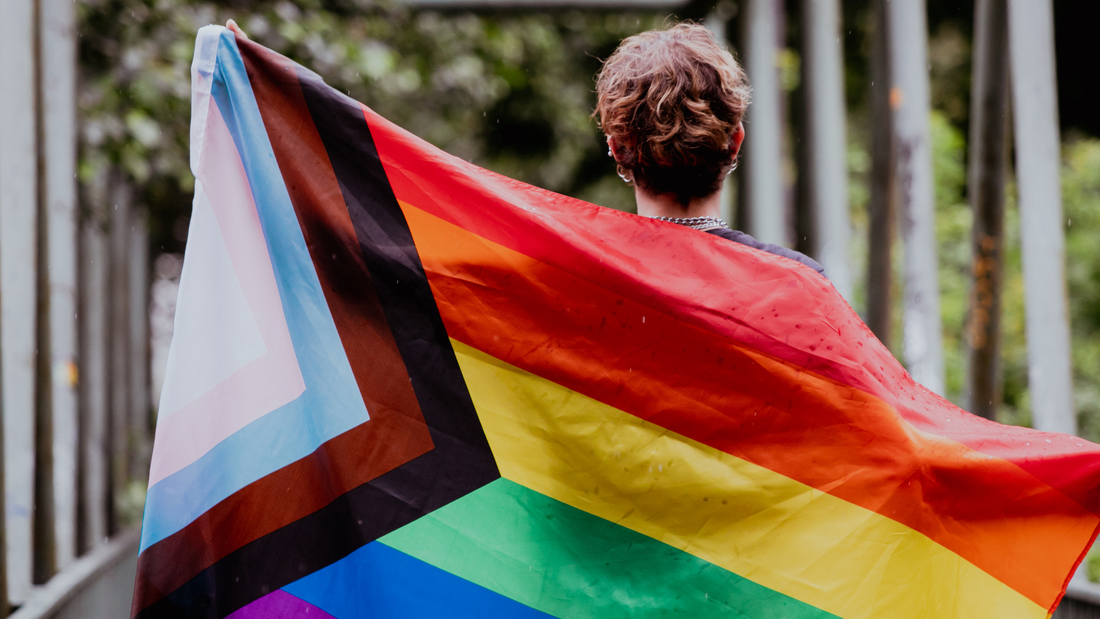 When the Big Walnut Local School Board of Education passed a resolution banning Pride and other “controversial” flags from school grounds, it did so against the objections of two board members and many parents and teachers, who voiced their opposition to the policy over two hours of public debate. Now, the ACLU of Ohio has weighed in, expressing “grave concerns with this policy, which is unconstitutional in multiple respects …”
Protect The 1st has always held that it’s the job of schools to educate children but the job of parents to instill personal values. We should always strike an appropriate balance between safeguarding the proper functioning of the classroom and overprotecting young people from any whiff of controversy. A blanket ban on "flags, banners, posters, electronic insignia and other items" that "promote activist causes, or [are] otherwise deemed controversial" falls short of any reasonable goal. It’s a vague, poorly articulated, viewpoint-based restriction unlikely to survive judicial scrutiny. There seems to be growing confusion over the First Amendment at the local level (particularly at the Big Walnut school board, which previously landed in hot water for shutting down parental dissent back in 2022). School boards regularly overstep their bounds in the context of debates about educational curricula. That’s to say nothing of recent municipal and county attempts to go after newspapers based on unfavorable reporting. The Big Walnut resolution is another example of attempting to direct the culture with laws and rules. The ACLU called it “vague to the point of incoherence.” That’s not far off. School boards and other government officials should be wary of exceeding constitutional strictures in their efforts to appease a vocal constituency, left or right – or themselves. We look forward to further developments in this story.  That the performance of three Ivy League presidents before a congressional hearing last week was disastrous doesn’t need context – any version of academic freedom that tolerates a call for the genocide of Jews or any other group is well beyond any proper understanding of that concept. It would transform universities into arenas of fear.
This debacle continues to spark a long-needed reassessment of the correct balance in protecting speech on campus against the need to protect students with laws and court rulings that forbid “true threats.” Eugene Volokh, UCLA School of Law professor and Senior Legal Advisor to Protect The 1st, explores this territory in a thoughtful essay for The Los Angeles Times. He urges university presidents to do all they can to protect students from true threats without abandoning free speech standards. "Antisemitism on campus is a real problem, and in this fraught moment, many Jewish students are understandably scared. But if freedom of expression is to survive on American campuses — and for our nation’s vitality, it must — Magill’s original answer was right. Context does matter. The categorical exceptions to the 1st Amendment are few, narrow and carefully defined by precedent. And while Penn is a private university not bound by the 1st Amendment, its policies commit the school to 1st Amendment standards." Volokh finds considerable context for utterances or writings that are interpreted as calls for genocide for some, and merely an explication of just-war theory by others. Between these two polarities, however, many thorny questions present themselves. For example, is the call for a “global intifada” a true threat or a political statement? What matters most: what the speaker means or how it is heard by others? Beyond the university, has the jurisprudence of true threats and incitement kept up with the internet age? Shouting “Kill the Jews” in an empty park is one thing. Promoting such a message with a vivid post that reaches millions of people – potentially inspiring the most unbalanced mind among them to take up a gun and attack a synagogue – is another. Protect The 1st looks forward to examining these questions and holding debates on “true threat” exceptions to speech throughout 2024. TIME FOR ‘UNFETTERED COMPETITION’  “School choice is sweeping the nation,” writes Harvard economics professor Roland Fryer in a recent piece for the Wall Street Journal. “But school choice as we know it won’t fix the American education system.” What is needed, he argues, is “unfettered competition” instead of the piecemeal, “half a loaf” approach with which we are currently saddled.
Fryer alludes to the stunning groundswell of support for school choice in recent years. Since 2021, ten states have passed universal choice measures. It’s a positive development for the world’s most prosperous and powerful nation, which incongruously lags behind many of its peer and non-peer competitors in scholastic outcomes. As Fryer points out, the United States came in 36th in math and 13th in reading in the 2018 Program for International Student Assessment. It’s hardly an adequate result for a nation as bold and innovative as our own. Despite some encouraging signs when it comes to school choice, Fryer argues that our current system remains “more patchwork than panacea.” Against the backdrop of standardized and homogenous public-school curricula, a full-fledged embrace of the free market is necessary if we are to fully unlock our young people’s potential. Protect The 1st believes school choice supports the full expression of the First Amendment. The First Amendment’s guarantees of free speech and the free exercise of religion must include room for parents to choose schools that reflect their beliefs. Doing so will have the added, bonus effect of alleviating some of the non-stop controversies that so dominate the educational discourse of late. Consider the endless arguments over textbooks and curricula, from the banning of literary classics like 1984 in Iowa to the “stench of animus” towards religious student groups in California. Consider the persistent attempts to incorporate ideological instruction for children as young as four years old. With public schools having a monopoly on public education dollars, the only option for many who can’t afford private schools is to accept what’s dished out or simply pick up and move. More choice means more freedom for parents to guide their children’s education by selecting schools that align with their values, or offer education of superior quality. There has to be a better way, and Fryer is correct that our current Balkanized approach won’t cut it. Advocates must be bolder, he says, submitting that if “we can fully commit to free market principles in education, we can create an education system that unlocks the talents of every student in our lifetimes.” One way to do that is through education savings accounts, which he writes “allow parents to channel public funds to a variety of educational services, from private-school tuition and microschools to tutoring and online courses.” By funding ESAs at a level comparable to public schools, you give parents real purchasing power. Competition and innovation will result. That is the true underlying principle upon which school choice operates. Want to send your child to a school that meets all the state requirements but is also a Christian, Jewish, or Muslim school? Want to send your kids to a school with a great literature program? Or one with more of an emphasis on STEM? School choice does that, but first you have to end the public monopoly on education for everyone to have those choices. And we won’t get there unless advocates double down.  The Academic Freedom Alliance recently released a guidance statement regarding campus protests over the Israeli-Gaza war. It’s a stirring call for a recommitment to basic principles of free speech at colleges and universities. It’s also a reminder to differentiate between private speech by professors in their personal capacities versus efforts by some to politicize the classroom.
Reposted in full by the Volokh Conspiracy blog, the statement reads (in part): “Professors must enjoy the liberty to discuss and even promote controversial ideas and to present controversial materials to students in their classes. Professors have an obligation, however, not to take advantage of their captive audience of students by introducing ideas or materials that are not germane to the subject matter of their class. Likewise, professors have a responsibility not to exploit their privileged position to attempt to indoctrinate students or to subject them to political or ideological litmus tests or pressures in their classroom assignments. Nor do professors have a right to compromise the education of their students by conducting their classes in a manner designed simply to advance their favored political causes. Universities must resist calls to censor what is taught in classrooms, but they must also ensure that classes are used for proper educational purposes. “Professors, like other members of the campus community, should enjoy the freedom to speak and act as citizens. When speaking in public in their personal capacity, professors may give voice to controversial and even extreme political and social opinions that others might find offensive or disturbing. When professors at American universities speak in public in a manner that is lawful under the First Amendment, universities should stand behind their right to express such views. Universities should insist that professors, as well as other members of the campus community, adhere to content-neutral regulations regarding the time, place, and manner of public speech on campus, but universities must strive to apply those rules in an even-handed and consistent manner regardless of the substantive views of those expressing themselves. Universities should refrain from punishing members of the faculty simply because some think their private political speech is intemperate, uncivil, dishonest, or disrespectful. Professors should be judged and held accountable for their professional speech and conduct, not for their political views.” It's hard to disagree with such a cogent defense of free expression on campus, which indeed is the place where difficult subjects should be respectfully discussed and debated. But we do. We agree that it is important, as the statement points out, to consider the fora when adjudicating the appropriateness of speech content by professors. On the other hand, we must recognize that many American colleges and universities are private institutions with their own speech rights. Unless they are substantially funded by the public, schools are perfectly justified in reacting reasonably to the speech of their employees. Case in point: When Cornell University history professor Russell Rickford told a group of pro-Palestinian demonstrators that he was “exhilarated” by the Oct. 7 attacks against Israel, he faced criticism from the administration, a petition drive to fire him, and demands from Sen. Kirsten Gillibrand (D-NY) for his termination. Instead, Rickford received permission to take a leave of absence. But make no mistake, Cornell would have been well within its rights to have fired Rickford. There will always be a tension between the personal speech rights of a professor and the right of free association at a public university. Given the different status of public and private universities, it is impossible to describe a neat methodology for dealing with incendiary speech – just as it is difficult to legislate academic outcomes. Consider Florida’s attempt to implement the Stop WOKE Act, which sought to ban schools and companies from promoting ideas of race- or sex-based blame to “privileged” students and employees. To be fair, there is no lack of idiotic ideology on campus and in the corporation. But that law, had it gone into effect, would have significantly chilled speech by professors within the classrooms, creating fear among anyone that so much as touched on race in the course of a lesson plan. In enjoining the Stop WOKE Act, Chief U.S. District Judge Mark Walker called it outright Orwellian, noting that the law “officially bans professors from expressing disfavored viewpoints in university classrooms while permitting unfettered expression of the opposite viewpoints.” The law remains blocked as of this writing. It is critical that we have such baseline principles for the preservation of free inquiry and academic debate on campus. What such principles won’t do is negate the free speech and associational rights of private institutions. Nor will they inoculate a public university against the invisible hand of the higher education marketplace, which may well withdraw donor support and student applications because of vitriolic commentary, even when professors speak in a private capacity. In the private sector, employers can hold employees responsible for what they say. Yes, they can fire them for it. And that’s okay. 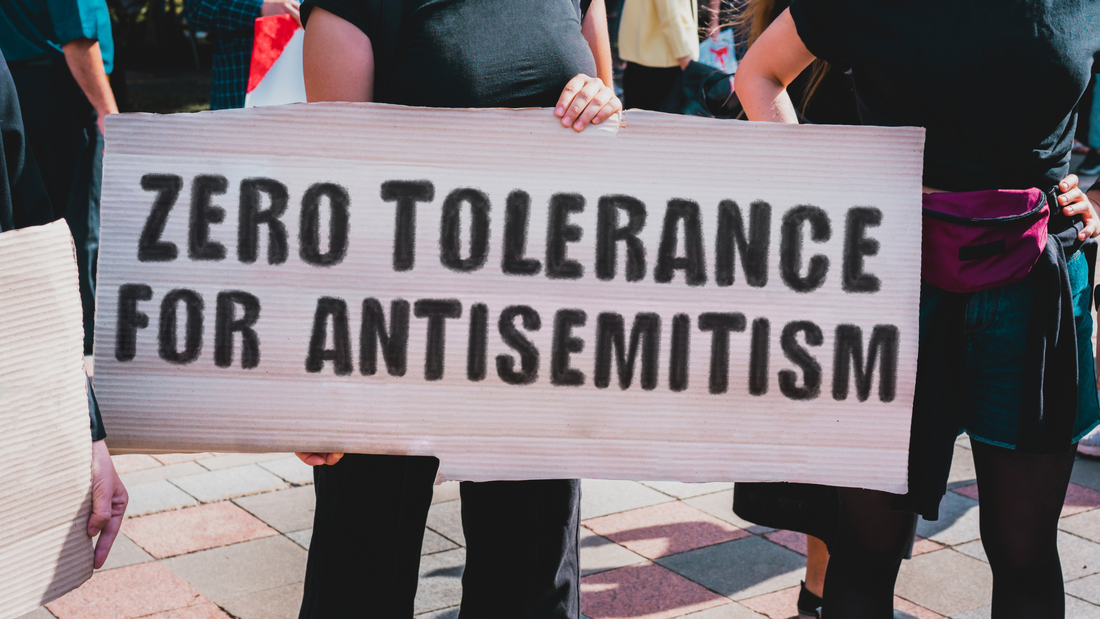 There is something poignant and noble about the ACLU’s defense of the right to engage in antisemitic speech. From its founding through the civil rights era, ACLU has been led by many lawyers, advocates, and donors who were and are Jewish. They and their families would be the first ones to perish under the regimes of the people whose constitutional right to speak are defended by the ACLU.
The ACLU in 1978 famously defended the right of neo-Nazis to parade though Skokie, Illinois, where many Holocaust survivors were living. Now former ACLU president Nadine Strossen and social psychologist Pamela Paresky – both proudly Jewish – are taking a stand against efforts to use the law to punish offensive remarks about the recent mass slaughter in Southern Israel. In particular, they criticize a proposal from Sen. Tom Cotton (R-AR) to empower the Department of Homeland Security to pull student visas and deport any foreign national on American soil who expresses support for Hamas. They write that such a policy would fly in the face of the First Amendment, which Supreme Court precedents extend to foreign nationals on American soil. On the other hand, Strossen and Paresky are correct to call out Joseph Massad of Columbia University for writing that Hamas’ slaughter of innocents was “awesome” and Russell Rickford of Cornell for saying “I was exhilarated.” Strossen and Paresky correctly note in their Free Press piece, “Imagine if, days after the murder of black worshippers in a Charleston church by a white supremacist, Proud Boys marched across campuses celebrating their deaths.” Or, we would add, if a professor called the murder of the worshippers “exhilarating.” The condemnation of such speech by university administrators, professors and students would be deafening. At Cornell, Jewish students have had to shelter-in-place and avoid kosher dining halls to avoid violence. There has been a large number of similar, chilling incidents on other campuses. And the response by university presidents? By and large, mealymouthed statements that amount to profiles in cowardice. It is hard to imagine students making the most of the promise of academic freedom when they must fear for their lives simply because of their religion. The academy has gone from creating “safe spaces” for students to avoid hearing dissenting views, to having to create safe spaces to protect them from actual violence. At the other extreme, Strossen and Paresky are right that outlawing offensive speech, even if it has implications that could be dangerous, does not make bad ideas go away. As we’ve said before, banning anti-social speech tends to pump it up with a neon allure. And the only thing worse than the flag-waving Nazi next door is the secret Nazi next door who pretends to be normal but would denounce you if the moment were ripe. We agree with Strossen and Paresky that people and institutions have – and should exercise – a First Amendment right to react negatively to offensive speech. They support, as we do, the right of university donors to withhold funding. But how far should critics go? Strossen and Paresky write: “We should also consider the cultural effects of such retribution. People say ill-conceived, stupid, even evil things all the time. Should they be cast out into the wilderness? Their livelihoods jeopardized?” Perhaps the answer to these questions should be “yes.” We agree that the extremes of cancel culture have degraded the free exercise of speech in our First Amendment society. But make no mistake, “cancellation” or calls for disassociation by private parties and companies itself is a protected form of speech and association. Nobody needs to associate, in business or in life, with those who wish them or people they care about ill. Where Strossen and Paresky are squeamish about firings and shunning, we are more worried about the cultural effects of maintaining tenure for professors and scholarships for students who advocate the mass murder of innocents. If someone is highly critical of Israel, the bombing of Gaza, or is pro-Palestine, they are well within the parameters of a fair debate. But if someone can respond to the murder of babies and find it “exhilarating,” then we question if it’s just the speech that’s evil. It is important to remember that the First Amendment means no government suppression of speech. Private actors can respond to bad speech with speech of their own, including the right of association – or, by implication, disassociation, commonly called firing. Discrimination against people for what they say and do can be a good thing. Such distinctions mark the boundary between a culture of lively debate and a nihilist culture moderated by violence.  The Foundation for Individual Rights and Expression (FIRE), in conjunction with College Pulse, published its fourth annual survey on free speech at colleges and universities around the country. The survey included over 55,000 students from 254 institutions.
Bottom line: No school on the list earned an “Exceptional” or “Very Good” rating. The best earned a “Good” speech climate rating. The top five universities in the country for their speech climates were Michigan Technological University, Auburn University, the University of New Hampshire, Oregon State University, and Florida State University. At the bottom of the pack is Harvard University, followed distantly by the University of Pennsylvania, the University of South Carolina, Georgetown University, and Fordham University. The University of Chicago, which previously held the top spot in 2020 and 2023, slid in the rankings this year, but this was mostly driven by the inclusion of considerably more schools. In fact, this year’s survey is the largest ever conducted by FIRE and College Pulse, up from just 54 institutions in 2020. Other universities that consistently rank highly include George Mason University, Purdue University, the University of Virginia, and Texas A&M University. Just because a school scores highly, though, doesn’t mean that students necessarily feel safe. When asked whether they self-censor often, 18% of students at the top five schools for freedom of speech reported that they do, whereas 20% of students at the bottom five schools said the same. Fifty-four percent of students at the top five schools reported worrying about damaging their reputation because of someone misunderstanding what they have done or said, whereas 57% of students at the bottom five schools reported the same. Overall, the average score on “Comfort Expressing Ideas” at the top five schools did not differ significantly from that of the bottom five schools. Far from being safe to express one’s beliefs at the top five schools, students at these institutions may only experience a moderately less hostile environment. This insight underscores how much work still needs to be done to make even the most tolerant American universities safe for academic freedom. Other facts from the report stand out. Students at the bottom five institutions were more biased against politically diverse speakers and were more accepting of disruptive or violent protests to stop a campus speech. Consequently, deplatforming speakers at these institutions was successful 81% of the time. More students this year (45%) compared to last year (37%) reported that blocking other students from attending a speech is acceptable to some degree. While opposition to a controversial conservative speaker appearing on campus was considerably higher (57% to 72%, depending on the speaker) than a controversial liberal speaker, controversial liberal speakers were still opposed by anywhere between 29% to 43% of the student body. Hostility to a speaker of a particular political persuasion may be more akin to a numbers game, rather than the domain of one particular ideology. For example, in 2021 at Florida State University, Dr. Meghan Martinez’s class “The History of Karen: Weaponizing White Womanhood,” the title of which leaves nothing to the political imagination, received significant backlash, causing the class to be removed from the course catalog. The report contains many more fascinating insights into the state of free speech across America’s institutions of higher learning. Protect The 1st congratulates FIRE and College Pulse for another informative and thoughtful list. |
Archives
October 2026
Categories
All
|
 RSS Feed