

 The Office of Information and Regulatory Affairs (OIRA) is a division within the Office of Management and Budget that has the power to review regulations proposed by federal agencies. Since the days of Presidents Carter and Reagan, the White House has used OIRA as a way to maintain cost-benefit analyses of regulations, and to make sure that they do not conflict with public policy.
One clear public policy goal for any administration is to make sure that the national shortage of doctors and nurses on the front line of care is not exacerbated by thoughtless federal regulations. Now the Biden administration has proposed rescinding a Health and Human Services regulation to OIRA adopted during the Trump administration that protects the conscience rights of medical professionals – a move that could, in fact, reduce medical care, especially among underserved populations. Conscience rights protect doctors and nurses who object to performing certain procedures, such as abortion. Surveys demonstrate that 90 percent of religious health professionals would stop practicing medicine if ordered to violate their conscience. So far, we are looking at the administration’s OIRA maneuver through a glass darkly. There may be nothing to it other than paper shuffling, and there may be justification for amending the regulation. On the other hand, if the administration is preparing to force healers to perform procedures they object to, the result will be the departure of thousands of doctors and nurses from the front lines of care, especially those who work for less pay among the underserved. If so, such a move doesn’t sound like smart politics, either. We would bet that even a majority of Americans who are pro-choice would find the idea of compelling physicians to choose between performing abortions, or leaving the practice of medicine, morally objectionable. Let us hope that this is not where the administration wants to go.  The U.S. Supreme Court today unanimously revived the case of a former postal employee, Gerald Groff, an evangelical Christian who claims his rights under Title VII of the civil rights law were violated when the Postal Service denied his request to refrain from working on Sunday.
In oral argument in April, the Justices had focused on how much disruption and hardship an employer would have to suffer in order to justify denying an employee a religious accommodation. In today’s ruling, the Court threw out the prevailing standard that businesses shouldn’t be required to suffer more than “de minimus” harm from a religious accommodation. Instead, the Court held that a business or other employer must accommodate a religious practice unless the accommodation would create a “hardship” that is “substantial in the overall context of an employer’s business.” Writing for the unanimous Court, Justice Alito also made clear that the range of cognizable hardships is narrow: “An employer who fails to provide an accommodation has a defense only if the hardship is ‘undue,’” he wrote, “and a hardship that is attributable to employee animosity to a particular religion, to religion in general, or the very notion of accommodating religious practice cannot be considered ‘undue.’” Justice Alito also wrote that it is not enough for an employer to conclude that forcing other employees to work overtime would constitute an undue hardship. “Consideration of other options, such as voluntary shift swapping, would also be necessary.” “In throwing out the lower court ruling, the Supreme Court today took a major step toward widening respect for religious liberty,” said Gene Schaerr, general counsel of Protect The 1st. “In this unanimous ruling, the Justices made clear that, absent serious harm to the actual practice of a business, Title VII – which reflects in the private sphere the First Amendment’s protection for free exercise of religion in the public sphere – requires employers to respect an employee’s religious needs.” State by State, School Choice Movement Sweeps – and Falters  What’s behind the mushrooming success of the school choice movement? Why is school choice spreading like a prairie fire, from Oklahoma’s recent refundable school tuition tax credit, to major expansions in recent years from Florida to Utah, from Arizona to West Virginia?
This movement is fueled by a desire to bring competition to the often disappointing – and in some cities, alarmingly bad – performance of public school systems. But something else is also at play: school choice fulfills the guarantees and values of the First Amendment writ across generations. From coast to coast, parents are expressing their desire to transmit their values and beliefs through the choice of state-accredited private schools. But with success comes inevitable pushback and disappointment. Protect The 1st praised Democratic Gov. J.B. Pritzker of Illinois during the election season last year for supporting “The Invest in Kids Act,” which provides a tax credit for thousands of children to avoid public schools with decades-long records of failure. But the goal of a viable state-supported choice alternative for Illinois families has yet to be realized. Under political pressure from the teachers union, and unfounded fears public schools would be short-changed, the Illinois legislature killed the program – consigning thousands of children to return to dysfunctional public schools. Protect The 1st also had high hopes for Texas, where Republican Gov. Greg Abbott pushed the legislature in Austin to pass a statewide school choice bill. Conservative Republicans in the Texas House, however, killed the measure out of fear that a school choice program would divert funds away from rural public schools. Such fears about school choice are unfounded. School choice doesn’t degrade public schools – it improves them. Randomized control trials of voucher programs found moderate evidence of improvement in academic achievement from private school vouchers – a welcome result given America’s persistently mediocre place in international school rankings. Moreover, out of 28 studies that explored the causal relationship between school choice and the performance of public schools, 25 found that school choice improves educational attainment in traditional school systems. “In terms of social-scientific validity, that’s a slam dunk,” writes Alexander William Salter, economist at Texas Tech University. What about Republicans’ fears about the impact of school choice on rural schools? States like Arizona and Florida that have expansive school choice policies have witnessed an increase both in rural private-school enrollment and public-school performance. Since the enactment of state school choice policies, Arizona’s rural schools have increased performance in students’ fourth- and eighth-grade reading and math scores, while the performance of rural schools nationwide has declined. The critical role school choice can have in young lives explains why Sen. Tim Scott (R-SC) called school choice a “civil rights issue.” And it explains the brave stand of Democratic Gov. Josh Shapiro of Pennsylvania who said he is open to school choice because: I believe every child of God deserves a shot here in the Commonwealth of Pennsylvania, and one of the best ways we can guarantee their success is making sure every child has a quality education. “While every one shall sit in safety under his own vine and fig tree”  The First Amendment of the Constitution guarantees the free exercise of religion, just as it forbids the official establishment of a religion. The latter, by implication, protects the free expression of all religions.
President George Washington made this clear in his famous letter to a Rhode Island synagogue: “May the Children of the Stock of Abraham, who dwell in this land, continue to merit and enjoy the good will of the other Inhabitants; while every one shall sit in safety under his own vine and fig tree, and there shall be none to make him afraid.” What does it say about us that 18th century America was a safer place for worship than it is today? In 2023, we can only yearn for the days when houses of worship were seen as sanctuaries by all. Friday’s conviction of a 50-year-old hater for the killing of 11 worshippers at the Tree of Life synagogue in 2018 is a reminder how just much our free exercise of religion is endangered in the most basic of ways. The largest such shooting of a house of worship occurred in Sutherland Springs, Texas, when a deranged man killed 26 worshipers, from ages 5 to 77, in 2017. Two years before that, a white supremacist killed nine worshippers at a prayer meeting at the Emanuel African Methodist Episcopal Church in Charleston, South Carolina. There has been violence and threats since against churches, synagogues, and mosques. Somehow, as a nation, we must recognize that the free exercise of religion must begin with the most basic right of all – the right to live to worship freely.  The approach of the Fourth of July reminds us once again that vigilance is the price of freedom. A new report from the U.S. Department of State puts that duty into stark relief, illustrating the horrific toll that accompanies the abdication of human rights and the proliferation of religious bigotry and intolerance abroad.
The annual survey on religious freedom, submitted to Congress under the requirements of the Religious Freedom Act of 1998, documents continued and worsening persecution of religious minorities in a variety of countries around the world. As Secretary of State Anthony Blinken said: “Governments in many parts of the world continue to target religious minorities using a host of methods, including torture, beatings, unlawful surveillance, and so-called re-education camps.” If your mind goes straight to China’s ongoing persecution of its Muslim Uyghur minority, you’re right on the mark. But China is far from the only serial abuser of human rights and religious freedom on the global stage. The new report is a tough read – a compendium of horror stories that illustrates the world of difference between those nations that value the free exercise of religion and those that do not. Below, find a few of the biggest takeaways.
When it comes to our trading partners, China remains the biggest human rights offender. However, India is also called out in the report as a habitual violator of religious liberty, with a range of documented, targeted attacks against religious minorities and a majority of its 28 states affirmatively prohibiting religious conversion by law. The United States is unique in its radical protections for the free exercise of religion. We are duty-bound and bound by law to respect our differences, despite not-infrequent attempts of overweening bureaucrats to diminish that mutual respect. As we look forward to celebrating Independence Day, we say to “ bigotry no sanction, to persecution no assistance.” And we can reflect on how fortunate we are to have the First Amendment as a shield against religious bigotry.  The founders left us with a balancing act on religion: the First Amendment guarantees the free exercise of religion, but forbids the government establishment of one. On the whole, an updated policy from the Biden Administration’s Department of Education does a good job of explaining – and promoting – that balance in its new guidance for state and local education agencies on what is, and what is not, permitted in prayer and religious expression in elementary to secondary schools.
Comparing the additions and deletions of this policy from the Trump administration’s version reveals – as one might expect from a left of center administration – added emphasis on the “no establishment” clause. But the new policy contains no shocking departures from traditional constitutional protections. Instead, it doubles down on the distinction between religious expression that is government-sponsored, and that which is privately expressed. After noting Supreme Court jurisprudence that “it is no part of the business of government to compose official prayers for any group of the American people,” the updated policy declares that “nothing in the First Amendment, however, converts the public schools into religion-free zones, or requires students, teachers, or other school officials to leave their private expression at the schoolhouse door.” Somewhat defensively, the policy notes that the “principles outlined in this updated guidance are similar” to the 2020 guidance. The new policy clearly responds to the U.S. Supreme Court’s Kennedy v. Bremerton School District opinion (2022), aka “the praying coach case,” in which the Court upheld the right of a coach to pray on a football field after a game. It cautions that schools have some right to discipline a schoolteacher, coach, or other employee for improper speech. It particularly empowers schools to discipline teachers who “pressure or encourage” students to join private prayer. “However,” the policy adds, “not everything that a public-school teacher, coach or other official says in the workplace constitutes governmental speech, and schools have less leeway to regulate employees’ genuinely private expression.” The new policy upholds the right of teachers and other school employees to meet for prayer before school or during breaks. It upholds the central place religion has held in music, history, and literature. It allows philosophical questions concerning religion, the history of religion, comparative religion, religious texts as literature, and the role of religion in the history of the United States. It recognizes that much classical music has religious themes, which is no bar to the classics being played or sung by students. The updated policy affirms the right of students to “express their beliefs about religion in homework, artwork, and other written and oral assignments free from discrimination based on the religious perspective of their submissions.” Most commendably, the policy calls for the teaching of these twin First Amendment principles as an “opportunity to assist America’s youth in developing an understanding of these constitutional protections as they apply to people of all faiths and no faith and an appreciation for the core American values and freedoms that undergird them.” In an age of culture wars, it is refreshing to see a policy from a Republican administration revised by a Democratic administration with stronger emphasis – as you would expect -- on government neutrality, while maintaining the enduring respect for religious freedom rooted in the U.S. Constitution.  The Pines Church in Bangor Maine, after noticing that many of its congregants lived in nearby Hermon, decided to make the move to this small town; however, Hermon (population 6,461) has a scarcity of available rental space. After searching around, The Pines Church turned to leasing space from the local high school as an after-hours, weekend option for worship services.
This seemed a no-brainer. After all, a number of groups rent space from the local school district, including Black Bears Basketball, Hermon Recreation, the Boy Scouts, the Girl Scouts, and various baseball clubs. To show support to the community, the church offered to pay $400 above the original price. After filing the request form, the church received a questionnaire from Superintendent Micah Grant, a member of the school board. Grant forwarded questions from a school board member:
After receiving responses it regarded as disappointing, the school board rejected the church’s application for a six-month or a year-long lease. The Pine Church responded by suing to protect its First Amendment right to the free exercise of religion, with equitable treatment under the law. “Public institutions that seek to lease their facilities for revenue should not be able to discriminate based on religious or political conviction,” Mariah Gondiero, an attorney for Advocates for Faith & Freedom, said in a statement. This small-town drama is just one manifestation of a controversy playing out across the United States, one in which traditional views on sexuality conflict with public mandates on “diversity, equity, and inclusion.” This is the core of a legal struggle in California, where a school district is fighting in court to enforce its ban on the Fellowship of Christian Athletes as a recognized student group, all because that organization adheres to traditional beliefs. As a matter of law, traditional religious beliefs are protected under the free exercise of religion clause in the First Amendment. Given this constitutional basis, Protect The 1st expects the courts to side with The Pine Church. But continuous clashes like this will not be solved by law alone. This is a cultural issue in which a little dialogue might work wonders. Dialogue is needed because it sometimes seems as if many public officials hold a caricature of traditional religions as being just an inch away from hateful groups like the infamous Westboro Baptist Church. Whatever one’s beliefs about traditional marriage, it bears noting that it is not just evangelical Christians who hold this belief, but also millions of Roman Catholics, Orthodox Jews, and Muslims. In our experience, most religious groups are the opposite of hateful, welcoming all comers, charitable, and tolerant in the extreme. Beyond the lawsuits and the constitutional issues at stake, it would behoove those in positions of authority to recognize that one can disagree with traditional beliefs while respecting our fellow Americans’ right to hold them. That is exactly what Congress did when it passed the Respect for Marriage Act, signed into law by President Biden in December 2022. With the vote of every congressional Democrat and many Republicans, that law not only protected same-sex marriage in statute, but also expressly affirmed that those who hold traditional beliefs on that subject should not be treated as bigots. Congress declared: “Diverse beliefs about the role of gender in marriage are held by reasonable and sincere people based on decent and honorable religious or philosophical premises. Therefore, Congress affirms that such people and their diverse beliefs are due proper respect.”  In the latest example of government targeting religion, the Minnesota Legislature recently passed a bill banning Christian colleges and universities from participating in the state’s Post-Secondary Enrollment Options (PSEO) program – which allows high school students to earn college credit at the institution of their choice.
The move is brazenly unconstitutional. It also deprives the state of some of its largest PSEO providers, while also preventing thousands of high-school aged young people from attending schools that align with their faith. Minnesota’s PSEO program is designed to allow 10th, 11th, and 12th-grade students to earn college credit tuition free while still in high school. Two of its prominent providers are Crown College and the University of Northwestern-St. Paul. In 2020, Crown provided nearly 4,400 credit hours to PSEO students. That same year, Northwestern provided almost 25,000 – roughly 15 percent of the state’s total PSEO student hours. What do these two schools have in common? Both are Christian institutions requiring a statement of faith from prospective on-campus students – and both are now expressly banned from participating in the PSEO program. This new law is a wide-ranging education bill which, among other things, revises the criteria for eligible PSEO institutions to explicitly exclude religious institutions. The bill states: “An eligible institution must not require a faith statement from a secondary student seeking to enroll in a postsecondary course under this section during the application process or base any part of the admission decision on a student's race, creed, ethnicity, disability, gender, or sexual orientation or religious beliefs or affiliations.” (Emphasis added.) The legislative history plainly demonstrates that legislators knew that Crown and Northwestern would be affected by the changes, with the bill’s sponsor acknowledging an intent to coerce such institutions into admitting students regardless of their beliefs. For an entertaining view of legislative sharp elbows within the constraints of Minnesota nice (see the 3:09 mark), listen to Rep. Ben Bakeburg discuss the “targeting of people of faith,” and Rep. Harry Niska put the amendment’s author, Rep. Laurie Pryor, on the spot about whether she intends to exclude religious schools or force them to change their doctrine. As Rep. Niska amply demonstrated, by excluding religious institutions from public benefits widely available to private secular institutions, this bill runs afoul of the U.S. Supreme Court opinion in Trinity Lutheran Church of Columbia, Inc. v. Comer, (2017), which held that such discrimination is “odious to our Constitution . . . and cannot stand.” Rep. Niska also pointed out in Carson v. Makin that the Supreme Court held that religious schools in Maine could not be excluded from a state school choice program on the basis of their religious beliefs. A second, more practical, problem is that Minnesota’s actions disenfranchise students wishing to attend Crown and Northwestern, the latter being the largest provider of PSEO services. Northwestern has already admitted 183 on-campus PSEO students for the 2023-2024 school year. As Becket Fund senior counsel Diana Thomson aptly put it, “Minnesota politicians just slammed the door on thousands of kids in their state who want to get a head start on college, all because the schools they want to attend share their religious beliefs.” Two families affected by the Legislature’s decision – as well as both Crown and Northwestern – have filed suit against the state asking for injunctive relief and a determination that the new law violates the Constitution and Minnesota law, enshrining the right to the free exercise of religion. Any law infringing on a fundamental Constitutional right must be narrowly tailored to further a compelling governmental interest. Protect The 1st will be watching this case closely as it progresses.  In a striking win for advocates of religious freedom (i.e. the vast majority of Americans), Arizona’s Washington Elementary School District agreed to settle a lawsuit brought by Arizona Christian University (ACU) alleging religious discrimination in contravention of the U.S. Constitution and established state law. The settlement walks back the district’s February decision to exclude ACU student teachers from public school classrooms based on the university’s “Statement of Faith” and its traditional, Christian religious beliefs.
For the 11 years preceding the school board’s decision, ACU enjoyed a harmonious and productive relationship with the district, with dozens of its students assisting in the district’s elementary schools as part of the university’s student teaching and practicum requirements. According to the complaint filed by the Alliance Defending Freedom on behalf of ACU, at least 17 of those students went on to be hired as full-time employees. In no instance was there ever any allegation by the district about improper behavior by ACU students, who are required by the Arizona Christian Student Teaching Handbook to “[a]bide by the rules and policies of the assigned school.” That didn’t stop the school board from terminating the longstanding operating agreement between ACU on Feb. 23 after one member brought up concerns about certain language contained in ACU’s mission statement demonstrating the university’s commitment to “biblically informed values that are foundational to Western civilization, including […] the centrality of family [and the] traditional morality and lifelong marriages between one man and one woman.” Following a period of discussion, the board voted unanimously to end the agreement with ACU, causing significant harm to university students in the process of completing their teaching requirements – and doing so solely on the basis of their constitutionally protected religious beliefs. As we noted, many religions and denominations hold beliefs similar to those of ACU. Were a court to uphold the school board’s decision, it would open the floodgates to widespread government discrimination against practicing members of many religions, including Orthodox Jewish and Muslim teachers, as well as those who are Roman Catholic. Instead, this settlement reflects a positive development in the ongoing and seemingly ceaseless fight to defend the free exercise of religion. The school board’s commendable willingness to reverse itself is emblematic of a growing recognition that quality education is commonplace at religious institutions, even if some may disagree with those institutions doctrines and beliefs. So long as good teachers don’t bring their faith into the secular, public classroom, there should be no need to further litigate this issue in a courtroom. “On a Greased Slide to the Supreme Court”  St. Isidore, early medieval Bishop of Seville, is venerated as a doctor of the church for writing extracts from ancient literature that preserved classical wisdom. For this reason, Pope John Paul II established St. Isidore as the patron saint of internet users. In the 21st century, because of a dramatic development in Oklahoma on Monday, St. Isidore is now almost certainly destined to also become known as the name of a major, future U.S. Supreme Court opinion.
This is because Oklahoma has become the first state in the union to explicitly approve a religious charter school, the St. Isidore of Seville Catholic Virtual School, to be run by the Archdiocese of Oklahoma and Diocese of Tulsa. Until now, private religious schools have been eligible to participate in some publicly funded programs – Hasidic schools in New York receive some public funds while charging tuition, for example – but St. Isidore will be the first religious charter school fully paid for by taxpayers. No sooner did an Oklahoma state board approve St. Isidore for funding than the Americans United for Separation of Church and State signaled it was preparing a lawsuit. “This case is on a greased slide toward the Supreme Court,” said Gene Schaerr, Protect The 1st general counsel. “It will establish once and for all whether religious schools can be lawfully excluded from charter funding. Recent Court reasoning, from Trinity Lutheran v. Comer to Carson v. Makin, strongly suggests that discrimination against religious charter schools will soon be relegated to the proverbial ash heap of history.”  Another university professor is in the news for showing a depiction of the Muslim Prophet Muhammad in a classroom. This is the second such incident involving a portrayal of the Prophet Muhammad to happen this academic year.
In the fall of 2022, Maziar Behrooz, as associate professor of history at San Francisco State University, was teaching a course on Islamic history when he showed his students a drawing of the prophet. Though artistic portrayals of the prophet are considered idolatry by many in the Muslim world, opinions differ. Behrooz, who was born in Iran, said that such drawings can be purchased in street markets in Tehran. A Muslim student objected to the depiction to Behrooz outside of class. Behrooz told the student that as the professor he has the ultimate discretion to decide class content. According to some accounts, the professor showed the image again, which the student took as a taunt, prompting him to issue a complaint. When approached by the chair, Behrooz replied that the student's view is not uniform among all Muslims and that many do own and display depictions of the Prophet Muhammad. The SFSU office of Equity & Compliance informed Behrooz in March that he would face an investigation. Despite appeals from some civil liberties organizations for SFSU to drop the investigation, California law may require the university to investigate the student’s complaint. As SFSU navigates this mine field, it should consider another recent academic drama centered around depictions of the prophet. In fall 2022, Hamline University professor Erika López Prater was fired for showing a depiction of the Prophet Muhammad in her global art history class. The incident was elevated to a national controversy. In January, professor López Prater sued Hamline for religious discrimination and defamation, as well as for damaging her professional and personal reputation. Hamline has since walked back their comments against professor López Prater, and over one-half of full-time Hamline faculty voted to demand President Fayneese Miller resign. In early April, the president announced that she would retire. The president of SFSU, Lynn Mahoney, has approached this case with greater care, issuing a statement that balances academic freedom with protecting students from harassment. As more cases like this occur, nuances could arise regarding the First Amendment – not only professors’ academic freedom, but also the religious liberty rights of students. This is another sign that American universities are in the midst of a major recalibration prompted by an increasingly diverse student body. Such recalibration can never come, however, at the cost of free inquiry, nor can de facto blasphemy laws be enshrined within higher education. Perhaps California law should not mandate such investigations in the first place, but rather give academic leaders flexibility to look into complaints in ways that protect students and academic freedom.  When private and religious schools meet their state’s stringent educational standards, they frequently offer an educational experience superior in quality to public schools and provide a way for parents to express their First Amendment right to the free exercise of religion, extending their faith’s tradition, while knowing their children will be educated in math, science, English, and history. This is why Protect The 1st sees school choice as empowering parents and strengthening both education and a First Amendment society.
States are warming up to this view, though two states are wavering because of strong opposition from politicians in both parties. North Carolina has recently become embroiled in a bitter political fight over school choice between that state’s governor and the general assembly. The governor has declared his opposition to school choice legislation recently passed by the legislature. If the measure is sent to the governor’s desk as a standalone bill, it appears the legislature has the upper hand with a veto-proof majority. In Texas, there are fewer political fireworks, but a handful of rural Republican legislators have nevertheless so far managed to keep school choice from happening in the Lone Star State. Economist Stephen Moore recently noted that the districts these recalcitrant Republican legislators represent have abysmal levels of student performance at or above grade level. Moreover, the Texas school choice bill would direct more dollars per student for rural districts. On the plus side, when Gov. Kevin Stitt signs school choice into law, Oklahoma will have a refundable tax credit for families to put toward private school tuition. This new law, the Oklahoma Parental Choice Act, will also have a common feature of recent school choice bills – it boosts spending for public schools and teacher pay. “We’re excited for what it does for every student, every teacher and school and parent in the state, regardless of what their personal choice is in terms of educating that child,” House Speaker Charles McCall told local media. This year has seen enactments of major expansions of school choice in Indiana (available to 97 percent of K-12 students), Montana, and South Carolina. Four states – Arkansas, Florida, Iowa, and Utah – enacted school choice programs open to all K-12 students, following the trailblazing path of Arizona and West Virginia. These states include language ensuring that private schools must meet state minimum education standards to be eligible to receive funding. Such a move ensures that states can chart their own course with respect to curricular standards that private schools must meet to receive state support, while also providing students and families the resources they need to obtain a quality education. The ability to educate one’s children in the best schools available and according to one’s values or religion should be afforded to every American family. Since funding will now be opened up to a broader array of private schools, many more parents won’t have to choose between sacrificing educational quality for their children or sacrificing their family savings. Perhaps Oklahoma’s addition to the national school choice juggernaut will prompt North Carolina and Texas to overcome political opposition to join a movement that is sweeping the nation.  In February, we reported on the case of a Catholic charity – which has provided aid to the disabled, the elderly, and the poor for more than one hundred years – deemed not religious enough to qualify for that state’s religious liberty exemptions. An appellate court ruled that the Catholic Charities Bureau of Wisconsin must contribute to the state’s unemployment system, instead of to a church-run system.
We reported at the time: “This ruling is of far greater significance than the immediate issue: it opens a fresh vulnerability for the free practice of religion. If upheld, this ruling would subject religious-based charities to all manner of state agency rules regarding church governance that would amount to government regulation of belief.” Now religious organizations will have another chance in court to protect the religious nature of their charitable programs. The Wisconsin Supreme Court recently granted the charity’s request to hear its case and ordered that it file a brief within 30 days. In this case, religious doctrine and belief will be inseparable from considerations of the law. The Wisconsin Supreme Court will hear that this charity, run by the Diocese of Superior, and that offers in-home health care, housing, childcare services, and other resources, is an expression of the directives of the Gospels. The free exercise of religion necessarily will require justices to consider the core belief of Christianity – as well as those of other religions – that charitable service is most definitely a form of worship. 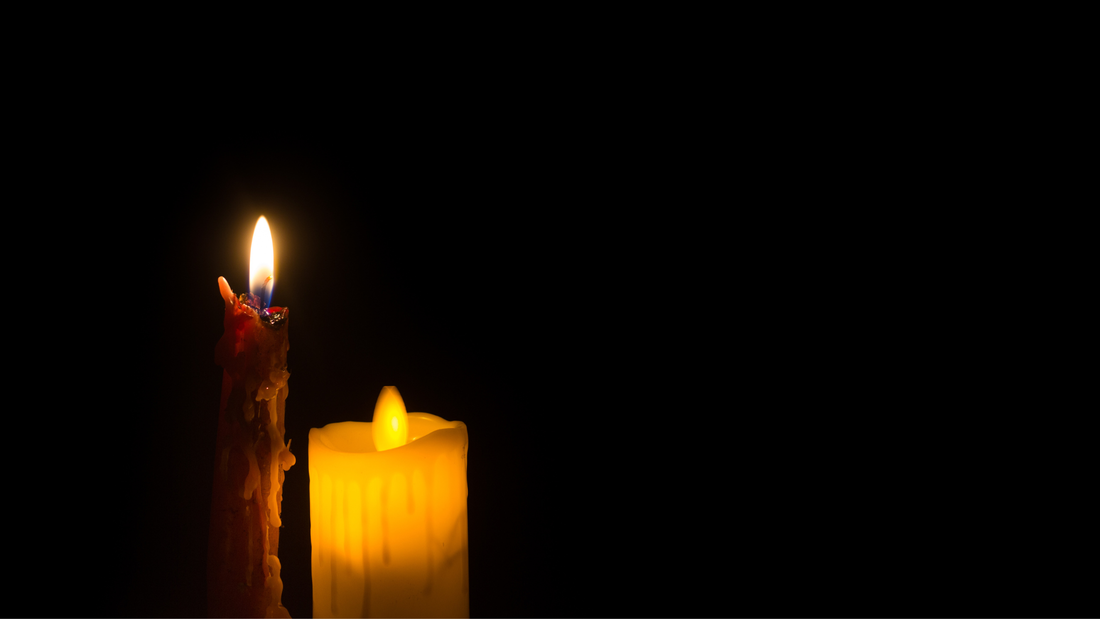 The St. Francis Health System in Oklahoma is the twelfth largest hospital system in the nation. It cares for more than 400,000 patients each year and has given away more than $650 million in free medical care in the past five years. St. Francis also employs more than 11,000 Oklahomans.
And it was almost shut down by the federal government over a candle. For 62 years, St. Francis has maintained a continuously burning flame on a sanctuary candle in its chapel. It is not decorative. Like a Sikh’s kirpan or a Jew’s kippah, it is a devotional object central to worship. The Catholic Church’s Code of Canon Law requires that wherever the Blessed Sacrament is kept, a special lamp – a “living flame” – must be kept burning. The St. Francis flame – in a chapel, apart from the hospital – is fueled by a candle inside a thick, glass globe, which is encased in a second glass globe, resting in a bronze holder with a bronze top. It is affixed six feet above the floor and surrounded by sprinkler heads. For all these good reasons, it has met the approval of the local fire marshal during annual inspections. But the candle did not meet the approval of a surveyor sent by the Centers for Medicare and Medicaid Services. Lori Windham, vice president and senior counsel of the Becket Law firm, wrote the government: “Curiously, during the inspection, the surveyor expressly asked to go to the chapel to see if there was a living flame.” After seeing it, the surveyor deemed this enclosed candle flame, six feet above the ground, as a safety hazard that could, somehow, ignite the oxygen in a visitor’s breathing tube. He made this declaration despite the fact that the National Fire Protection Association deems that such a threat exists only within one foot of a flame. “This is not Mrs. O’Leary’s barn,” Windham wrote. The government’s inspector did not find such a problem with other open flames at St. Francis, from a pilot light in a stove and ovens, to water heaters and gas dryers in a laundry. CMS nevertheless told St. Francis to either extinguish the candle or lose access to federal funding, essentially shutting down the hospital and leaving thousands of patients without treatment. Becket’s Windham explained why this living flame, believed by the Catholic Church to be a sign of the presence of the living Jesus, could not be extinguished. In a tartly written letter to the government, under the heading “Why the Government Will Lose,” Windham noted the three ways the government’s action violates the Religious Freedom Restoration Act: it imposes a substantial burden on religious exercise by making the institution extinguish its candle, it has no compelling interest (the case for public safety is risible), and the government did not seek out the least restrictive means. The government withdrew its demand last week, though it required St. Francis to post a warning sign nearby – a good example, perhaps, of a less restrictive means. What can we learn from this monumental waste of government resources? Becket’s quick and thorough letter demonstrates the important role played by civil liberties organizations in the defense of religious liberty. This case also demonstrates what seems at times a willful obtuseness on the part of government when it comes to respecting religious norms. While St. Francis won the day, it is clear that defenders of religious liberty will continue to get static from the attitudes of some government officials. In such cases, it is the job of civil libertarians to demonstrate to the government that the fight isn’t worth the candle.  Last month, North Dakota and West Virginia passed state equivalents of the federal Religious Freedom Restoration Act (RFRA). With these two additions, one-half of U.S. states now have such laws that fulfill the First Amendment’s guarantee of the free exercise of religion.
The original RFRA was enacted by Congress in 1993 in response to the Supreme Court’s decision in Employment Division v. Smith, a case that jettisoned the strong “compelling interest” standard in free exercise of religion cases in favor of a test that allowed the government to burden religion as long as the burden was imposed in a way that was neutral and generally applicable. Since its enactment, RFRA has faced numerous legal challenges and undergone significant interpretations by the courts – some of which expanded its reach, and others which narrowed it, such as the Ninth Circuit’s decision in Navajo Nation v. U.S. Forest Service. In recent years, states have passed their own versions of RFRA to clarify the legal protections afforded to religious beliefs and practices within their borders. With North Dakota and West Virginia joining the list of states with RFRA laws, twenty-five states now have their own form of RFRA. State courts have adopted this standard in nine additional states. Supporters of RFRA laws argue that they are essential to protecting religious liberty, a fundamental human right. They contend that government policies and regulations should not be allowed to unduly burden the exercise of religious beliefs and practices, and that RFRA laws provide a necessary check on government overreach. Opponents of RFRA laws see it as justifying discrimination. Some states are aggressively acting against the free expression of religion. Who knows? Perhaps disobedience to the law of the land may well one day soon prompt the U.S. Supreme Court to clarify matters by holding that the “compelling interest” standard that protects the observance of other constitutional rights also protects the free exercise of religion. Until then, state RFRAs and the federal RFRA will have to fill the void left by Smith’s misinterpretation of the Free Exercise Clause.  In Tuesday’s oral argument in Groff v. DeJoy, Justices of the U.S. Supreme Court struggled to define a proper test for workplace rules that balance respect for employees’ religious liberty with their employers’ need for efficiency.
This case revolves around former postal worker Gerald Groff, an evangelical Christian in Pennsylvania who alleged that his civil rights were violated when the Postal Service denied his right to refrain from working on Sunday. A central question emerged: when an employee wants to take time off due to religious beliefs, is the prevailing standard of hardship that must experienced by employers too expansive – too generous – to the employer? Another question: How can a court measure the degree of hardship an employer must suffer from an employee’s regular absence on a day of religious observance before it becomes actionable? Justice Neil Gorsuch said there is “common ground” that a hardship standard that is de minimis (or trivial) “can’t be the test, in isolation at least, because Congress doesn’t pass civil rights legislation to have de minimis effect, right? We don’t think of the civil rights laws as trifling, which is the definition of de minimis.” Justice Samuel Alito criticized the precedent created by the Supreme Court’s 1977 decision in Trans World Airlines, Inc., v. Hardison, which held that employers can fire workers who refuse to work on a seventh day sabbath, as “an exercise in constitutional avoidance.” Solicitor General Elizabeth Prelogar said that under Hardison, the lower courts have interpreted that decision in a way that properly respects the rights of minority religions. Justice Alito responded sharply: “[W]e have amicus briefs here by many representatives of many minority religions, Muslims, Hindus, Orthodox Jews, Seventh Day Adventists, and they all say that is just not true, and that Hardison has violated their right to religious liberty.” The quest for “common ground” was repeated by several Justices, a ray of hope that the Court may craft a new doctrine with more latitude for the religious. Based on Tuesday’s oral arguments, it would be foolhardy to predict how the Justices will come down on this one. Protect The 1st can only direct attention to Justice Thurgood Marshall’s dissent in Hardison: “The ultimate tragedy is that despite Congress’ best efforts, one of this Nation’s pillars of strength – our hospitality to religious diversity – has been seriously eroded. All Americans will be a little poorer until today’s decision is erased.” California’s “Special Kind of Chutzpah”  A new lawsuit in California challenges a state policy that bars religious parents and schools from using special education funding to serve children with disabilities. Jewish parents and schools filed Loffman v. California Department of Education, claiming the California policy violates their 1st and 14th Amendment rights by prohibiting federal and state special education funding for disabled children at religious private schools while allowing it for secular private schools.
This funding originates with the Individuals with Disabilities Education Act, a federal law ensuring that all children with disabilities in America can receive a free appropriate public education that meets their needs. However, the California legislature allows only secular private schools to participate in this benefits program and has categorically excluded religious schools from participation. Eric Rassbach, Vice President and Senior Counsel at the Becket Fund, which represents the plaintiffs, said: “It takes a special kind of chutzpah to deny Jewish kids with disabilities equal access to special education benefits.” In a Twitter thread, Rassbach pointed out that a majority of Californians would like to see funding for students with disabilities opened up to non-secular schools. The suit cites Espinoza v. Montana Department of Revenue, a landmark case that struck down a similar restriction. In that case, the U.S. Supreme Court held that restrictions in government programs for no other reason than the fact that they are religious are “odious to our Constitution and cannot stand.” In Carson v. Makin, the Court struck down a Maine law that, like the California law, would allow private secular schools and families to access public funding but exclude religious schools and families. Carson builds on a long line of cases holding that religious people cannot be excluded from government benefits programs solely on the basis of their religion. PT1st supported the plaintiffs in Carson v. Makin, in which the Court ruled 6-3 to uphold the rights of religious families. We wrote: “With a solid win for religious liberty in Carson v. Makin, we can expect future cases will explore the freedom of publicly funded religious charter schools to include religious instruction.” Should Loffman make it before the U.S. Supreme Court, it seems likely that the Court will strike down the California restriction. We supports the plaintiffs and the Becket fund in their efforts to ensure all students with disabilities in California can receive a quality education in line with their academic needs and religious heritage. The California legislature, by restricting resources, forces parents with a disabled child to violate their religious conscience, leaving them with inadequate options for their child’s education. We look forward to further developments in this case.  Rome persecuted minority religions by making a hideous example of the pious. In the third century, the Roman Emperor Diocletian executed Christians by burning or flaying them alive, razing their churches, and forcing priests at the point of a sword to publicly offer sacrifices to the Roman gods.
We all know how that turned out. In one of the great boomerangs of history, the persecution of Christians and heroism of martyrs evoked sympathy and curiosity from fellow Romans, opening the way to the conversion of the whole empire. The People’s Republic of China seems to have learned from this history that public spectacle can be counterproductive. It is developing intricate, insidious, and largely nonpublic ways to use technology to persecute religious minorities in order to shrink them out of existence. The use of technology to persecute individuals is something that could happen in the United States as well. First, some background: ChinaAid, a religious persecution watchdog, released its annual persecution report for 2022, in which it found China is escalating its attacks on Chinese Christian churches. At the center of Beijing’s tightening squeeze on religious freedom is a smarmily named “Smart Religion” app that applicants must fill in with their personal information before being allowed into a worship site. And when compliance with this and many other rules falter, Chinese authorities fabricate fraud charges against churches. They effectively outlaw tithing, starving churches of income. Many pastors have been imprisoned. China has recently deployed harsh regulations to target online religious content as well. Several Christian websites have been purged from the internet. WeChat, the primary texting app in China, implemented censorship blocks against common Christian words and terminology. In short, while no one has been flayed alive on public television, no one needs to be. Instead, China is using technology to distribute slow, gut-wrenching discouragement, intimidation, and censorship to do the job. Most insidiously, China’s persecution demonstrates how technology can be used to suppress the faithful in a manner that appears softer than the persecutions of old, but that ultimately work in a much more comprehensive – and perhaps, effective – way. The example of China should serve as a warning to Americans of all stripes about the value of data privacy. Americans’ personal information – including not only our religion, but also our ethnicity, gender, sexual orientation, and income level – is gathered by data brokers and sold to commercial and governmental actors, including a dozen federal agencies. Our government thus has warrantless access to similar information as in China, but without the need for a controversial app. As we have said many times before, our government, often with the best of intentions, is putting together all the pieces needed for a Chinese-style surveillance state at home. We trust that our data won’t be used against us as it is in China, but there are currently few legal protections against it. U.S. government agencies have already used private data to monitor religious minorities, including apps for Muslim prayer and dating. That’s why we support measures that would prevent data brokers from selling our personal information to law enforcement and intelligence agencies without authorization by a court.  The lawyers are already at work contesting the decision by the governing board of Arizona’s Washington Elementary School District to exclude student-teachers from a Christian university after a long and productive relationship.
In recent years, more than 100 students and teachers-in-training from Arizona Christian University have taught in the district’s elementary schools. ACU’s president, Len Munsil, said that many of these students have been hired as full-time teachers. Munsil also said that the high quality of ACU student-teachers prompted school administrators to ask for more trainees from the university. Then the board noticed the mission statement of the ACU website. The university holds to “biblically informed values that are foundational to Western civilization, including […] the centrality of family [and the] traditional morality and lifelong marriages between one man and one woman.” No one has alleged that any of ACU’s student-teachers have brought religion or discrimination into the district’s public schools. So, what’s the problem? School board president Nikkie Gomez-Whaley said that she doesn’t believe Christian student-teachers can separate their Christian values from their professional obligations, making them unable to treat students equally. “For me,” she told The Christian Post, “this is not a concern about Christianity, there are plenty of Christian denominations who are LGBTQ friendly.” But what about the denominations and religions that hold doctrines similar to that of the ACU? For example, what will the Washington Elementary School District do now about teachers drawn from the pool of more than 60 million Roman Catholic Americans? Despite the softening of Pope Francis on criminalizing same-sex relations, he has not changed the Catechism of the Catholic Church, which calls same-sex relations as “intrinsically immoral and contrary to the natural law.” That’s a stronger statement than the one made by ACU. Is the Washington Elementary school board now going to exclude Roman Catholics? Opposition to same-sex marriage is also prevalent in Orthodox Judaism and Sunni and Shia Islam, as well as many Eastern religions. Is the Washington Elementary school board also going exclude Jewish and Muslim teachers? Let us suggest a way out for the school board: acknowledge that people can belong to faiths that have dogmas with which you disagree or even find offensive. Understand also that all the great world religions endorse the fair treatment of all people. As long as teachers do not bring their faith into the classroom, they should be judged by the quality of their teaching. Anything less than that is a gross violation of the First Amendment’s guarantee of the free exercise of religion. How Many of the Underserved Will Lose Their Healthcare?  Protect The 1st on Monday filed a comment with HHS detailing many of the ways in which the proposed recension of a 2019 rule to protect the religious conscience rights of physicians, nurses, and other health-care providers will hurt access to care among low-income and underserved Americans.
In 2019, the Department of Health and Human Services (HHS) reported that a poll showed that more than 80 percent of healthcare providers who are religious would likely limit their scope of practice if they were required to participate in practices and procedures – such as abortion or sex reassignment surgery – to which they have a moral, ethical, or religious objection. “If the existing rule is rescinded, many of these physicians will be forced to choose between obeying their conscience or violating their most cherished beliefs,” said Gene Schaerr, general counsel of Protect The 1st. “There is no lack of health-care providers who are willing to provide these procedures. Trying to force the minority of doctors and other providers to violate their conscience is a pointless exercise in religious discrimination and enforced ideological conformity.” Protect The 1st asks HHS: Please explain why, in the Department’s view, religious freedoms do not warrant protective regulatory provisions similar to those protecting other civil rights. Please estimate how many doctors will likely leave the medical profession if they are required to perform medical procedures to which they are religiously opposed. Please estimate the effect on underserved communities if religious hospitals and other entities choose to shut down rather than perform procedures to which they are religiously opposed. Please estimate the rate at which patients will be unable to obtain what the Department considers healthcare if the 2019 final rule is largely rescinded. The Protect The 1st comment also noted that the HHS proposal to move from reviews of systemic offenders to a “case-by-case” basis will shift the burden of litigation to injured parties. The department’s removal of all compliance requirements will almost certainly encourage the recent rash of local laws that discriminate on the basis of religion. The Protect The 1st filing also said that the “proposed new rule is so deficient as to appear half-hearted in its attempt to protect religious freedoms.” In seeking to purportedly protect religious liberty and expand healthcare, the department’s new rule “cuts its own feet out from under it.” Protect The 1st will work to communicate the dire nature of this rule change – and its impact on those who can least afford a restriction of access to health care – to the Biden Administration and to Congress.  Protect The 1st on Wednesday filed a reply brief answering claims from the University of Alabama against our petition for the U.S. Supreme Court to hear Keister v. Bell.
We told the court that this case is an “excellent vehicle” to resolve a split in appellate courts on the proper analysis of what constitutes a public forum. The case revolves around the right of evangelist Rodney Keister to stand on city-owned sidewalks on a public street in Tuscaloosa, Alabama, near the University of Alabama. The UA campus police enforced an agreement with the city to clamp down on expressive activity at that portion of the sidewalk, warning Keister not to preach on this portion of a public sidewalk. At stake is the right of Americans to use public spaces to engage in speech – a practice that was embedded in American life long before colonials handed out Thomas Paine’s Common Sense pamphlets. The Tenth Circuit Court of Appeals, for example, recognizes that “traditional public fora are open for expressive activity regardless of the government intent.” On the other hand, the Eleventh Circuit ruled against Keister with a multifactor balancing test and allowed the University to forbid expressive activity on the sidewalk. Protect The 1st wrote: “Even assuming the propriety of a balancing test, the Eleventh Circuit’s circular reliance on the University’s intent to suppress speech was an improper fulcrum for converting the most quintessential of traditional public fora into a limited forum allowing suppression.” Protect The 1st is hopeful the Court will take this chance to resolve a split in the courts and uphold the traditional right of Americans to use public property for expression and speech.  The Alliance Defending Freedom has won another victory for free expression after reaching a settlement in court with the Simpson County School District in Mississippi to retract a policy infringing on a student’s right to religious expression. In 2020, during the height of the pandemic, elementary school student Lydia Booth was told by school staff that she could not wear a facemask emblazoned with the words “Jesus Loves Me.”
"I chose [the mask] because it had my favorite words on it, ‘Jesus Loves Me,’ and it made me feel safe when I went to school," Lydia said. At the time, the school had no formal policy barring students from wearing clothing that expressed a political or religious message, so long as the message did not interfere with the educational process. Lydia had already worn the mask several times to school without any problem. Then, in October 2020, Lydia was told she could not wear a mask with words on it, despite other students regularly wearing masks with sayings or slogans. Lydia was asked again several days later to leave her mask at home. Finally, the district changed its mask policy to prevent “religious” or “political” statements. But last week, the district reached an agreement with Lydia and the Alliance Defending Freedom to reverse their policy. Although the school no longer requires masks in the classroom, this lawsuit sends a clear message that free speech and expression, including religious expression, is to be protected in the schoolhouse. Protect The 1st congratulates Lydia and the Alliance Defending Freedom on their hard-won settlement. “It’s about the little things,” Lydia’s mother, Jennifer, said. Although a face mask with the words “Jesus Loves Me” may seem like a small win, it is out of such small victories that lines are drawn to protect our First Amendment rights. Matthew 25:35: I was hungry, and you gave me something to eat. I was thirsty, and you gave me something to drink. I was a stranger, and you took me into your home.  For two millennia, Christians have seen charitable service as a form of worship, as do Jews, Muslims, and people of other faiths. They have scripture and centuries of tradition on their side. Too bad they don’t have a black robe and a gavel.
An appellate court in Wisconsin recently ruled that a Catholic charity, which has provided aid to the disabled, the elderly, and the poor for over one hundred years, no longer qualifies for religious liberty-based legal exemptions. The court held that the express purpose of the charity as a religious institution does not protect it from having to contribute money to the state’s unemployment system, instead of to a church-run system. This ruling is of far greater significance than the immediate issue: it opens a fresh legal vulnerability for the free practice of religion. If upheld, this ruling would subject religious-based charities to all manner of state agency rules regarding church governance that would amount to government regulation of belief. This case involves the Catholic Charities Bureau, the social ministry arm of the Diocese of Superior, Wisconsin. The charity covers sixteen counties, roughly a quarter of the state. The nonprofit offers in-home health care, housing, childcare services, and other resources to those in need as a way to demonstrate the spirit of the Gospels. The Wisconsin appellate court doesn’t grasp how this organization can be both charitable and religious. It ruled an organization is “operated primarily for religious purposes” only if its professed motive and activities are based on explicit proselytizing. Although the charity is run by Catholics compelled by scripture to aid the needy, the court found that the primary purpose of the bureau is charitable work and not proselytization. Thus, the court reasoned, the charity is not operated “for religious purposes.” The Catholic Charities Bureau is challenging the court’s ruling under the First Amendment’s Establishment Clause, appealing the decision to the Wisconsin Supreme Court. The appeal notes that the appellate court’s ruling would enable the government to “finely parse all the activities of religious bodies in the State and decide whether those activities are ‘inherently’ or ‘primarily’ religious.” Quite right – no activity violates the Establishment Clause more than one in which the government decides which religious practices qualify as religious, and hence protected, and which do not. After all, the Supreme Court has recognized that “[t]he clearest command of the Establishment Clause is that one religious denomination cannot be officially preferred over another.” If courts really can say that proselyting activities are worthy of legal protection, but charitable activities categorically aren’t, then inevitably some religious groups – here, Catholics – are going to find that their beliefs, though inherently religious, are less protected than the religious beliefs of others. The Bureau thus rightly informs the court that the ruling, at bottom, infringes on the charity’s ability to freely exercise its religion. Eric Rassbach of the Becket Fund for Religious Liberty says that the outcome of this case could have huge ramifications for religious establishments. The ruling implicates legal protections of other organizations that are affiliated with religious institutions, such as parochial K-12 schools or religious colleges and universities. The devout of many faiths believe that reaching out to help people in the community is, perhaps, the most effective form of proselytizing. Such a narrow definition of religious organization would degrade the First Amendment rights of thousands of institutions and millions of American faithful around the country. Protect The 1st will report further developments in this case.  A federal district judge in Oregon late Thursday dismissed a lawsuit filed by a group of students who have soured on the religious colleges they attend (or have attended), seeking to overturn the religious exemption that Congress included in federal law to protect the right of religious colleges and universities to adhere to the tenets of their faith.
Title IX of the Education Amendments of 1972 prohibits educational programs or activities receiving federal funds from excluding, denying benefits to, or subjecting to discrimination any person on the basis of sex. Congress, however, included a narrow exception to Title IX when an educational institution “is controlled by a religious organization” holding “religious tenets.” Forty people who applied to, attended, or currently attend religious colleges and universities filed suit against the U.S. Department of Education, alleging that religious schools discriminate against them on the basis of their sexual orientation or gender identity. The plaintiffs alleged that the “religious exemption to Title IX exerts a chilling effect” on their free exercise of religion, speech, assembly, and association. District Judge Ann Aiken noted that the Supreme Court has upheld the obvious principle that churches “advance religion, which is their very purpose.” Nor did Judge Aiken buy the plaintiffs’ argument that the religious exemption somehow violates the Religious Freedom Restoration Act (RFRA). The judge noted, “the text is clear that government granting exemptions does not constitute a violation …” In short, Judge Aiken ruled “the balance of equities” fails to tip in the favor of the plaintiffs. “This ruling is a big win for the rights of religious universities and colleges,” said Gene Schaerr, general counsel of Protect The 1st. “It upholds the First Amendment rights of these schools to advocate the tenets of their faiths, and to freely associate on that basis.” 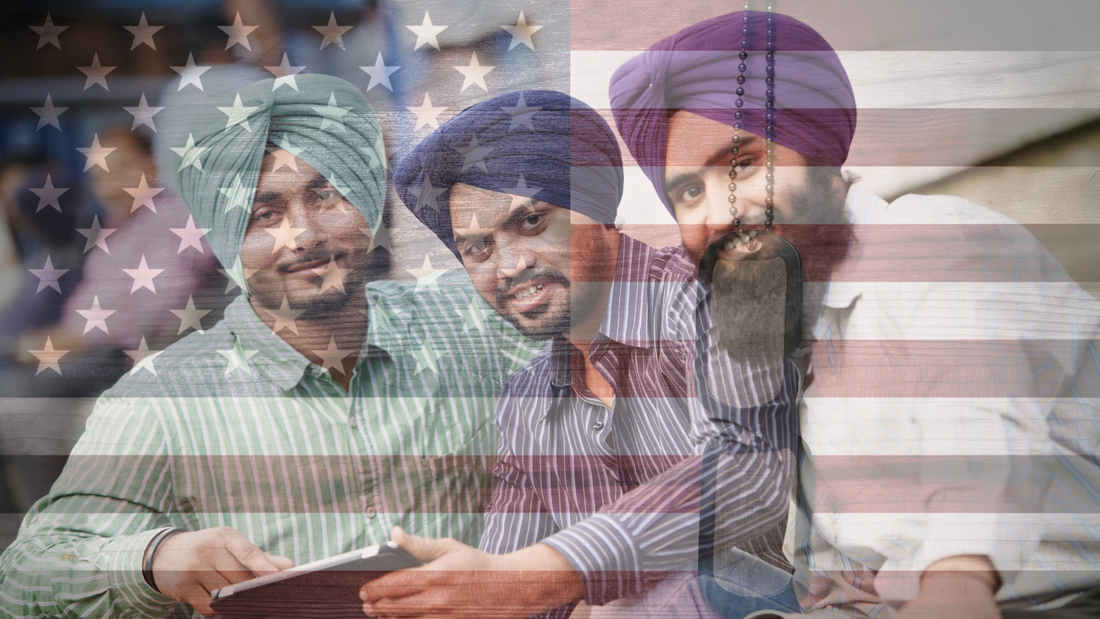 On December 23rd, the U.S. Court of Appeals for the District of Columbia ruled that Sikhs who serve or wish to serve in the military may keep their beards, in a First Amendment win for religious minorities.
In Sikhism, adherents will often allow their hair to grow out naturally as a sign of respect for God’s creation; however, each military branch maintains strict regulations on personal grooming, which effectively bar pious Sikhs from serving, even though exceptions have been made for medical conditions such as pseudofolliculitis barbae. On Friday, the Court ruled in favor of three Sikh plaintiffs who were denied admission to basic training in the Marine Corps. The Court argued that denying Sikhs admission to basic training because of their religious beards violates the Religious Freedom Restoration Act (RFRA), which holds that the federal government cannot “substantially burden a person’s exercise of religion” unless such a burden is the least restrictive means of achieving a “compelling interest.” The Court stressed the delicate balancing act at play: on the one hand, “no military organization can function without strict discipline and regulation that would be unacceptable in a civilian setting.” On the other hand, “the cost of military service has never entailed the complete surrender of all ‘basic rights[.]’” As Eric Baxter, lawyer to the plaintiffs, said, Sikhs “have served for a long time in militaries around the world, including in the United States, with all of their articles of faith in place.” We commend the Court on an excellent decision. While we recognize that military service necessitates the sacrifice of some personal freedoms, we must work to ensure that as few as possible are relinquished. Americans do not shed their constitutional rights to the freedom of religion at military training ground gates. |
Archives
April 2024
Categories
All
|
 RSS Feed