
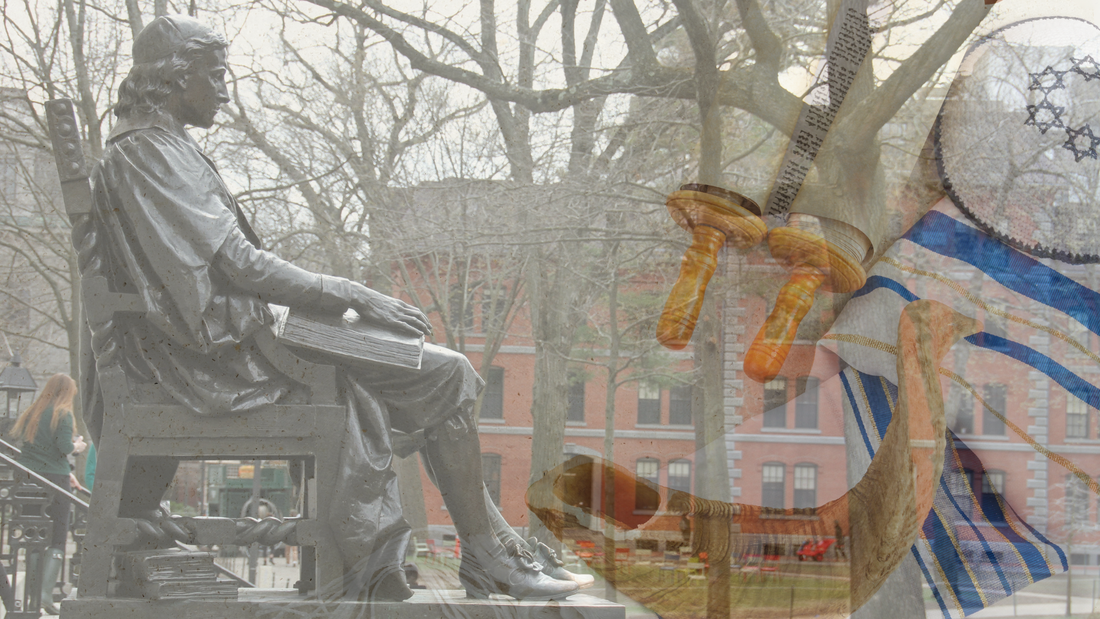
 Jewish students at Harvard are suing the university for failing to address rampant antisemitism on campus. Their case, Kestenbaum v. Harvard, raises sharp questions about free speech and the responsibilities of a private university. Harvard is not required by law to observe the principles of the First Amendment the way a state-sponsored school would. But Harvard must live up to its self-proclaimed commitment to open discourse.
The plaintiffs, Students Against Antisemitism, contend that “since October 7, 2023, when Hamas terrorists invaded Israel and slaughtered, tortured, raped, burned, and mutilated 1,200 people – including infants, children, and the elderly – antisemitism at Harvard has been particularly severe and pervasive.” One of the central claims of the case is that “Harvard selectively enforces its policies to avoid protecting Jewish students from harassment, hires professors who support anti-Jewish violence and spread antisemitic propaganda, and ignores Jewish students’ pleas for protection.” This, combined with the university's reluctance to discipline students engaging in antisemitic behavior, paints a disturbing picture. The lawsuit points out a stark contrast: while Harvard mandates training classes to address various forms of discrimination – including “sizeism,” fatphobia, racism, and transphobia – it seems lackadaisical about antisemitic incidents. This was memorably captured by former Harvard President Claudine Gay who suggested “that calls for the genocide of the Jewish people do not necessarily violate Harvard’s policies.” Furthermore, the case highlights instances where Harvard faculty members have not only condoned but actively participated in rallies characterized as antisemitic. The suit claims the university's response to a student mob taking over a campus building for antisemitic purposes was not disciplinary action but the provision of burritos and candy. The suit alleges that while the university aggressively enforces policies against bias towards other minority groups, it turns a blind eye to antisemitic incidents. The plaintiffs propose disciplinary measures, including the termination of faculty and administrators involved in antisemitic discrimination, as well as suspension or expulsion for students engaged in such conduct. It also calls for antisemitism training for all members of the Harvard community and the rejection of donations implicitly or explicitly conditioned on the promotion of antisemitic views. We commend Students Against Antisemitism for their bold stance against Harvard’s obvious double standard, but some of the lawsuit’s remedies might deepen Harvard’s problematic relationship with free speech – a serious concern for the university with the lowest-ranked commitment to speech in the nation, according to the free-speech organization FIRE. This ranking could actually get worse with the further expansion of diversity, equity, and inclusion (DEI) programs. Under the DEI banner, expansive bureaucracies have already cast a pall over campus speech. We need less of this, not more. Consider how DEI was used at Harvard to defenestrate Carole Hooven, a distinguished author and longtime Harvard lecturer on evolutionary biology who committed the thought crime of asserting that there are two biological sexes. We need fewer such codes, not more, for speech to thrive again on campus. The critical distinction to be drawn is between harsh language and justifications for what constitutes a just war, and the celebration of outright hatred, violence, and heinous acts. As we previously wrote, “if someone is highly critical of Israel, the bombing of Gaza, or is pro-Palestine, they are well within the parameters of a fair debate. But if someone can respond to the murder of babies and find it ‘exhilarating,’ (as one Cornell professor did), they may be within the bounds of the First Amendment, but we have to ask if it’s just the speech that’s evil. At some point, for private entities in particular, the heinous uses some make of free speech rights raise serious questions regarding the freedom of association (or disassociation) choices of the institutions themselves. Educational institutions cannot always hide behind the laissez faire ethos of free speech when choosing the administrators and the professors that represent them, or even the students who form part of the community the university actively creates. Public institutions, like all of society, are challenged to adapt principles spelled out by the U.S. Supreme Court in its 1968 Brandenburg v. Ohio opinion, which gave maximum berth to speech – even hate speech. How do the principles of this ruling apply given the new technological reach of speech and the ability to use social media to incite others to violence in the form of swatting, anthrax, bombs, or doxing? How do we apply that ruling’s maximum respect for speech in modern circumstances so that if only a tiny percentage of followers is responsive to incitement, it still amounts to a high probability of violence? Or, as former U.S. Senator and current University of Florida President Ben Sasse told The Wall Street Journal, the U.S. Constitution “draws a deep, deep line at speech and action,” that “threats are the front edge of action,” and that “orchestrated plans, or getting to a definable way of targeting specific people, is when speech ceases to be deliberation.” The risk with such speech is unlawful violence, not just war or self-defense. On the other hand, universities must accept much controversial but benign speech today, even if it might “trigger” someone. For Harvard, better approaches to free inquiry are emerging from the Council on Academic Freedom, a faculty organization dedicated to expanding respect for speech on campus. For society at large, perhaps the principles of Brandenburg need to be updated for the digital age. In the meantime, when the murder-adjacent speak out and self-identify, they should suffer the social and career consequences. National Rifle Association v. Vullo  In this age of “corporate social responsibility,” can a government regulator mount a pressure campaign to persuade businesses to blacklist unpopular speakers and organizations? This is the central question the U.S. Supreme Court faces in National Rifle Association v. Vullo.
Here's the background on this case: Maria Vullo, then-superintendent of the New York Department of Financial Services, used her regulatory clout over banks and insurance companies in New York to strongarm them into denying financial services to the National Rifle Association. This campaign was waged under an earnest-sounding directive to consider the “reputational risk” of doing business with the NRA and firearms manufacturers. Vullo imposed consent orders on three insurers that they never again provide policies to the NRA. She issued guidance that encouraged financial services firms to “sever ties” with the NRA and to “continue evaluating and managing their risks, including reputational risks” that may arise from their dealings with the NRA or similar gun promotion organizations. “When a regulator known to slap multi-million fines on companies issues ‘guidance,’ it is not taken as a suggestion,” observed Gene Schaerr, PT1st general counsel. “It’s sounds more like, ‘nice store you’ve got here, it’d be shame if anything happened to it.’” The U.S. Court of Appeals for the Second Circuit reversed a lower court’s decision that found that Vullo used threats to force the companies she regulates to cut ties with the NRA. The Second Circuit reasoned that: “The general backlash against gun promotion groups and businesses … could (and likely does) directly affect the New York financial markets; as research shows, a business's response to social issues can directly affect its financial stability in this age of enhanced corporate social responsibility.” You don’t have to be an enthusiast of the National Rifle Association to see the problems with the Second Circuit’s reasoning. Aren’t executives of New York’s financial services firms better qualified to determine what does and doesn’t “directly affect financial stability” than a regulator in Albany? How aggressive will government become in using its almost unlimited ability to buy or subpoena data of a target organization to get its way? Can government stymie the speech rights of a national advocacy organization with 5 million supporters? Even if you take Vullo’s justifications at face value, the government cannot override the Bill of Rights to slightly reduce the rate of corporate bankruptcies. The dangers of a nebulous, government-imposed “corporate social responsibility standard” is a grave threat to all constitutionally protected individual rights. Protect The 1st is far from alone in this view. The ACLU, which also filed a brief in favor of the NRA, writes: “This is a critically important First Amendment fight: if government officials can pressure the businesses they regulate to blacklist the NRA in New York, then officials in other states can punish other advocacy organizations in the same way – including the ACLU itself.” Other not aligned with the NRA are alarmed as well. James P. Corcoran, former New York Superintendent of Insurance, in his amicus brief writes that while he does not support the National Rifle Association, he believes “that the threat to free speech at issue here could equally harm groups aligned with his own political views if left unchecked." For all these reasons, we urge the Supreme Court in this case to put the First Amendment first.  A new poll by RealClear Opinion Research offers a compelling and, for many, likely unsurprising rebuttal to breathless media reports about the decline in religious belief among Americans and the rise of the “nones.”
The survey of 1,000 adults, conducted from December 19-21, found that 85 percent of respondents believe in God – with the same 85 percent also reporting a belief in heaven. Fifty-eight percent of those polled self-identified as Christian (with 36.8 percent identifying as Protestant and 22 percent as Catholic). Some 2.9 percent identify as Members of the Church of Jesus Christ of Latter-Day Saints. The poll revealed the pluralistic wealth of religious belief in America: 3.2 percent consider themselves Muslim; 1.9 percent are Jewish; Buddhists account for 1.6 percent; and Hindus make up 0.5 percent. Despite the clear Christian majority, respect for religious pluralism is strong, with an overwhelming majority of all Americans – 94 percent – saying they believe religious freedom is a fundamental human right. Despite assertions that so-called “nones” make up a large and growing percentage of Americans, only 3.8 percent of respondents claim to be atheist while only 3.7 percent identify as agnostic. The religious pessimists are right about one thing: While the RealClear poll did find that those who consider themselves religiously affiliated far outnumber those who do not, regular attendance at worship services is well below where it once was. Only 30 percent of respondents regularly attend a formal religious service once a week or more. The good news for the First Amendment’s guarantee of the free exercise of religion remains. Large majorities believe that prejudice against Jewish and Muslim people is a very serious or somewhat serious problem in the United States. As RealClear writes, “Americans strongly believe that they have the right to practice the religion of their choice in the manner they choose or not to practice at all.” With National Religious Freedom Day approaching tomorrow, this poll is a clear reminder that Americans overwhelmingly reject religious bigotry in all its forms. This RealClear poll is an excellent set up for our next report Tuesday on another poll from Becket’s Religious Freedom Index that will drill down deeper into Americans’ beliefs about the freedom of religious expression. Read more of the RealClear poll’s top-line results here.  Censorship controversies made many headlines throughout 2023. We’ve seen revelations about heavy-handed content moderation by the government and social media companies, and the looming U.S. Supreme Court decisions on Florida and Texas laws to restrict social media. Behind these policies and laws is a surprising level of public support. A Pew Research poll offers a skeleton key for understanding the trend.
According to Pew, a majority of Americans now believe that the government and technology companies should make more concerted efforts to restrict false information online. Fifty-five percent of Pew respondents support the federal government removal of false information, up from only 39 percent in 2018. Some 65 percent of respondents support tech companies editing the false information flow, up from 56 percent in 2018. Most alarming of all, Americans adults are now more likely to value content moderation over freedom of information. In 2018, that preference was flipped, with Americans more inclined to prioritize freedom of information over restricting false information – 58 percent vs. 39 percent. Pew doesn’t editorialize when it posts its findings. For our part, these results reveal a disturbing slide in Americans’ appreciation for First Amendment principles. Online “noise” from social media trolls is annoying, to be sure, but sacrificing freedom of information for a reduction in bad information is anathema to the very notion of a free exchange of ideas. What is needed, instead, is better media literacy – not to mention a better understanding of what actually constitutes false information, as opposed to opinions with which one may simply disagree. Still, the poll goes a long way toward explaining some of the perplexing attitudes we’re seeing on college campuses, where polls show college students lack a basic understanding of the First Amendment and increasingly support the heckler’s veto. These poll results also speak to the increasing predilection of public officials to simply block constituents with whom they disagree. And it perhaps explains some of the push-and-pull we’re seeing between big, blue social media platforms and big, red states like Florida and Texas, where one side purports to protect free speech by infringing on the speech rights of others. While these results are interesting from an academic perspective, the suggested remedies raise major red flags. Americans want private technology companies to be the arbiters of truth. A lesser but still significant percentage wants the federal government to serve that role. Any institution comprised of human beings is bound to fail at such a task. Ultimately, if we want to protect the free exchange of information, that role must necessarily fall to each of us as discerning consumers of news. The extent to which we are unable to differentiate between factual and false information is an indictment of our educational system. And, as far as content moderation policies are concerned, they must be clear, standardized, and include some form of due process for those subjected to censorship decisions. More than anything, Americans need to relearn that if we open the door to a private or public sector “Ministry of Truth,” we will eviscerate the First Amendment as we know it. You might be on the winning side initially, but eventually we all lose.  Everyone loves cake pops, right? We’re talking about those rounded pieces of cake with icing presented on sticks like lollipops. In the Commonwealth of Virginia, however, there is a bitter taste over what is and what is not protected speech when it comes to cake pops sold by a cottage vendor.
The state recently sent an email to Richmond-based baking entrepreneur Kelly Phillips after she posted a social media photo of her homemade baked goods, informing her that she lacked the requisite permits to advertise online. Ms. Phillips runs KP’s Kake Pops, a cottage foods establishment that is exempted from regulation under Virginia Code Section 3.2-5130(C)(3). Virginia’s regulations prohibit home bakers from selling their products online without necessary permits, yet the First Amendment protects the conveyance of true information about lawful products. It’s called commercial speech and there is a whole body of law that backs it up. So, when does posting Facebook photos constitute advertising? How do speech rights in advertising change with the prospect of online marketing? And is banning online advertising constitutional in the first place? The Supreme Court has suggested it is not. In Virginia, the boundaries are murky. The state exempts cottage food businesses from regulation but prohibits them from online advertising. In Ms. Phillips’ case, roughly half of her sales come from posts she makes on her website and social media accounts, in which she informs followers where she plans to sell her goods at farmers markets. Her website also gives out her contact information for sales. When the Virginia Department of Agriculture and Consumer Services contacted Ms. Phillips, they told her that her products “appear to be for sale for consumers on your Facebook page.” Another state official later confirmed “the VDACS Office of Policy and Planning has clarified that ‘offered for sale’ includes advertising on the Internet.” To be clear, permit requirements are acceptable when a type of consumer good has the potential to be unsafe – particularly if they’re being sold online. At the same time, it’s hard to make the argument that posting a Facebook photo of cake pops and future appearances at community events constitutes sales. As the Institute for Justice recently explained in a letter to VDACS, “[s]elling cottage foods is legal in Virginia, and the First Amendment requires that talking about a legal activity must be legal too. The ban is also a poor policy choice because it stifles Virginians’ ability to start or grow their small businesses.” To be fair, Ms. Phillips apparently has more than 2,000 flavors of cake pops. That sounds like a fairly significant operation. To the extent she’s avoiding regulation, that’s a significant government benefit. Still, Virginia should be required to demonstrate narrow tailoring to advance a substantial government interest if they want to abridge commercial speech. There needs to be more clarity here, and we broadly agree with IJ’s calls for VDACS to rescind any guidance restricting commercial speech. As they write in their letter, “at bottom, VDACS’ policy is that people are free to sell cottage foods at their home or at farmers’ markets but forbidden from posting about that same food on Facebook or Instagram.” When there are such close calls, Protect The 1st recommends leaning in on the side of speech. Besides, more cake pops are an inherent good in and off themselves.  When the Big Walnut Local School Board of Education passed a resolution banning Pride and other “controversial” flags from school grounds, it did so against the objections of two board members and many parents and teachers, who voiced their opposition to the policy over two hours of public debate. Now, the ACLU of Ohio has weighed in, expressing “grave concerns with this policy, which is unconstitutional in multiple respects …”
Protect The 1st has always held that it’s the job of schools to educate children but the job of parents to instill personal values. We should always strike an appropriate balance between safeguarding the proper functioning of the classroom and overprotecting young people from any whiff of controversy. A blanket ban on "flags, banners, posters, electronic insignia and other items" that "promote activist causes, or [are] otherwise deemed controversial" falls short of any reasonable goal. It’s a vague, poorly articulated, viewpoint-based restriction unlikely to survive judicial scrutiny. There seems to be growing confusion over the First Amendment at the local level (particularly at the Big Walnut school board, which previously landed in hot water for shutting down parental dissent back in 2022). School boards regularly overstep their bounds in the context of debates about educational curricula. That’s to say nothing of recent municipal and county attempts to go after newspapers based on unfavorable reporting. The Big Walnut resolution is another example of attempting to direct the culture with laws and rules. The ACLU called it “vague to the point of incoherence.” That’s not far off. School boards and other government officials should be wary of exceeding constitutional strictures in their efforts to appease a vocal constituency, left or right – or themselves. We look forward to further developments in this story.  A recent podcast featuring Prof. Eugene Volokh, Senior Legal Advisor to Protect The 1st, looks at restraining orders and their potential for overbreadth – particularly when they deal with speech (and not conduct) in the digital age.
Volokh joined the California Appellate Podcast with Tim Kowal and Jeff Lewis on December 19 to tackle the issue, about which the professor has written extensively. As Volokh points out, criminal harassment and restraining order laws are gradually undergoing a curious evolution: where once they largely (and constitutionally) restricted unwanted speech to a particular person, now many orders restrict speech about a particular person. It’s the latter category of orders that implicate the First Amendment and could potentially constitute unlawful prior restraints. Volokh discusses this issue at length in the podcast, though it is perhaps best summarized by a hypothetical he posits in a 2022 article he wrote for the Harvard Journal of Law and Public Policy: “Donna is publicly criticizing Paul. So Paul sues her, and gets an injunction such as this: ‘[Defendant] is permanently enjoined from publishing… any statements whatsoever with regard to the plaintiff.’ “It’s hard to reconcile such an injunction (whether entered in a libel case or as a ‘personal protective order’) with First Amendment precedents. The injunction isn’t limited to speech within a First Amendment exception, such as libel or true threats. It is far from ‘narrowly tailored,’ which is often set forth as a requirement for the rare content-based anti-speech injunctions that are permitted.” Even so, as of last year Volokh had found over 200 such injunctions – many involving cyberstalking and other online conduct, a particularly murky area with outsized potential to implicate protected speech. As Volokh points out, this trend threatens the imposition of liability not just on criminal libel and falsehoods but also, potentially, on true statements and opinions. One such case is Chan v. Ellis, in which poet Linda Ellis sued website author Matthew Chan for criticizing Ellis’ copyright enforcement practices. There, the Supreme Court of Georgia reversed a lower court ruling ordering Chan to delete “all posts relating to Ms. Ellis” from his website, finding that the posts were not sufficiently directed to Ellis. Rather, they were merely opinion-based assessments about her. The California Appellate Podcast is, in large part, oriented around practical advice for practicing attorneys on issues of public importance. Here, the hosts urge lawyers to look closely at restraining orders for the “to/about” dichotomy. We’d second that and recommend the podcast to anyone interested in how judicial reactions to changing technologies can result in First Amendment backslides.  They say, “misery acquaints a man with strange bedfellows,” and to most followers of the national discourse, no pair of institutions could make for an odder couple than the National Rifle Association and the American Civil Liberties Union. Yet in keeping with its principles, the ACLU has decided to represent the NRA before the Supreme Court, and it’s causing some consternation within the group.
The ACLU of Texas announced on December 15 that it would not join with its national organization in siding with the NRA’s suit against New York’s Department of Financial Services. They join the New York Civil Liberties Union, who said in a statement: "The NRA is among the most powerful advocacy organizations in the country, with resources to secure the nation’s finest lawyers. It does not need the ACLU to volunteer for that job." The case, National Rifle Association v. Vullo, asks whether former New York State Department of Financial Services Superintendent Maria Vullo violated the First Amendment by encouraging banks and insurance companies to stop doing business with the NRA following the 2018 Parkland, Florida high school shooting. The U.S. Court of Appeals for the Second Circuit ruled against the NRA, arguing that “government officials have a right — indeed, a duty — to address issues of public concern.” The NRA, which is also represented by Brewer Attorneys and Counselors as well as constitutional scholar and Protect the First Senior Advisor Eugene Volokh, believes the case was erroneously decided. In their certiorari petition, they write: “The Second Circuit’s opinion below gives state officials free rein to financially blacklist their political opponents – from gun-rights groups to abortion-rights groups, to environmentalist groups, and beyond. It lets state officials ‘threaten[] regulated institutions with costly investigations, increased regulatory scrutiny and penalties should they fail to discontinue their arrangements with’ a controversial speaker, on the ground that disfavored political speech poses a regulable ‘reputational risk.’ … It also permits selective investigations and penalties targeting business arrangements with disfavored speakers, even where the regulator premises its hostility explicitly on an entity’s political speech and treats leniently, or exempts, identical transactions with customers who lack controversial views.” For their part, the ACLU has made clear that they disagree with the NRA’s overarching policy goals. In a statement, they said: “The ACLU does not support the NRA or its mission. We signed on as co-counsel because public officials shouldn’t be allowed to abuse the powers of the office to blacklist an organization just because they oppose an organization’s political views.” We could not agree more, and the NRA makes a compelling argument that Vullo overstepped her bounds. In fact, the Supreme Court has already ruled in Bantam Books v. Sullivan from 1963 that the government violates fundamental First Amendment rights when it targets an organization through “informal sanctions,” including “coercion, persuasion and intimidation.” We applaud the ACLU for standing up for what’s right, even – and especially – when it’s hard to do so. We look forward to further developments in this case. PruneYard Shopping: Are the Speech Rights of Shopping Centers Really Like Those of Social Media?12/19/2023
 The Cato Institute’s recent amicus brief making the case that social media laws passed by the states of Texas and Florida are unconstitutional also takes aim at a precedent from 1980, PruneYard Shopping Center v. Robins. Cato’s brief raises the question: Does it make sense to analogize the speech rights of those who own a physical property with those who own a social media company?
In PruneYard, the U.S. Supreme Court held that the California Constitution protected reasonably exercised speech on the privately owned PruneYard shopping center against the owner’s wishes. The Court noted the California Constitution has broader protections for speech than the Bill of Rights. The Court correctly reasoned that states can have greater and positive protections for speech than the negatively defined rights of the First Amendment, which forbids government censorship and curtailments of speech rights. Based on this singular insight, the Court’s opinion established that the shopping center could not prevent outsiders from protesting or soliciting for political purposes on its private property. In its brief, Cato argues that the Supreme Court should at the proper time address this odd ruling and hold that forcing private property owners to accommodate on their premises speech they do not support is a violation of the property owners’ First Amendment rights. Cato also argues that social media platforms should similarly be protected from being forced to carry the speech of others. While Protect The 1st agrees with Cato that the Texas and Florida laws are unconstitutional, the analogy to PruneYard is flawed. Cato’s comparison with real property, however, remains useful, offering an illuminating look at what is unique about social media. As Protect The 1st previously reported, the Florida law would prohibit social media platforms from removing the posts of political candidates, while the Texas law would bar companies from removing posts based on a poster’s political ideology. The former law was struck down by the Eleventh Circuit, while the latter was upheld by the Fifth Circuit. Both cases are now headed to what promises to be a landmark digital speech review by the Supreme Court. But is the extension of the critiques of the PruneYard applicable to social media? This seems inapt because property owners who allow outsiders to mount politically-charged events on their premises might face liability for that speech, just as newspapers can be sued for speech contained in letters-to-the-editor. Social media is different. Section 230 of the Communications Decency Act is a government grant of immunity to social media platforms for third-party speech, while allowing some discretion for the platforms to moderate content. Despite frustrations over actual content management by social media companies, and government involvement in it, Section 230 has allowed a thriving online world to develop – along, of course, with all the attendant psychic garbage. This is utterly unlike shopping centers, which don’t enjoy any such government immunity and could be held legally accountable for the speech that occurs on their property. The two state laws have obvious First Amendment flaws and striking them down doesn’t require revising precedents. The authors of the Texas and Florida laws, concerned about the manipulation of the online debate, would further intrude government meddling into social media content moderation. This power would likely extend far beyond what these politicians imagine (and perhaps even to their specific detriment). We suggest the Supreme Court take a more straightforward analysis of the Florida and Texas laws as it invalidates them under the First Amendment.  That the performance of three Ivy League presidents before a congressional hearing last week was disastrous doesn’t need context – any version of academic freedom that tolerates a call for the genocide of Jews or any other group is well beyond any proper understanding of that concept. It would transform universities into arenas of fear.
This debacle continues to spark a long-needed reassessment of the correct balance in protecting speech on campus against the need to protect students with laws and court rulings that forbid “true threats.” Eugene Volokh, UCLA School of Law professor and Senior Legal Advisor to Protect The 1st, explores this territory in a thoughtful essay for The Los Angeles Times. He urges university presidents to do all they can to protect students from true threats without abandoning free speech standards. "Antisemitism on campus is a real problem, and in this fraught moment, many Jewish students are understandably scared. But if freedom of expression is to survive on American campuses — and for our nation’s vitality, it must — Magill’s original answer was right. Context does matter. The categorical exceptions to the 1st Amendment are few, narrow and carefully defined by precedent. And while Penn is a private university not bound by the 1st Amendment, its policies commit the school to 1st Amendment standards." Volokh finds considerable context for utterances or writings that are interpreted as calls for genocide for some, and merely an explication of just-war theory by others. Between these two polarities, however, many thorny questions present themselves. For example, is the call for a “global intifada” a true threat or a political statement? What matters most: what the speaker means or how it is heard by others? Beyond the university, has the jurisprudence of true threats and incitement kept up with the internet age? Shouting “Kill the Jews” in an empty park is one thing. Promoting such a message with a vivid post that reaches millions of people – potentially inspiring the most unbalanced mind among them to take up a gun and attack a synagogue – is another. Protect The 1st looks forward to examining these questions and holding debates on “true threat” exceptions to speech throughout 2024.  Colorado and the Catholic Church are locked in a struggle over whether the state’s universal preschool program should include religious schools that impart religious instruction.
It began in 2022, when Colorado's Department of Early Childhood launched a program offering 15 hours of free education per week to all preschoolers at a private or public school chosen by their parents, aiming to provide universal preschool access before kindergarten. According to the Becket law firm, the department then imposed restrictions categorically forbidding all Archdiocesan Catholic preschools from participating – excluding over 1,500 kids at 36 preschools. It seems as if universal isn’t so universal after all. The Catholic schools’ federal lawsuit against the State of Colorado aims to protect the right of families who send their children to Catholic schools to participate in that state’s universal preschool program. The lawsuit filed by St. Mary’s and St. Bernadette’s parishes, brought by the Becket Fund for Religious Liberty, would ensure their preschools had access to state funding, seeking to challenge the Colorado Department of Early Childhood’s decision. Such schools fulfill a vital charitable role within their communities. Many of the families they serve are of limited means. Twenty percent of families who send their children to preschools in the Archdiocese qualify for the free and reduced-price school meals program. At St. Bernadette’s, that number is 85 percent. At St. Mary’s over a quarter of families also receive scholarships or discounts on their preschool education. That Colorado would knowingly deprive impoverished schools and families of critical resources simply because of their religion is unconscionable – and also unconstitutional. The Supreme Court has three times in the past six years affirmed that the government cannot exclude some people from public benefits because of their religious beliefs or the free exercise of their religion. Families of any religion – or no religion – ought to have the freedom to raise their children in accordance with their values without losing out. In late October, U.S. District Court Judge Daniel D. Domenico granted a Christian school in Buena Vista, Colorado, a preliminary injunction, allowing the school to remain in the universal pre-K program and receive state funding while their case proceeds. Judge Domenico wrote that the state forces the school “into the unconstitutional choice of abandoning religiously motivated practices or foregoing otherwise available public funding … Exclusion of a preschool is inherently anti-universal, and denying participation based on one’s protected beliefs or speech is not equitable.” PT1st looks forward to further developments in this case.  It’s fashionable to say, “I’m intolerant of intolerance.” This refrain can justify all manner of censorship. If any undesirable opinion can be plausibly cast as “intolerant,” then nearly any action to stifle that speech (instead of refuting it) is not only justified but desirable. We see this logic play out in American colleges and universities, where sprawling bureaucracies routinely try to micromanage speech, as well as in efforts to manage the culture by both blue and red state legislators.
It’s no surprise, then, that younger Americans believe it is more important to feel welcome and safe, especially online, than it is to be able to speak their minds freely. Many no longer believe the freedom of speech covers offensive speech. To see what this looks like in action, we only need to turn to the example of the United Kingdom, which enacted a censorship regime only to reverse course. In 1986, the UK passed the Public Order Act. Section 5 of the act made it a statutory offense to use threatening, abusive, or insulting words or behavior, or to display any writing, sign, or other visible representation which is threatening, abusive, or insulting, within the hearing or sight of a person who is likely to feel harassed, alarmed, or distressed as a result. Got that? In effect, it became illegal to offend someone in the UK. Countless citizens were brought to court, many found guilty, because they made some pillock feel barmy or gormless. There was sufficient British commitment to the principles of democracy to spur a countermovement. At the launch event for a campaign to reform Section 5 in 2012, Mr. Bean actor Rowan Atkinson joined the fray, giving a rousing speech and a call to action. He called the right to express oneself freely the “most precious thing in life,” second only to food in your mouth. Atkinson has never been arrested for insulting someone, but he attributes that to his fame, which protects him from charges which might befall the less famous. Atkinson spotlighted three particularly ludicrous cases: one in which a man was arrested for insulting a police horse, another in which a teenager was arrested for calling the Church of Scientology a cult, and a third in which a cafe owner was arrested for displaying passages from the Bible on a TV screen. The first two cases were only dropped once they had gained public notoriety, and the police were worried about being publicly embarrassed. In the process, people were arrested, questioned, and taken to court – three things which are themselves enough to chill speech, even if the case is ultimately dropped. Atkinson sums up the problem with the law nicely: “The clear problem with the outlawing of insult is that too many things can be interpreted as such … merely stating an alternative point of view to the orthodoxy can be interpreted as an insult.” Rather than censorship, what should be done instead? Atkinson says: “More speech …The strongest weapon against hateful speech is not repression, it is more speech.” The campaign to amend Section 5 was ultimately successful. Reforms passed in 2013 dropped language that outlawed insulting speech. The UK’s trial and error with outlawing offensive speech should be an enduring warning to those in the United States who want to enact similar restrictions.  U.S. District Judge Donald Molloy recently blocked Montana's ban of the Chinese-owned social media platform TikTok, standing up for free speech but leaving a host of issues for policymakers to resolve. Montana’s ban, which was slated to take effect at the beginning of 2024, made it the first U.S. state to take such a measure against the popular video sharing app.
Judge Molloy asserted that Montana’s law infringed on free speech rights and exceeded the bounds of state authority. This decision is a significant affirmation of the importance of safeguarding fundamental rights in the digital age, particularly within the context of online platforms that serve as crucial arenas for expression. While celebrating this victory for free speech, it remains essential to acknowledge legitimate concerns over national security and data privacy regarding social media platforms answerable to a malevolent foreign government. TikTok's ownership by China's ByteDance raises pertinent questions about safeguarding user data and its potential exploitation by foreign entities. So worrying were the reports that the FBI opened an investigation into ByteDance in March. The need for robust measures to protect against data scraping, digital surveillance, and misuse of personal information is a valid concern. This case prompts reflection on the broader social welfare implications of platform regulation. TikTok's substantial user base, particularly youth, holds significant sway over American culture. Striking a balance between protecting user freedoms and privacy enables a safer digital environment without compromising free expression. Even storing Americans’ data in the United States might not be enough to lessen the danger that the regime in Beijing might override any firewalls. A better solution could be to incentivize China's ByteDance to divest TikTok's ownership to American ownership. This move would alleviate worries about data security by placing the platform under the oversight and governance of a company within the United States, subject to American laws and regulations. Ultimately, Judge Molloy's ruling upholds the sanctity of free speech in the digital realm. It should fuel constructive dialogues on the complex challenges to the United States posed by TikTok, particularly to the tension between individual liberties, national security imperatives in the face of a hostile regime, and the responsibility of digital platforms. Finding a delicate equilibrium among these facets remains an ongoing challenge that requires creative solutions, not restrictions on speech.  A recent Federalist Society debate between NYU law professor Richard Epstein and the Cato Institute’s Clark Neily offered an illuminating preview of an urgent legal question soon to be addressed by the U.S. Supreme Court: can states constitutionally regulate the content moderation policies of social media platforms like Facebook and X (Twitter)?
Florida and Texas say “yes.” A Florida law bars social media companies from banning political candidates and removing anything posted by a “journalistic enterprise” based on its content. A Texas law prohibits platforms with at least 50 million active users from downgrading, removing, or demonetizing content based on a user’s views. Both bills are a response to legislative perceptions of tech censorship against conservative speakers. These two laws are based on the premise that states can regulate online platforms. But two federal courts came to two entirely different conclusions on that point. In 2022, the U.S. Court of Appeals for the Eleventh Circuit struck down the Florida law, finding “that it is substantially likely that social-media companies – even the biggest ones – are ‘private actors’ whose rights the First Amendment protects ...” Also in 2022, the Fifth Circuit Court of Appeals ruled for Texas, allowing the state law to stand. In the FedSoc debate, Epstein and Neily agreed about many of the problems some have with social media platforms but diverged – radically – on the remedies. Epstein argued that social media companies should be regulated like “common carriers,” fee-based public transportation businesses and entities offering communication transmission services such as phone companies. Under federal law, common carriers are required to provide their services indiscriminately; they cannot refuse service to someone based on their political views. Epstein – who himself was deplatformed from YouTube for offering contrarian views on Covid-19 policy – believes this is an appropriate requirement for social media platforms, too. Epstein cited a number of examples that he classifies as bad behavior by social media companies (collusion with government, acquiescence to government coercion, effective defamation of the deplatformed) which, in his view, compound an underlying censorship concern. He said: “…[I]t’s a relatively low system of intervention to apply a non-discrimination principle which is as much a part of the constitutional law of the United States as is the freedom of expression principle….” Neily, by contrast, took the Eleventh Circuit’s perspective, arguing that social media platforms are private companies that make constitutionally protected editorial decisions in order to curate a specific experience for their users. Neily said: “Even the torrent of Richard’s erudition cannot change three immutable facts. First, social media platforms are private property. There are some countries where that doesn’t matter, and we’re not one of them. Second, these are not just any private companies. These are private companies in the business of speech – of facilitating it and of curating it. That means providing a particular kind of experience. And third, you simply cannot take the very large and very square peg of the social media industry and pound it into the very round hole of common carrier doctrine or monopoly theory or regulated utilities ….” Protect The 1st understands Epstein’s frustration. Social media platforms routinely curate the content posted by third parties in order to ensure conformity with the platforms’ policies and terms of use. Modification of the content or refusal to publish often enrages the party who made the submission. But we remain decisively inclined towards Neily’s view. The First Amendment only prohibits repression of speech by the government. To carve out constitutional exceptions against private companies based on the disaffection of some with curation decisions would be a tremendously shortsighted error. To again quote Neily: “This is how you lose a constitution of limited government – one exception at a time.” One of the examples of the bad behavior to which Epstein alludes is presently being litigated in Missouri v. Biden. In that case, it is alleged that the government coerced social media platforms into downgrading or removing content that did not comport with the government’s efforts to ensure the provision of accurate information to the public regarding the Covid-19 pandemic, such as the effectiveness of vaccines. And while coercion is certainly reprehensible, we again agree with Neily as to how it should be addressed – through existing legal remedies. Said Neily: “What we should be doing instead [of regulating] is identifying the officials who engaged in this conduct and going after them with a meat axe.” When platforms engage in content moderation practices that are aggressive, they risk compromising their status as mere hosts of other’s content to become publishers of the content. The threat of losing the liability protections of Section 230 in these cases would serve as a useful deterrent to egregious content modification. Meat axes and other hyperboles aside, what we need most is an articulable roadmap for distinguishing between coercion and legitimate government interaction with tech platforms. Advocates of the common carrier argument tend to accurately diagnose the problem but overprescribe the solution. The preponderance of new issues that would arise if we transformed platforms into common carriers is staggering. Shareholder value would plummet, and retirement plans would suffer. And then there’s the problem of deciding which particular bureaucrats should be entrusted with overseeing these thriving, innovative, bleeding-edge technology companies, and the social media townhall. It’s unlikely the federal bench is that deep. We cannot seamlessly apply common carrier doctrine to social media platforms, nor should we nullify their constitutional rights just because of their success. As Neily said: “The idea that somehow you begin to lose your First Amendment rights just because you create some new way of affecting public discourse or even the political process, just because you hit it big … That is utterly alien to our tradition.”  In a recent Fox News interview, presidential candidate Nikki Haley drew a lot of raspberries when she called online anonymous posting a “national security threat.” She proposed that social media platforms require identity verification for all users to stop foreign disinformation campaigns.
Nikki Haley is legitimately concerned with real online dangers. But such a requirement would chill speech, stifle the free flow of ideas and information, harm journalists and their sources, and land several American Founders in internet jail. Anonymity serves as a shield for individuals to freely express opinions without fear of retribution or persecution. For marginalized communities, victims of abuse, or those living under oppressive regimes, online anonymity can be a lifeline, allowing them to voice their concerns and opinions without risking personal safety. Banning anonymity would silence these voices. Furthermore, this proposal fails to acknowledge the pivotal role played by anonymous sources in investigative journalism. Banning online anonymity could place an insurmountable barrier for journalists to protect their sources, impeding the public's right to know about crucial matters of public interest. Platforms that allow anonymity often become safe spaces for open discussions on sensitive topics, mental health, or personal struggles. Removing this protective veil might discourage individuals from seeking help or sharing their experiences, ultimately stifling lifesaving conversations. Rather than enhancing security, enforced identification online could create an environment ripe for censorship and surveillance, where individuals feel compelled to self-censor out of fear. It may also pave the way for increased government intrusion into private online spaces, eroding the very freedoms the First Amendment aims to protect. Anonymity plays a vital role in many areas of American life, not just online speech. Since the landmark Supreme Court ruling in 1958, NAACP v. Alabama, the anonymity of donors has been recognized as critical to the protection of speech and the flourishing of the First Amendment. Perhaps that is why civil liberties groups on both the left and right have united to challenge laws that seek to expose donors, given such laws’ history with coercion, discrimination, and surveillance. Perhaps most important of all, this great country and our freedoms might not exist if not for anonymity. Friends of history will know that America’s Founders and pivotal figures made generous use of anonymity. Alexander Hamilton, John Jay, and James Madison wrote under the pseudonym “Publius” when they drafted The Federalist Papers. So too did their opponents, who published the Anti-Federalist Papers anonymously under multiple pseudonyms like “Brutus,” “Cato,” and “Federalist Farmer.” Thomas Paine published Common Sense anonymously. Less monumental in scope, Benjamin Franklin wrote under the name “Mrs. Silence Dogood” for the New-England Courant when his brother, the founder and publisher of the newspaper, refused to publish his letters under Benjamin’s real name. Were it not for anonymity, American history would look very different. To be sure, online anonymity has an ugly side. Social media platforms such as Facebook and Linked In have a First Amendment right to restrict anonymity and do so for sound business and public policy reasons. A personal attack or bombastic ideological statement without an identifiable author, however, inherently lacks credibility. We believe Americans have become savvier in their online judgments about online graffito than many experts believe. Instead of advocating for the elimination of anonymity, we should focus instead on promoting responsible online behavior, fostering digital literacy, and developing mechanisms that balance security concerns with the preservation of free speech rights. We’ve said it before – it would be a pointless victory to combat Russian disinformation if we become Russia.  The Academic Freedom Alliance recently released a guidance statement regarding campus protests over the Israeli-Gaza war. It’s a stirring call for a recommitment to basic principles of free speech at colleges and universities. It’s also a reminder to differentiate between private speech by professors in their personal capacities versus efforts by some to politicize the classroom.
Reposted in full by the Volokh Conspiracy blog, the statement reads (in part): “Professors must enjoy the liberty to discuss and even promote controversial ideas and to present controversial materials to students in their classes. Professors have an obligation, however, not to take advantage of their captive audience of students by introducing ideas or materials that are not germane to the subject matter of their class. Likewise, professors have a responsibility not to exploit their privileged position to attempt to indoctrinate students or to subject them to political or ideological litmus tests or pressures in their classroom assignments. Nor do professors have a right to compromise the education of their students by conducting their classes in a manner designed simply to advance their favored political causes. Universities must resist calls to censor what is taught in classrooms, but they must also ensure that classes are used for proper educational purposes. “Professors, like other members of the campus community, should enjoy the freedom to speak and act as citizens. When speaking in public in their personal capacity, professors may give voice to controversial and even extreme political and social opinions that others might find offensive or disturbing. When professors at American universities speak in public in a manner that is lawful under the First Amendment, universities should stand behind their right to express such views. Universities should insist that professors, as well as other members of the campus community, adhere to content-neutral regulations regarding the time, place, and manner of public speech on campus, but universities must strive to apply those rules in an even-handed and consistent manner regardless of the substantive views of those expressing themselves. Universities should refrain from punishing members of the faculty simply because some think their private political speech is intemperate, uncivil, dishonest, or disrespectful. Professors should be judged and held accountable for their professional speech and conduct, not for their political views.” It's hard to disagree with such a cogent defense of free expression on campus, which indeed is the place where difficult subjects should be respectfully discussed and debated. But we do. We agree that it is important, as the statement points out, to consider the fora when adjudicating the appropriateness of speech content by professors. On the other hand, we must recognize that many American colleges and universities are private institutions with their own speech rights. Unless they are substantially funded by the public, schools are perfectly justified in reacting reasonably to the speech of their employees. Case in point: When Cornell University history professor Russell Rickford told a group of pro-Palestinian demonstrators that he was “exhilarated” by the Oct. 7 attacks against Israel, he faced criticism from the administration, a petition drive to fire him, and demands from Sen. Kirsten Gillibrand (D-NY) for his termination. Instead, Rickford received permission to take a leave of absence. But make no mistake, Cornell would have been well within its rights to have fired Rickford. There will always be a tension between the personal speech rights of a professor and the right of free association at a public university. Given the different status of public and private universities, it is impossible to describe a neat methodology for dealing with incendiary speech – just as it is difficult to legislate academic outcomes. Consider Florida’s attempt to implement the Stop WOKE Act, which sought to ban schools and companies from promoting ideas of race- or sex-based blame to “privileged” students and employees. To be fair, there is no lack of idiotic ideology on campus and in the corporation. But that law, had it gone into effect, would have significantly chilled speech by professors within the classrooms, creating fear among anyone that so much as touched on race in the course of a lesson plan. In enjoining the Stop WOKE Act, Chief U.S. District Judge Mark Walker called it outright Orwellian, noting that the law “officially bans professors from expressing disfavored viewpoints in university classrooms while permitting unfettered expression of the opposite viewpoints.” The law remains blocked as of this writing. It is critical that we have such baseline principles for the preservation of free inquiry and academic debate on campus. What such principles won’t do is negate the free speech and associational rights of private institutions. Nor will they inoculate a public university against the invisible hand of the higher education marketplace, which may well withdraw donor support and student applications because of vitriolic commentary, even when professors speak in a private capacity. In the private sector, employers can hold employees responsible for what they say. Yes, they can fire them for it. And that’s okay.  On either side of the abortion issue, advocates and legislators have become so entrenched that they often lose sight of the constitutional forest for the trees. Consider two cases out of Colorado and New York that illustrate the lengths to which some will go to restrict speech about any choice they don’t like.
In April, we wrote about a Colorado law restricting the ability of physicians to discuss a treatment for women who are having second thoughts about a chemically induced abortion. That law limits prescribing progesterone, a popular method of reversing a chemical abortion. It forbids physicians from even informing pregnant women that such a treatment exists. It’s essentially the inverse of legislative proposals in red states that would permit civil actions against anyone informing women about abortion options in other states. At Protect The 1st, we oppose any effort to gag physicians and other health care providers from informing patients about treatment options – particularly when it conflicts with closely held religious beliefs. Such was the case with Bella Health, a Catholic healthcare clinic in Colorado that offers life-affirming care to pregnant women (among others). That includes offering progesterone. With help from the Becket Fund, Bella Health sued the State of Colorado in federal court. Bella Health has now been granted a preliminary injunction barring implementation of the law and allowing the clinic to continue its work. U.S. District Court Judge Daniel D. Domenico wrote: “There is no question whether [the law] burdens Bella Health’s free exercise of religion. It does. Bella Health considers it a religious obligation to provide treatment for pregnant mothers and to protect unborn life if the mother seeks to stop or reverse an abortion.” Domenico further criticized the state for failing to even attempt to make the case for a compelling government interest, which is necessary for overcoming a strict scrutiny review. The fact is, which Domenico seemingly recognized, the law was a nakedly partisan response to recent developments on the national stage – an effort to punish those on the other side of this contentious issue by trampling over their First Amendment rights. In a similar case out of New York, the state passed a law in 2022 authorizing the New York State Department of Health to conduct a study on “limited service pregnancy centers on the ability of women to obtain accurate, non-coercive health care information and timely access to a comprehensive range of reproductive and sexual health care services.” (“Limited service pregnancy” centers is how the state describes clinics that do not offer abortion services.) The statute further permitted the state to demand “data and information” from any center that does not offer abortion services or referrals. That included Sisters of Life, a Catholic community of nuns who offer holistic care for women in crisis, often providing housing, maternity clothes, baby formula, and other necessities. Sisters of Life sued to overturn and enjoin enforcement of the law, rightfully concerned about the vast amount of sensitive personal data that would have be turned over – including, according to the complaint, “organizational funding; membership in umbrella organizations; services provided and most frequently sought; the number of women who access services, the geographic regions in which each woman resides, and ‘basic demographic information about each woman, including race, age, and marital status.’” In more good news for the First Amendment, the Sisters dropped their lawsuit after reaching an agreement with the state stipulating that the state will not “take any enforcement action of any kind against Plaintiff based on Plaintiff’s nonresponse to or noncompliance with any survey, document request, or information request of any kind authorized by or issued by Defendant.” It’s a total surrender on the part of New York, which seems largely embarrassed by the whole ordeal. State attorneys should be embarrassed. Regardless of your views on abortion, passing coercive laws to shut down speech and punish religious organizations makes a farce of the First Amendment. And while we should celebrate these victories, we must also remember that such threats to our foundational rights remain ever present – coming from the right as well as the left. 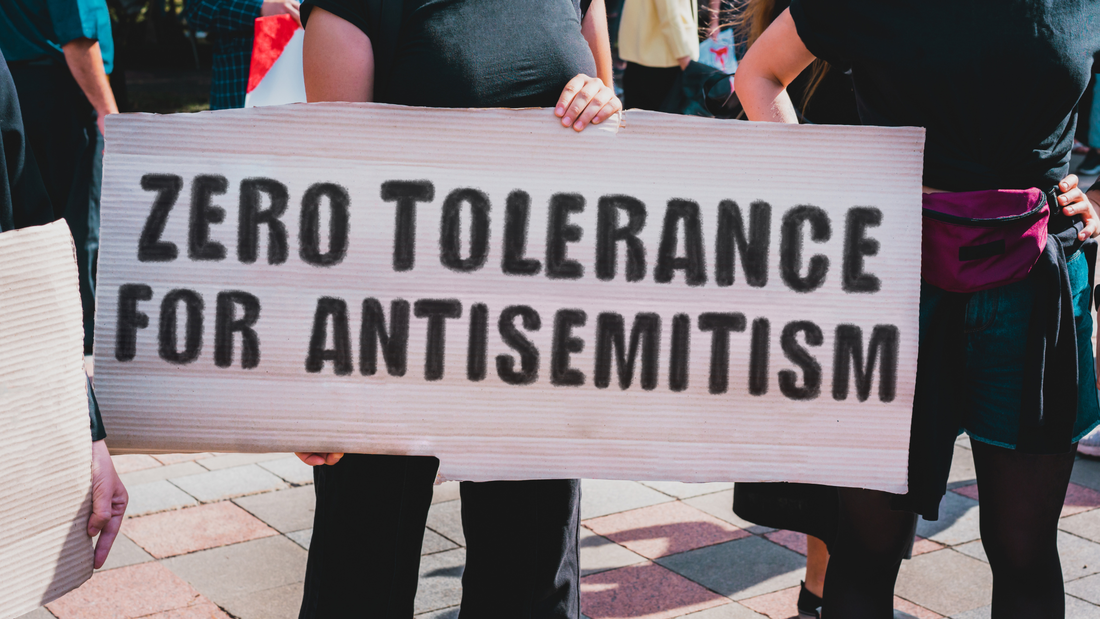 There is something poignant and noble about the ACLU’s defense of the right to engage in antisemitic speech. From its founding through the civil rights era, ACLU has been led by many lawyers, advocates, and donors who were and are Jewish. They and their families would be the first ones to perish under the regimes of the people whose constitutional right to speak are defended by the ACLU.
The ACLU in 1978 famously defended the right of neo-Nazis to parade though Skokie, Illinois, where many Holocaust survivors were living. Now former ACLU president Nadine Strossen and social psychologist Pamela Paresky – both proudly Jewish – are taking a stand against efforts to use the law to punish offensive remarks about the recent mass slaughter in Southern Israel. In particular, they criticize a proposal from Sen. Tom Cotton (R-AR) to empower the Department of Homeland Security to pull student visas and deport any foreign national on American soil who expresses support for Hamas. They write that such a policy would fly in the face of the First Amendment, which Supreme Court precedents extend to foreign nationals on American soil. On the other hand, Strossen and Paresky are correct to call out Joseph Massad of Columbia University for writing that Hamas’ slaughter of innocents was “awesome” and Russell Rickford of Cornell for saying “I was exhilarated.” Strossen and Paresky correctly note in their Free Press piece, “Imagine if, days after the murder of black worshippers in a Charleston church by a white supremacist, Proud Boys marched across campuses celebrating their deaths.” Or, we would add, if a professor called the murder of the worshippers “exhilarating.” The condemnation of such speech by university administrators, professors and students would be deafening. At Cornell, Jewish students have had to shelter-in-place and avoid kosher dining halls to avoid violence. There has been a large number of similar, chilling incidents on other campuses. And the response by university presidents? By and large, mealymouthed statements that amount to profiles in cowardice. It is hard to imagine students making the most of the promise of academic freedom when they must fear for their lives simply because of their religion. The academy has gone from creating “safe spaces” for students to avoid hearing dissenting views, to having to create safe spaces to protect them from actual violence. At the other extreme, Strossen and Paresky are right that outlawing offensive speech, even if it has implications that could be dangerous, does not make bad ideas go away. As we’ve said before, banning anti-social speech tends to pump it up with a neon allure. And the only thing worse than the flag-waving Nazi next door is the secret Nazi next door who pretends to be normal but would denounce you if the moment were ripe. We agree with Strossen and Paresky that people and institutions have – and should exercise – a First Amendment right to react negatively to offensive speech. They support, as we do, the right of university donors to withhold funding. But how far should critics go? Strossen and Paresky write: “We should also consider the cultural effects of such retribution. People say ill-conceived, stupid, even evil things all the time. Should they be cast out into the wilderness? Their livelihoods jeopardized?” Perhaps the answer to these questions should be “yes.” We agree that the extremes of cancel culture have degraded the free exercise of speech in our First Amendment society. But make no mistake, “cancellation” or calls for disassociation by private parties and companies itself is a protected form of speech and association. Nobody needs to associate, in business or in life, with those who wish them or people they care about ill. Where Strossen and Paresky are squeamish about firings and shunning, we are more worried about the cultural effects of maintaining tenure for professors and scholarships for students who advocate the mass murder of innocents. If someone is highly critical of Israel, the bombing of Gaza, or is pro-Palestine, they are well within the parameters of a fair debate. But if someone can respond to the murder of babies and find it “exhilarating,” then we question if it’s just the speech that’s evil. It is important to remember that the First Amendment means no government suppression of speech. Private actors can respond to bad speech with speech of their own, including the right of association – or, by implication, disassociation, commonly called firing. Discrimination against people for what they say and do can be a good thing. Such distinctions mark the boundary between a culture of lively debate and a nihilist culture moderated by violence.  If you follow this blog you are probably concerned about growing ignorance of, or contempt for, the First Amendment, as well as an increasing appetite for weaponizing the law to punish disfavored speech. A case out of Castle Hills, Texas, is illustrative of this weaponization.
While some underlying motives are in dispute, the facts – per the Fifth Circuit Court of Appeals – are stark. Sylvia Gonzalez was elected to a seat on the Castle Hills city council in 2019. After learning that many of her constituents were unhappy with the performance of the city manager, Gonzalez helped organize a petition for that official’s removal. During her first city council meeting, a resident of Castle Hills submitted the petition, which somehow wound up in Gonzalez’s personal binder of documents. After being asked for it by the mayor, Gonzalez found the petition among her effects and handed it over during that same meeting. The mayor initiated an investigation of Gonzalez under a Texas Penal Code statute that provides that “[a] person commits an offense if he […] intentionally destroys, conceals, removes, or otherwise impairs the verity, legibility, or availability of a governmental record.” A warrant was subsequently served against Gonzalez, who was taken to jail and later resigned from her post. Why Gonzalez would want to hide a petition she helped organize is far from clear. Gonzalez argues it was an honest mistake. The warrant affidavit speculates that Gonzalez hid it because a resident claimed she convinced them to sign it under false pretenses. What is not disputable is that Gonzalez was arrested, handcuffed, and detained for the purported crime of placing a document in her folder during a meeting. The 72-year-old Gonzalez claims her arrest was retaliatory, stemming from her support for removing the city manager. Sylvia Gonzalez brought suit in U.S. district court, alleging two counts of retaliation. The city respondents, in turn, filed a motion to dismiss based on qualified immunity, a legal doctrine that generally protects government officials from lawsuits unless it can be shown they violated a “clearly established” statutory or constitutional right. The city officials argued that the existence of probable cause rendered Gonzalez’s claims moot. The district court, for its part, denied the government’s motion to dismiss based on a 2019 Supreme Court opinion in Nieves v. Bartlett. The court held that retaliatory arrest claims may proceed where probable cause exists (as it technically did with Gonzalez), but in cases in which officers “typically exercise their discretion not to do so.” This is what is more commonly known as the “jaywalking exception,” and it guards against law enforcement arresting people for petty crimes for less than noble purposes. As Justice Sonia Sotomayor admitted in her memoir, “I jaywalk with the best of them.” Everyone jaywalks, but very few are actually arrested for it. It is an infraction, however, that could be used as pretext to arrest someone. In such circumstances, the U.S. Supreme Court held, a plaintiff must present “objective evidence that he was arrested when otherwise similarly situated individuals not engaged in the same sort of protected speech had not been.” Gonzalez, attempting to satisfy the Nieves exception, presented evidence that not one of 215 grand jury felony indictments in Bexar County under a tampering statute over the preceding decade involved an allegation remotely similar to the one levied against her. The district court found this “objective evidence” sufficient. In the appeal, the Fifth Circuit held that Nieves requires comparative evidence of individuals who engaged in the “same” criminal conduct but were not arrested. In other words, going by the Fifth Circuit’s interpretation, Gonzalez would have to find specific instances of people who misplaced government documents but were not arrested. If the Fifth Circuit’s decision is left in place, it would make it easier for law enforcement or other government officials to punish critics for expressing protected speech based on novel applications of relatively minor criminal laws. It also sets the evidentiary bar so high that few could ever hope to prove their case in a court of law. Gonzalez’s conduct was so benign that the only inference one can reasonably draw is that she was indeed the target of retaliation. That reasonable inference standard is what is required to overcome a qualified immunity defense. But varying interpretations of Nieves stand in Sylvia Gonzalez’s way. A brief supporting cert from the Cato Institute, American Civil Liberties Union, and the Foundation for Individual Rights and Expression seems to have enticed the U.S. Supreme Court to hear this case. The Court has a historic opportunity to bring clarity to qualified immunity and resolve a circuit split. The Seventh and Ninth Circuits have interpreted Nieves to allow more flexibility in the type of evidence plaintiffs must show in making a retaliation claim. The Fifth Circuit, unfortunately, has not. The Fifth Circuit’s standard would all but enfranchise the most egregious abuses. At a time when liberals and conservatives worry about the weaponization of the law, a reasonable standard to hold officials to account for abuses is needed now more than ever.  The Ninth Circuit Court of Appeals in March issued a controversial opinion in Twitter v. Garland that the Electronic Frontier Foundation calls “a new low in judicial deference to classification and national security, even against the nearly inviolable First Amendment right to be free of prior restraints against speech.”
X (née Twitter) is appealing this opinion before the U.S. Supreme Court. Whatever you think of X or Elon Musk, this case is an important inflection point for free speech and government surveillance accountability. Among many under-acknowledged aspects of our national security apparatus is the regularity with which the government – through FBI national security letters and secretive FISA orders – demands customer information from online platforms like Facebook and X. In 2014, Twitter sought to publish a report documenting the number of surveillance requests it received from the government the prior year. It was a commendable effort from a private actor to provide a limited measure of transparency in government monitoring of its customers, offering some much-needed public oversight in the process. The FBI and DOJ, of course, denied Twitter’s efforts, and over the past ten years the company has kept up the fight, continuing under its new ownership. At issue is X’s desire to publish the total number of surveillance requests it receives, omitting any identifying details about the targets of those requests. This purpose is noble. It would provide users an important metric in surveillance trends not found in the annual Statistical Transparency Report of the Office of the Director of National Intelligence. Nevertheless, in April 2020, a federal district court ruled against the company’s efforts at transparency. In March 2023, the Ninth Circuit upheld the lower court’s ruling, sweeping away a substantial body of prior restraint precedent in the process. Specifically, the Ninth Circuit carved out a novel exemption to long established prior restraint limitations: “government restrictions on the disclosure of information transmitted confidentially as part of a legitimate government process.” The implications of this new category of censorable speech are incalculable. To quote the EFF amicus brief: “The consequences of the lower court’s decision are severe and far-reaching. It carves out, for the first time, a whole category of prior restraints that receive no more scrutiny than subsequent punishments for speech—expanding officials’ power to gag virtually anyone who interacts with a government agency and wishes to speak publicly about that interaction.” This is an existential speech issue, far beyond concerns of party or politics. If the ruling is allowed to stand, it sets up a convenient standard for the government to significantly expand its censorship of speech – whether of the left, right or center. Again, quoting EFF, “[i]ndividuals who had interactions with law enforcement or border officials—such as someone being interviewed as a witness to a crime or someone subjected to police misconduct—could be barred from telling their family or going to the press.” Moreover, the ruling is totally incongruous with a body of law that goes back a century. Prior restraints on speech are the most disfavored of speech restrictions because they freeze speech in its entirety (rather than subsequently punishing it). As such, prior restraint is typically subject to the most exacting level of judicial scrutiny. Yet the Ninth Circuit applied a lower level of strict scrutiny, while entirely ignoring the procedural protections typically afforded to plaintiffs in prior restraint cases. As such, the “decision enables the government to unilaterally impose prior restraints on speech about matters of public concern, while restricting recipients’ ability to meaningfully test these gag orders in court.” We stand with X and EFF in urging the Supreme Court to promptly address this alarming development.  Texas is going big on school library content curation. A new law aims to keep “sexually explicit” books off of school library shelves, which brings to mind the old saw about killing a fly with an elephant gun.
HB 900 – also known as the Restricting Explicit and Adult-Designated Educational Resources (READER) Act – requires vendors who sell books to public schools to rate those books based on their degree of sexual content. Any book judged “patently offensive” will be deemed “sexually explicit” and removed from shelves entirely, while books deemed “sexually relevant” – publications with general depictions of sex that are nonetheless related to the curriculum – will require parental consent. Dystopian concerns aside about outlawing a number of classics, the biggest issue with this law is its implementation. The only guidelines for judging whether a book is “patently offensive” involve a highly subjective “contextual analysis” to be performed by the vendors. The term “vendor” means “any entity that sells library material to a public primary or secondary school in this state.” In practice, that’s everyone from Amazon to the smallest independent bookstore, often with two people on staff – and one of them might be a cat. Essentially, this law places the responsibility for protecting Texas’ children on private companies and small outfits. Even the largest independent bookseller – BookPeople in Austin – has about 100 busy employees and little bandwidth to screen the potentially thousands of books it might sell to schools any given year. What’s more, the law applies retroactively, meaning vendors will have to issue recalls on “sexually explicit” materials that may still be in circulation. If vendors fail to comply with the new law’s requirements, they’ll be barred from selling to public schools. If they are able to comply, costs will go likely go up – both for the schools and, by extension, for the taxpayers. As BookPeople CEO Charley Rejsek put it: “We’re losing all school business forever. That’s how it’s going to hurt us.” Protect The 1st has reported about increasing efforts to censor school reading materials. Texas is at the forefront of this controversy. According to a study from the American Library Association, the Lone Star State saw the most attempts to ban books in 2022. As we’ve also written, what is most needed in the context of book curation for school-aged minors is common sense. As a nation, we should seek to strike a balance between protecting the innocence of young people and throwing out material of great literary value just because it may include a few arguably inappropriate (for some) passages. Parents and teachers should be at the helm in these decisions – not private companies. What HB 900 purports to do is legislate common sense. Logistically, that’s hard achieve. As one bookseller analogized, this situation would be like a movie studio releasing a film and then requiring individual theaters to rate it. Who’s to say how interpretations might differ from Regal to AMC to Alamo Drafthouse? Again, curation is absolutely necessary for children’s books, but it should be the responsibility of schools to know what they are buying. And it should be the responsibility of the legislature to pass laws that are not untenably vague. Asked whether Larry McMurtry’s Pulitzer Prize-wining Lonesome Dove – the great Texas novel – would be removed under the new standards, READER Act sponsor Rep. Jared Patterson said: “I don’t care if it’s ‘Lonesome Dove’ or any other novel — if it has sexually explicit material, I would view that as an incredible win for the students of the state to not have that material in the library.” Such a decision would be up to an individual bookseller. In this litigious age, with the threat of losing access to a lucrative market, the likelihood is that whenever there is any judgment call, the bookseller will have to always go “thumbs down.” These will always be business decisions, not literary and cultural judgements. Unsurprisingly, the READER Act is currently embroiled in litigation. Judge Alan D. Albright enjoined the law’s implementation on Sept. 18, citing its “unconstitutionally vague requirements.” The Fifth Circuit Court of Appeals subsequently blocked that move, allowing the law to take effect as it considers the case. Oral argument is currently scheduled for Nov. 29. We’ll continue to monitor how this law unfolds. O’Connor-Ratcliff v. Garnier  The U.S. Supreme Court on Tuesday wrestled with a question of increasing urgency: When public officials block critics on social media, are they acting in their official roles and therefore liable for violating the First Amendment?
Arguments stemmed from two cases with differing outcomes. In O’Connor-Ratcliff v. Garnier, two California school board members blocked a couple – the Garniers – who regularly posted critical messages on the board members’ Facebook pages. The Ninth Circuit ruled that blocking the couple constituted state action due to the nature and character of the board members’ accounts, which frequently featured posts about official government business. In a separate, joined case (Lindke v. Freed), a Michigan city manager blocked a constituent – Lindke – following critical comments Lindke made regarding the city’s COVID-19 policies. There, the Sixth Circuit came to the opposite conclusion, finding that the city manager’s account was predominately personal in nature. That court held that a public official’s social media activity only constitutes state action when they are engaged in official duties. The Court’s questioning in Tuesday’s hearing offered no clear delineation between conservative and liberal justices. All nine, however, recognized the difficulty in determining when an official is acting in a public versus private capacity. “This is all a question of how broadly do we define authority or duty,” Justice Amy Coney Barrett said. The Biden Administration, through an amicus brief, sided with the public officials in both cases, arguing that officials have a right to block people from their social media accounts because those accounts constitute a type of private property. Chief Justice John Roberts and Justice Samuel Alito questioned the government’s position from different angles. “It doesn’t cost anything to open a Facebook page,” said Alito. “To make so much turn on who owns the Facebook page seems quite artificial.” Justice Roberts added, “In what sense is this really private property?” Lawyers representing the parties offered their own varying tests for determining what constitutes public versus private action. Hashim Mooppan, representing the school board members who lost in the Ninth Circuit, asserted that, the “only principled and workable test is to ask whether they exercised any duties or authorities of their job.” Justice Elena Kagan then asked if that would mean President Trump was acting in a private capacity when he blocked critics on his Twitter account (a lower court previously ruled that he was not). Mooppan conceded that, under his test, President Trump would be acting as a private citizen. Representing the Garniers, attorney Pamela Karlan offered a different test: if the board members were broadly doing their jobs when they blocked the Garniers, then it should be presumed as state action. Justice Alito, in turn, expressed concern about the breadth of Karlan’s test, noting that officials “have told me they’re always on call. They’re always doing their job. They’re always being approached by constituents.” Representing Kevin Lindke, the Michigan resident who lost in the Sixth Circuit, attorney Allon Kedem argued that “a public official who creates a channel for communicating with constituents about conduct in office and then blocks a user from that channel must abide by the Constitution.” Justice Clarence Thomas pointed out a key distinction between the two cases, which is that the board members in California only had a few personal posts on their Facebook pages, while the city manager in Michigan had many. It’s unclear where the Court will land on this issue. As Justice Neil Gorsuch said, there is a “profusion of possible tests” available. In an amicus brief filed by the foundation of Protect The 1st in O’Connor-Ratcliff v. Garnier, we argued that “no single factor is required to establish state action; rather, all relevant factors must be considered together to determine whether an account was operated under color of law.” In other words, a holistic test is likely appropriate here. More practically, “governmental bodies can and should adopt clear rules separating official accounts from private ones,” as Congress has done. Doing so would safeguard First Amendment rights for public officials and citizens alike.  In May, Iowa Gov. Kim Reynolds signed into law Senate File 496, a landmark parental rights bill that, among other things, requires schools to remove books that depict a “sex act.” The expansive reach of this law is leading school districts to toss out thought-provoking books and classics of Western literature. The Bible, if it could be admitted to a public school library, might face a similar fate over the Song of Solomon.
The Iowa City Community School District removed 68 books to comply with the law, including James Joyce’s Ulysses and Jodi Picoult’s Nineteen Minutes, Margaret Atwood’s The Handmaid’s Tale, and Toni Morrison’s The Bluest Eye. Among the hundreds of other books removed by other Iowa school districts are George Orwell’s 1984, Aldous Huxley’s Brave New World, Kurt Vonnegut’s Slaughterhouse-Five, and Winston Groom’s Forrest Gump. These books have enriched the reading lives of high school students for decades. Let us propose one test for any content restriction law: if your bill bans 1984, you might be a little too much like the book. In Arkansas, plaintiffs before a federal court are contesting two provisions in the state’s Act 372. One provision creates a misdemeanor criminal liability for librarians and booksellers, and even parents, who “[furnish] a harmful item to a minor.” The second creates a process by which any citizen can challenge the appropriateness of any book and have it removed from a school or other public library, applying local community standards, with final decision-making power in the hands of local county quorum courts or city councils. As the plaintiffs assert, the first provision would result in either the widespread removal of books or an outright ban on young people under 18 from entering libraries or bookstores. The second one, they argue, would allow vocal minorities to tell entire communities what they can and cannot read. The judge in this case found the plaintiffs likely to succeed in both claims on the merits based on the overbreadth of these provisions. If prohibitions, such as the elimination of “sex” from literature is too broad, what kinds of content should be legitimately challenged by parents? As if to answer this question, the Montgomery County Board of Education in Maryland maintains as part of its elementary school curriculum requirements controversial readings of sexually charged subjects, such as gender transition, and fetish topics like leather and drag queens. A balance is needed. Our laws have always recognized the need to delineate age-appropriate materials. But laws that are overly broad and vague risk trampling on legitimate First Amendment interests, degrading the educational experience of students, and will only result in costly legal battles. When legislators stick to crafting laws that support appropriate content curation for school libraries and avoid doomed efforts at censorship, everyone is better off. Legislators would save themselves the embarrassment of having their laws invalidated by courts when they pass messaging bills that are clearly unconstitutional. Parents can be assured their children will be protected from inappropriate content. And students can enjoy the best works from the best writers.  Since 2016, the American Civil Liberties Union has filed 400 legal actions against the Trump Administration. Yet, true to form, it became the first major institutional voice to defend the former president’s right to speak after Judge Tanya Chutkan of the D.C. Circuit issued a gag order against him.
On Oct. 17, Judge Chutkan issued an order prohibiting the former president from “making any public statements, or directing others to make any public statements, that target (1) the special counsel prosecuting this case or his staff; (2) defense counsel or their staff; (3) any of this court's staff or other supporting personnel; or (4) any reasonably foreseeable witness or the substance of their testimony.” The ACLU, in turn, submitted a motion for leave to file an amicus brief, arguing that the gag order is vague and overbroad, and urging the court to narrow its scope and application. It does not argue that all gag orders are unlawful, only that this specific one is too broad, vague and should be limited in its reach. In general, gag orders can “implicate the public’s and litigants’ First Amendment rights.” They threaten our right of access to courtroom proceedings (particularly concerning for a case with this level of public importance and scrutiny), while functioning as prior restraints on speech, largely disfavored by the courts. According to the ACLU, the first major problem here is the court’s use of the word “target,” which the organization asserts is “unconstitutionally vague.” They write: “The entire order hinges on the meaning of the word ‘target.’ But that meaning is ambiguous and fails to provide the fair warning that the Constitution demands, especially when, as here, it concerns a prior restraint on speech.” The First Amendment, the ACLU explains, dictates that restrictions on speech must be “clearly defined and narrowly framed.” The word “target” could refer to its most “menacing implications,” but it also means merely identifying people or issues in the case. As such, the defendant ex-president “cannot possibly know what he is permitted to say, and what he is not.” The ACLU also asserts that the order is overbroad, encompassing a public official (special counsel Jack Smith) as well as the “substance” of witness testimony, which will inevitably involve issues pertinent to the 2024 election, in which the former president is a declared candidate. As the ACLU notes: “Attempts to gag speech that addresses how the special counsel is conducting his work on the grounds of ensuring the proper and impartial administration of justice, unduly undermine public discussion on matters of public concern that is at the heart of what the First Amendment protects.” Courts have an obligation to safeguard the judicial process, ensure a fair trial for the defendant, and protect the safety of court personnel, witnesses, lawyers for both the prosecution and defense, and jurors. But those legitimate needs do not obviate the constitutional necessity of protecting free speech rights – even those of a controversial former president. A properly limited gag order in pursuit of that goal may be appropriate in this case. The First Amendment does not protect speech like incitement to violence and threats, but any restriction on the defendant’s ability to speak must be carefully tailored to meet the free speech requirements of the First Amendment. A willingness to protect the speech rights of someone with whom you vehemently disagree is the mark of a true constitutionalist. ACLU executive director Anthony Romero said, “No modern-day president did more damage to civil liberties and civil rights than President Trump, but if we allow his free speech rights to be abridged, we know that other unpopular voices — even ones we agree with — will also be silenced.” Protect The 1st commends the ACLU for standing up for speech – even if, for many of its donors, it may feel wrong.  Can a distinction be made in school libraries between book censorship and sensible curation?
Some books most people would agree are clearly inappropriate – especially for children. On the other hand, giving in to moral panic and succumbing to our more censorial instincts can deprive young people of vital information, not to mention the ability to access many classic literary touchstones. Consider Florida, where 40 percent of all book bans nationwide took place during the last school year. In July, the state legislature passed HB 1069, revising processes for parental objections to educational materials. The new law allows parents to unliterally ban books by performatively shocking the conscience of school board members through public readings of sexually charged paragraphs. The provision reads: “Parents shall have the right to read passages from any material that is subject to an objection. If the school board denies a parent the right to read passages due to content that meets the requirements under sub-sub-subparagraph b.(I), the school district shall discontinue the use of the material.” The language provides a specific roadmap for concerned parents, allowing them to attend school board meetings and read the most explicit passages aloud. If board members order them to halt a reading, the book in question is automatically removed. According to some accounts, readers are advised by groups, which have targeted books like Slaughterhouse Five and The Kite Runner, that: “You want to get shut down. Only read the dirtiest bits that we give to you.” Context is everything, of course, and most of us will recognize that books with passages that could be considered objectionable in a vacuum may also convey higher meaning or represent great literary achievements. To Kill a Mockingbird, The Color Purple, The Adventures of Huckleberry Finn, Of Mice and Men, Ulysses, The Grapes of Wrath, The Catcher in the Rye – all contain racy passages and have been subject to book bans at one point or another. An opposite danger is ignoring the rights of concerned parents. In 2022, the Montgomery County School Board introduced a series of “LGBTQ+-inclusive texts” as part of its required curriculum for children as young as four years old. These include works focusing on gender transition and same-sex infatuation, even sexual fetish topics like leather and drag queens – subjects that are obviously outside a four-year-old’s understanding. Parents were outraged for good reason. We should all be able to agree that foisting gender ideology discussions on children barely able to tie their shoes is inappropriate. Yet, the board refused to allow parents to opt-out, violating their sincerely held religious beliefs in the process. In another example of misguided curation policy, the commissioners of Llano County, Texas, responded to complaints about book removals by debating the closure of the Llano County Library System entirely. In Arkansas, the legislature passed a bill making it a crime for librarians to provide purportedly “harmful” material to minors, but the bill defined this broadly as any book with a description of “nudity, sexual conduct, sexual excitement, or sadomasochistic abuse.” A judge enjoined the law, pointing out that – as written – any reading material deemed harmful for a five-year-old minor would also be deemed harmful for a 17-year-old minor, despite obvious differences between the two in maturity and comprehension of adult themes and issues. The Supreme Court addressed this concern in Virginia v. American Bookseller’s Association, Inc., suggesting that an interpretation of the term “harmful to minors” that includes speech protected for older minors would raise First Amendment concerns. Instead of legislation and lawsuits addressing fringe debates, what is most needed in the context of book curation for school-aged minors is common sense. As a nation, we should seek to strike a balance between running roughshod over the rights of parents and throwing out material of literary value or useful for personal development just because it may include a few arguably inappropriate (for some) passages. As the Supreme Court suggests, teenagers have a right to access reading materials consistent with their age-level and understanding. And, from a public policy perspective, they should also be able to learn about the adult world they are about to enter. Parents, meanwhile, have a right to direct the upbringing of their children (especially young children) in accordance with their own values, and should absolutely have a say in what they read. As in all things, moderation – not knee-jerk censorship – is key. |
Archives
April 2024
Categories
All
|
 RSS Feed