

 The Apache Stronghold’s case to protect Oak Flat, sacred tribal lands within Arizona’s Tonto National Forest, is still in play. If a previously government-approved transaction is allowed, Oak Flat will be turned over to a foreign mining consortium, Resolution Copper, to be transformed into a crater as long as the Washington Mall and as deep as two Washington Monuments. Although a federal district court initially ruled in favor of the Apache, the Ninth Circuit U.S. Court of Appeals in 2022 reversed the lower court ruling.
Then the Ninth Circuit veered back and reheard the Apache’s case in an en banc hearing. We are currently awaiting a decision and hoping for an Apache victory. Now there’s yet another reason for cautious optimism. The Biden Administration, in a letter from Forest Service Associate Deputy Chief Troy Heithecker to Terry Rambler, chair of the San Carlos Apache tribe, expresses hopes to finalize a memorandum of understanding to set parameters around formal talks. The San Carlos Apache Tribe has for years pushed for a consultation agreement, so this letter comes as a heartening development. Meanwhile, the Ninth Circuit, which reheard oral argument in March before a full panel of 11 judges en banc, remains a wild card. At issue is whether the Oak Flat mining deal constitutes a “substantial burden” of the free exercise of religion guaranteed by the First Amendment and the Religious Freedom Restoration Act (RFRA). Granting requests for a rehearing are exceedingly rare, limited to about one-half of one percent of cases. So the rehearing served as a rare chance for the court to reverse itself. At worst, dissenting judges can get their opinions on record as fodder for a bid for the U.S. Supreme Court to hear the case. If the Supreme Court were to accept an appeal, it could fundamentally alter the calculus in favor of the Apache. The shadow of Justice Neil Gorsuch looms large over Native American issues. Gorsuch has ruled in favor of Native American tribes in nearly a dozen cases, often casting his vote to give the Court’s liberal wing a rare majority. When the Ninth Circuit recently ruled against a different Native American tribe in favor of the government in a similar case out of Oregon, the government agreed to a settlement once it seemed possible the case could land before the Supreme Court. Protect The 1st is pleased by the developments in the Apache Stronghold’s case to protect Oak Flat. The negotiation between the Apache and the Biden Administration should not deter the Ninth Circuit from finding in favor of the Apache on religious liberty grounds. As defenders of the First Amendment’s guarantee of freedom of religion, we look forward to further developments in the protection of sacred lands. Native American Tribes Win Settlement From Federal Government Over Destruction of Sacred Site10/11/2023
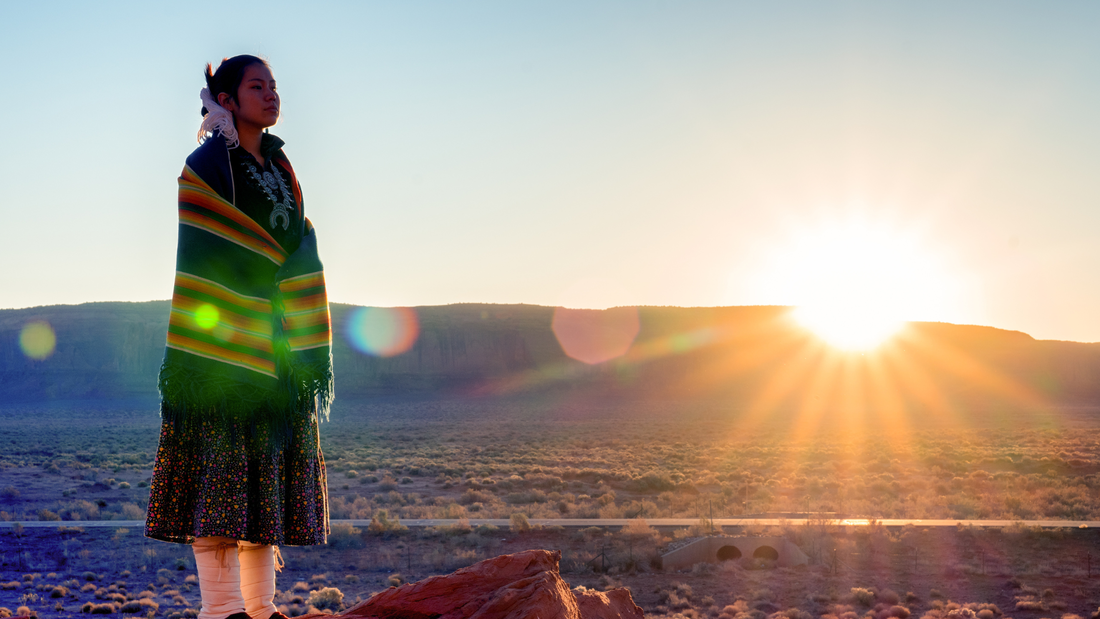 Last year, the Protect The First Foundation filed an amicus brief urging the Ninth Circuit Court of Appeals to hear the plight of the Yakima Nation and the Confederated Tribes of Grand Ronde. These two Native American groups sued when the federal government widened U.S. Highway 26 in Eastern Oregon, demolishing an ancient stone altar and grove of trees sacred to the religion of these Americans.
The U.S. District Court in Oregon had first found that the U.S. Federal Highway Administration had not violated the religious rights of the tribes under the Religious Freedom Restoration Act (RFRA). A Ninth Circuit Court panel further did not see that it had the authority, or a need, to attempt remediation. Compounding injury with insult, the Ninth Circuit ruled the government was not responsible for the destruction of the sacred site and dismissed the case as moot. Accordingly, Protect The 1st, along with the Jewish Coalition for Religious Liberty, the Sikh Coalition, and the American Islamic Congress, petitioned the U.S. Supreme Court to reconsider the matter. Perhaps not wanting to face a High Court notably protective of the First Amendment and religious expression, the federal government quickly agreed to a settlement. The government will replant the grove of native trees, pay for the reconstruction of the sacred stone altar, and recognize the historic use of the site by Native Americans. The restoration of the sacred site is set to be completed by spring 2024. The good news comes from the Becket Foundation, which helped the tribes file their petition. “Our nation has a long, dark history of needlessly destroying Native American sacred sites without consequence,” said Luke Goodrich, Vice President and Senior Counsel at Becket. In a thread on X (Twitter), Goodrich said, “The government can never fully undo the damage it caused in this case. But this agreement is one step in a better direction--allowing these tribal members to resume religious practices that the government had taken away.” The stunning about-face comes despite the government’s consecutive wins in lower and appellate courts. Perhaps the government took note that Justice Neil Gorsuch has ruled in favor of Native American tribes in nearly a dozen cases, often casting his vote to give the Court’s liberal wing a rare majority. The settlement comes as other cases involving Native American land are still pending. The Ninth Circuit is still considering Apache Stronghold v. United States. In that case, the federal government is seeking to give away another Native sacred site to a multinational mining giant which plans to turn the site into a copper mine. Protect The 1st congratulates the Yakima Nation and the Confederated Tribes of Grand Ronde as well as the Becket Foundation for their victory. The religious liberty protections of the First Amendment apply to all Americans, but most especially to religious minorities more vulnerable than faiths with many adherents. We hope this settlement will send a message to careless government bureaucrats to be more respectful of Native American religious sites. We especially hope this same change of heart will also come for the Apache and their case now before the Ninth Circuit.  Can a distinction be made in school libraries between book censorship and sensible curation?
Some books most people would agree are clearly inappropriate – especially for children. On the other hand, giving in to moral panic and succumbing to our more censorial instincts can deprive young people of vital information, not to mention the ability to access many classic literary touchstones. Consider Florida, where 40 percent of all book bans nationwide took place during the last school year. In July, the state legislature passed HB 1069, revising processes for parental objections to educational materials. The new law allows parents to unliterally ban books by performatively shocking the conscience of school board members through public readings of sexually charged paragraphs. The provision reads: “Parents shall have the right to read passages from any material that is subject to an objection. If the school board denies a parent the right to read passages due to content that meets the requirements under sub-sub-subparagraph b.(I), the school district shall discontinue the use of the material.” The language provides a specific roadmap for concerned parents, allowing them to attend school board meetings and read the most explicit passages aloud. If board members order them to halt a reading, the book in question is automatically removed. According to some accounts, readers are advised by groups, which have targeted books like Slaughterhouse Five and The Kite Runner, that: “You want to get shut down. Only read the dirtiest bits that we give to you.” Context is everything, of course, and most of us will recognize that books with passages that could be considered objectionable in a vacuum may also convey higher meaning or represent great literary achievements. To Kill a Mockingbird, The Color Purple, The Adventures of Huckleberry Finn, Of Mice and Men, Ulysses, The Grapes of Wrath, The Catcher in the Rye – all contain racy passages and have been subject to book bans at one point or another. An opposite danger is ignoring the rights of concerned parents. In 2022, the Montgomery County School Board introduced a series of “LGBTQ+-inclusive texts” as part of its required curriculum for children as young as four years old. These include works focusing on gender transition and same-sex infatuation, even sexual fetish topics like leather and drag queens – subjects that are obviously outside a four-year-old’s understanding. Parents were outraged for good reason. We should all be able to agree that foisting gender ideology discussions on children barely able to tie their shoes is inappropriate. Yet, the board refused to allow parents to opt-out, violating their sincerely held religious beliefs in the process. In another example of misguided curation policy, the commissioners of Llano County, Texas, responded to complaints about book removals by debating the closure of the Llano County Library System entirely. In Arkansas, the legislature passed a bill making it a crime for librarians to provide purportedly “harmful” material to minors, but the bill defined this broadly as any book with a description of “nudity, sexual conduct, sexual excitement, or sadomasochistic abuse.” A judge enjoined the law, pointing out that – as written – any reading material deemed harmful for a five-year-old minor would also be deemed harmful for a 17-year-old minor, despite obvious differences between the two in maturity and comprehension of adult themes and issues. The Supreme Court addressed this concern in Virginia v. American Bookseller’s Association, Inc., suggesting that an interpretation of the term “harmful to minors” that includes speech protected for older minors would raise First Amendment concerns. Instead of legislation and lawsuits addressing fringe debates, what is most needed in the context of book curation for school-aged minors is common sense. As a nation, we should seek to strike a balance between running roughshod over the rights of parents and throwing out material of literary value or useful for personal development just because it may include a few arguably inappropriate (for some) passages. As the Supreme Court suggests, teenagers have a right to access reading materials consistent with their age-level and understanding. And, from a public policy perspective, they should also be able to learn about the adult world they are about to enter. Parents, meanwhile, have a right to direct the upbringing of their children (especially young children) in accordance with their own values, and should absolutely have a say in what they read. As in all things, moderation – not knee-jerk censorship – is key.  The Buckeye Institute, a public policy institute in Ohio, is challenging a long-standing federal law that requires the IRS to demand that nonprofit institutes hand over the identities of their largest donors.
The think tank’s case against IRS collection of sensitive, personal data from Form 990 Schedule B rests on a solid foundation of precedent and practice. Similar measures at the state level, from Alabama to California, have already been stricken by the U.S. Supreme Court on First Amendment grounds. The bedrock principle regarding donor privacy and the First Amendment was established by the Supreme Court in 1958, when it struck down a State of Alabama requirement that the NAACP reveal its donors. That potential for compelled disclosure would almost certainly have led to “harassment, economic reprisal, and physical harm” – danger enough for the Court to act to protect the First Amendment. That reasoning carried through to 2021 when the Supreme Court struck down a California requirement for compelling donor disclosure for nonprofits. Though the California Attorney General promised to keep this private information under lock and key, the state had already compiled an impressive history of accidental disclosures and vulnerability to hackers. In the majority opinion, Chief Justice John Roberts noted early on “that it is hardly a novel perception that compelled disclosure of affiliation with groups engaged in advocacy may constitute as effective a restraint on freedom of association as [other] forms of governmental action.” Protect The 1st added at the time that the disclosure of donor information would be doubly dangerous in the era of flash-mobs, doxing, and cancellation of careers. In Buckeye’s favor as well is the IRS’s long history of failing to protect taxpayer information. In late September, federal prosecutors charged a former IRS consultant, Charles Littlejohn, with the crime of stealing and releasing the tax returns of thousands of Americans between 2018 and 2020. The IRS also had to pay out millions of dollars in settlements to nonprofit organizations who suffered increased scrutiny like Buckeye, and had their confidential applications for tax-exempt status released to the press. In addition, the IRS has repeatedly fallen victim to external data breaches due to inadequate security. The Buckeye Institute is mounting a long-needed challenge to a law that threatens to intimidate free expression. The chilling implications of this IRS statute on the First Amendment alone should be enough for the court to rule in Buckeye’s favor.  An FBI raid on the home of a Tampa-based journalist, and the seizure of his computer, hard drives, cellphone and all they contain, is raising questions about the fidelity of the Department of Justice to a year-old revision to its News Media Policy announced by Attorney General Merrick Garland. Under that policy, the Department is forbidden from using compulsory legal processes to obtain the newsgathering records of journalists, except in extreme circumstances.
Now a wide spectrum of press freedom and civil liberties organizations are asking the Department of Justice to provide transparency about this FBI raid in May. The FBI executed its search warrant at the home of journalist Tim Burke, which he shares with his wife, Tampa city councilwoman Lynn Hurtak. The credibility of this extreme action is highly questionable, leaving the Department to explain how this ransacking of a journalist’s home and seizure of his devices differs from the now-widely ridiculed police raid on a newspaper in rural Kansas. Burke is a former staffer of The Daily Beast and Deadspin. The reporting that put him in crosshairs of the FBI ran in Vice News and Media Matters for America (MMFA). Yet many civil libertarians are voicing suspicions, based on a government response brief, that DOJ may not regard Burke as a valid journalist worthy of the enhanced protections afforded reporters under the Privacy Protection Act of 1980. What we can say is that the FBI criminal investigation involves purported “hacking” of Fox News under the Computer Fraud and Abuse Act and wiretapping laws. Burke reported on embarrassing outtake videos from former Fox News commentator Tucker Carlson’s interview with Ye – formerly known as Kanye West – which were then published by Vice News MMFA. In the outtakes, Ye comes across as deranged and in serious need of help, voicing one ugly, juvenile antisemitic conspiracy theory after another. Carlson cut these lengthy and offensive rants from the interview, making Ye appear far more thoughtful than he is. Carlson concluded his show by saying that Ye is “not crazy” and is “worth listening to.” It is easy to see why even after Fox News fired Carlson that it would find these outtakes embarrassing. Fox News has since been intent on identifying the source of the leak. Fox sent a letter to MMFA earlier this month, demanding the outlet stop airing videos that were “unlawfully obtained.” MMFA president Angelo Carusone responded: “Reporting on newsworthy leaked material is a cornerstone of journalism ... Like any respectable media outlet, we won’t discuss confidential sourcing of any of our materials.” For his part, Burke says he obtained the unaired portions of the Tucker Carlson interview with Ye by visiting a publicly available website used to transmit live feeds of broadcasts. Fox News had apparently uploaded the video to the public site without encrypting it or keeping anyone from downloading it. Burke did use a user ID and password for a “demo account” provided to him by a source. That source, Burke says, found the credentials on a public website, without any restriction on their use. Given these facts suggest an impingement on the First Amendment and the practice of journalism, Attorney General Garland should direct the Department of Justice to provide a degree of transparency in this case. Among questions that need to be answered:
Burke claims he obtained the outtakes from a public source, with help from a source who knew how to access publicly posted credentials to download the raw interview.
There may be legitimate answers to some of these questions that put the Department’s actions in a better light. If they do not, however, DOJ and the FBI run the risk of resembling the bumbling, Barney Fife-like police chief in Kansas who raided a newspaper and, by the way, just resigned. 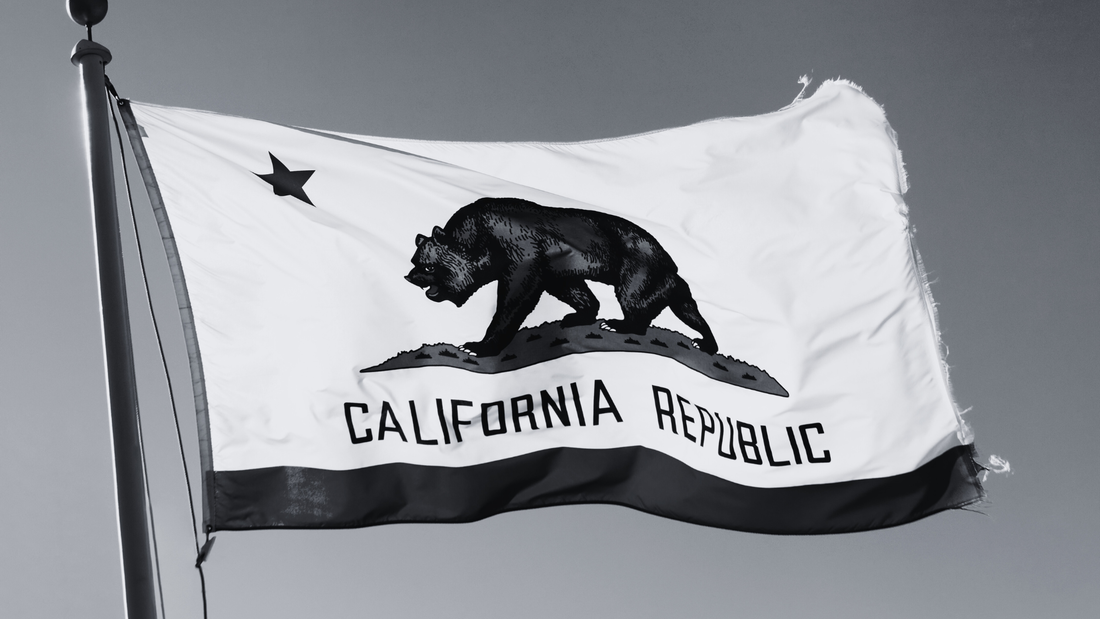 California’s efforts to run roughshod over the Second Amendment by violating the First is hitting a wall in the courts.
Readers may remember that in 2022, PT1st reported that the state had passed AB 2571, which prohibits the marketing of firearms or related products in a manner that “reasonably appears to be attractive to minors.” This law banned advertising for youth groups that promote firearms as a sport, with safety instruction every step of the way. Nominally intended to tackle soaring rates of gun violence, the law had only succeeded in taking down those youth groups and sporting activities. California tried to inoculate itself against legal challenges by passing another law that would make plaintiffs who attempt to test the constitutionality of California’s strict gun laws in court and then lose to have to pay all attorneys’ fees and costs. So, not only was the state going to trample over plaintiffs’ constitutional rights, but they were going to make them suffer for challenging them. Things got dicey for California when the state Attorney General Rob Bonta said he “won’t defend the validity” of the law, a step in the right direction. In September, the U.S. Court of Appeals for the Ninth Circuit enjoined enforcement of the state’s ban on firearm advertisements to minors, holding that it was likely to violate the First Amendment in the upcoming case, Junior Sports Magazines, Inc. v. Bonta. The district court had denied plaintiff’s request for a preliminary injunction, but the Ninth Circuit, no conservative bastion itself, reversed the lower court’s ruling. In that decision, the Ninth Circuit held that AB 2571 “does not directly and materially advance California’s substantial interests in reducing gun violence and the unlawful use of firearms by minors.” Circuit Judge Kenneth Lee writes, “There is no evidence in the record that a minor in California has ever unlawfully bought a gun, let alone because of an ad. Nor has the state produced any evidence that truthful ads about lawful uses of guns—like an ad about hunting rifles in Junior Sports Magazines’ Junior Shooters—encourage illegal or violent gun use among minors … Junior Sports Magazines has shown a likelihood of success on the merits …” In sum, the state Attorney General has declared he won’t defend punitive measures meant to punish constitutionally minded litigants. California’s gun-advertising restrictions have been blocked, pending a final decision by the Ninth Circuit. And the Ninth Circuit itself has stated that firearm sporting enthusiasts are likely to win on the merits. PT1st is pleased to see this sharp turn in fortunes for California and we hope these events encourage the state to reverse course.  The Religious Land Use and Institutionalized Persons Act (RLUIPA) is a multifaceted law. It protects the rights of prisoners to religious expression and the rights of houses of worship to be free of burdensome impositions by the government.
Protect The 1st has invoked RLUIPA in asking the U.S. Supreme Court to recognize the rights of a condemned man to have his pastor lay hands on him while he is being executed. And we have invoked RLUIPA in asking the Ninth Circuit to spare the long-acknowledged sacred lands of the Apache people from being uprooted by a foreign mining company. These are just some of the important religious liberty cases touched by RLUIPA. It is with gratitude, then, that we note that the U.S. Department of Justice is celebrating the 23rd anniversary of the signing of RLUIPA with a public awareness campaign, from online resources to special events around the country. The first outreach event on RLUIPA will be held at Seton Hall Law School in Newark, New Jersey, on Oct. 30. This event will include remarks from officials from the Justice Department Civil Rights Division, the U.S. Attorney’s Office of New Jersey, attorneys, and religious leaders representing the wide spectrum of worshippers who’ve been protected by RLUIPA over the years. “We are pleased to see Attorney General Merrick Garland and the Justice Department go the extra mile in making sure the public understands this important law,” said Rick Boucher, Senior Policy Advisor for Protect The 1st and former Congressman from Virginia. Ninth Circuit Slaps Down School District’s Shut Down of the Fellowship of Christian Athletes – Again9/27/2023
 The long-running effort by the San Jose Unified School District to keep the Fellowship of Christian Athletes (FCA) from being a recognized student club is finished. The FCA is now allowed back on campus for after-hours school meetings, just like any other recognized student organization.
This case revolved around the FCA’s requirement that students adhere to Christian teachings. A teacher, later portrayed by a federal judge as launching an “inquisition” against the FCA, drilled down into FCA websites to discover that this Christian organization holds the same position on marriage as, unsurprisingly, many Christian dominations. After an onslaught of personal attacks on the FCA and its student-members coordinated by faculty, the FCA was kicked off San Jose campuses. The FCA sued. After winning a lower court ruling, the school district lost in 2022 before the Ninth Circuit Court of Appeals. In a sharp rebuke, Judge Kenneth E. Lee – one of two judges on the three-judge panel that decided for the FCA – wrote that the school district “portrays a stench of animus against the students’ religious beliefs.” Undeterred, the school district doubled down and asked for a hearing before an en banc panel of the Ninth Circuit, in which 11 judges would hear the district’s justification for the removal of this student club. That decision came down this month. The Ninth Circuit ruled that “anti-discrimination laws and the protections of the Constitution work in tandem to protect minority views in the face of dominant public opinion.” The court also said the District had regrettably used a discriminatory “double standard” against the FCA that failed to treat “FCA like comparable student groups” and instead “penalized it based on religious beliefs.” The Ninth Circuit’s opinion held that just as high schools’ Senior Women club has all-female members, or the honors clubs sets standards of “good moral character” for their members, so too does it make “equal sense that a religious group be allowed to require that its leaders agree with the group’s most fundamental beliefs.” The court concluded that the First Amendment counsels “mutual respect and tolerance for religious and non-religious views alike.” We would only add that the use of lawfare to cancel this group or that group is inimical not just to the U.S. Constitution, but to respect for pluralism that is at the heart of the American ideal.  Starting next year, every family in North Carolina will have the option to send their children to the school of their choice.
On Friday, the North Carolina General Assembly approved in the state budget a nearly 300 percent funding increase for its Opportunity Scholarship program, which since 2013 has offered vouchers for lower income students to attend private schools. At the same time, the legislature eliminated all income-based restrictions for the school choice initiative, meaning that every young person in the state who wishes to attend a private educational institution will now be able to do so (though scholarship amounts decline with higher income levels). Meanwhile, state employees – including public school teachers – will receive a seven percent raise. North Carolina adds to evidence from Illinois – where public school funding is up by almost $2 billion despite a (now-endangered) tax credit for donations to private schools – that educational choice is not a zero-sum game. North Carolina’s action makes it the tenth state in the nation to offer universal school choice. Governor Roy Cooper announced that he will back off a threat to veto the funding. The program’s future is all but guaranteed. School choice offers families the chance to create better lives for the next generation. It allows parents to choose a school that fits their child’s particular needs and reflects their own values – options Protect The 1st believes empower parents to exercise their First Amendment rights by extending their standards and values across generations. Moreover, it provides a hopeful alternative for those children relegated to under-performing public schools. Protect The 1st applauds the North Carolina General Assembly and congratulates Tar Heel State parents, who will no longer have to choose between an empty bank account and limited options in educational choices for their children. Our eyes turn next to Texas, where Gov. Greg Abbott intends to call a special legislative session next month to address this same issue. Will Texas become the 11th state? Stay tuned. 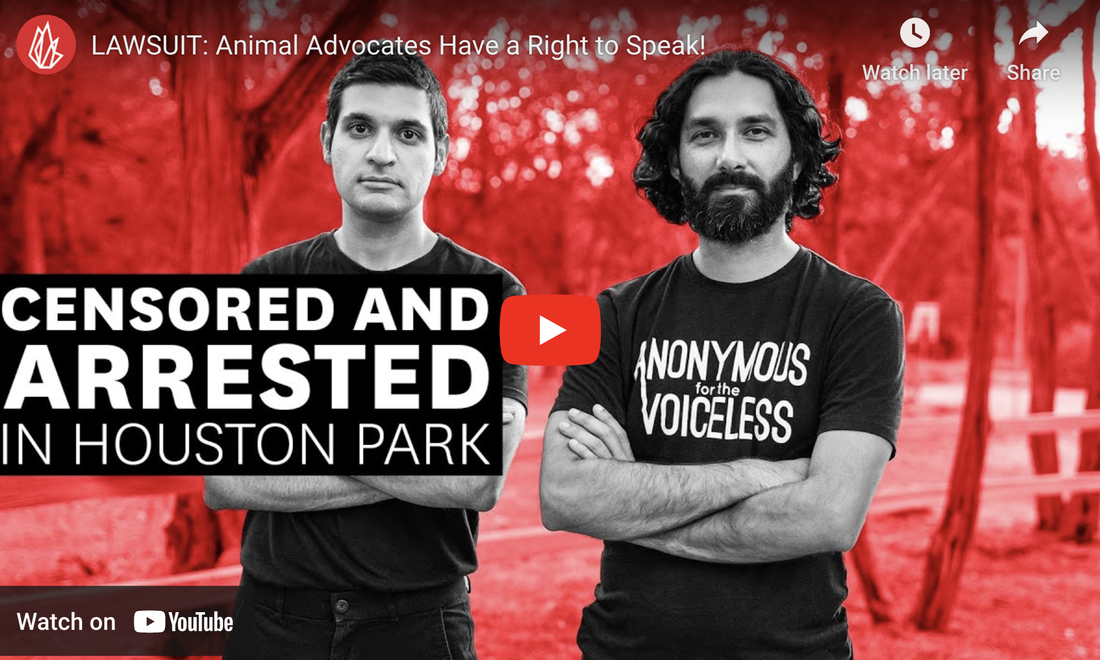 Protest can be uncomfortable. It’s often meant to be. From the very outset of our American experiment, protest was a means of shaking up the status quo and communicating hard truths – dating back to the 1688 Germantown Quaker petition against slavery and continuing today through the Black Lives Matter movement.
This tradition is fully protected under the First Amendment, though sometimes local authorities can lose their way under pressure and cave to censorial instincts. Take the case of Dr. Faraz Harsini and Daraius Dubash, two animal welfare advocates prevented by local authorities from exercising their right to free speech in Houston’s downtown Discovery Green Park. Both immigrants to the United States, Harsini and Dubash are members of Anonymous for the Voiceless, a grassroots advocacy group dedicated to combating animal cruelty. Dr. Harsini, a cancer and infectious disease expert, fled Iran after nearly being killed for protesting against the government. Dubash comes from India, where people enjoy substantially fewer free speech protections than in the United States. But it wasn’t until Dubash came to the United States that he was arrested for peaceful advocacy. Here’s the backstory: In the summer of 2022, Harsini and Dubash held an educational series in Discovery Park. This park has a long history of protest, without incident hosting pro-choice protests, anti-NRA protests, LGBTQ demonstrations and more. In the eyes of authorities, however, Harsini and Dubash went too far when they held a “Cube of Truth” – a bodily held television screen playing excerpts from the film Dominion, which documents factory farming practices. Looking at the screen – small enough for a protestor to hang on a harness – could be easily avoided by passersby. The two men were respectful, only speaking to passersby who engaged with them first. Yet nearly every time Harsini and Dubash visited the park, police asked them to leave at the request of park management (Discovery Green Conservancy), which found the documentary’s content “offensive.” Each time they complied – until Dubash finally explained his First Amendment right to be there to the police. Police arrested Dubash for his troubles and charged him with criminal trespass. The district attorney subsequently dismissed the charges. Now, the Law & Religion Clinic at the University of Texas and the Foundation for Individual Rights and Expression (FIRE) are bringing suit against the City of Houston, the Discovery Green Conservancy and two individual police officers for First and Fourth Amendment violations. As the U.S. Supreme Court recognizes, public parks – like public sidewalks – have long been places for “assembly, communicating thoughts between citizens, and discussing public questions.” In their communications with Harsini and Dubash, police argued that Discovery Green is a private park – an assertion that is false on its face. The City of Houston acquired the land and principally funded the park’s creation. Its “Covenants as to Use” state that “[s]uch property shall be used solely as an urban public park of high quality, reputation and natural beauty.” The fact that the city contracts with the private Discovery Green Conservancy for management does not absolve them from violating the First Amendment. Authorities’ assertion that the documentary’s content is “offensive” is unlikely to get them off the hook, either. Protest speech can be offensive, it just can’t be obscene. In 1972, the Supreme Court laid out a tripartite test for determining whether speech falls into that unprotected category. Courts now evaluate: 1) whether “the average person, applying contemporary community standards” would find that the message appeals to “prurient interest,” (2) whether the work depicts or describes, in a patently offensive way, sexual conduct specifically defined by the applicable state law, and (3) whether the work, “taken as a whole,” lacks serious literary, artistic, political, or scientific value. In the case of Harsini and Dubash, the images they depicted are of standard, lawful industrial meat production practices. Those images may be upsetting. That’s the point, and one can hardly argue they lack serious political value in the context of an ongoing national debate about farm animal welfare. As such, Houston authorities cannot justify this content-based censorship. Houston might do well to follow the lead of the D.C. Circuit Court, which has repeatedly upheld the rights of citizens to speak freely on the U.S. Capitol grounds, rejecting arguments that they are a “special type of enclave” immune from the guarantees of the First Amendment. In cases like Jeannette Rankin Brigade v. Chief of Capitol Police and Lederman v. United States, that court has repeatedly shot down, on the basis of their very public character, the idea that those grounds constitute a nonpublic forum. Similarly, a well-designated public park that has traditionally held demonstrations cannot suddenly be deemed private based on an official’s subjective interpretation of what is offensive. Constitutional law will make that determination and will, more than likely, vindicate Harsini and Dubash in the process – and their right to display their Cube of Truth. 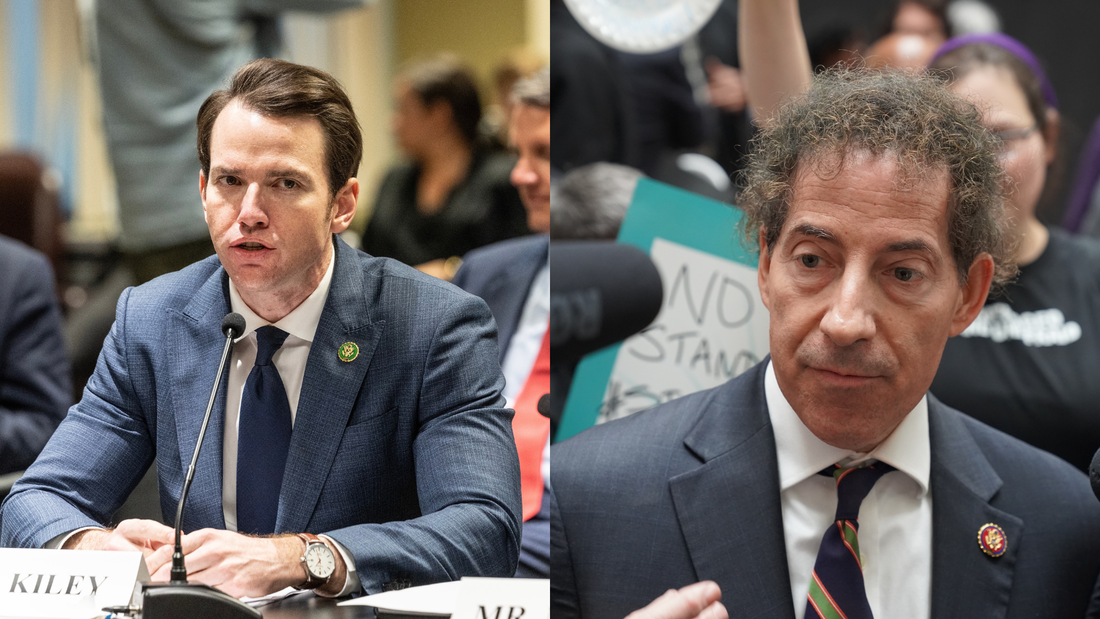 PRESS Act was introduced by Rep. Kevin Kiley (R-CA) (Left) and Rep. Jamie Raskin (D-MD) (Right). Photo Credit: Shutterstock The Protect Reporters from Exploitive State Spying, or PRESS Act, now has strong bipartisan support, with 20 co-sponsors. This milestone comes shortly after the bill received unanimous support from the House Judiciary Committee back in July.
The breadth of support for this measure is impressive. It was introduced by Rep. Kevin Kiley (R-CA) and Rep. Jamie Raskin (D-MD). Co-sponsors range from Rep. Darrell Issa (R-CA), to Rep. Ted Lieu (D-CA), from Rep. Ben Cline (R-VA) to Rep. Zoe Lofgren (D-CA), from Rep. Harriet Hageman (R-WY) to Del. Eleanor Holmes Norton (D-DC). They support one answer to the following question: Should the government be free to dig into the records, notes, phone logs and emails of journalists or subpoena them into federal courts to catch a leaker? Their answer is a resounding “no.” Perhaps it is no coincidence that many of the sponsors hail from California, which has strong laws that protect journalists, their notes and by implication, their sources. The California Constitution and the California Evidence Code, as interpreted by the California Supreme Court, are “shield laws” that give broad protection to journalists’ notes and sources. Throughout the Golden State, reporters, editors, publishers, and others employed by all forms of media are immune from being held in contempt for protecting “confidential sources” and “unpublished information,” including their notes. Every state has such a law except for Wyoming. The federal government does not. As events spin into overdrive in Washington, D.C., Congressional leaders in both parties are coming to see the wisdom of following California’s example and tempering government actions by protecting the ability of journalists to get the straight, inside skinny from whistleblowers. Whistleblowers need the assurance that the reporter with whom they speak in confidence cannot be compelled to betray their trust. The PRESS Act protects journalists and their sources. The PRESS Act establishes a federal statutory privilege shielding journalists from being compelled to reveal confidential sources. It would also block attempts to compel disclosure of account information from communications services used by reporters. This is a reasonable bill, one that would allow the breaking of this privilege only in extreme circumstances. During the last Congress, the House approved the PRESS Act with a bipartisan, unanimous voice vote. Rep. Kiley said: “As acknowledged by America’s founders, the freedom of the press to report on and disseminate information is critical to our republic. Our bipartisan legislation further codifies these First Amendment principles into law and will mitigate infringement upon the Constitution by the federal government.” The acceptance of shield laws by the states shows that the principles of the PRESS Act are popular. At a time when trust is scarce, wouldn’t it be refreshing to see federal leaders in both parties pass a popular measure that enhances freedom and holds government accountable?  Like so many issues, school choice is caught in the never-ending spin cycle of interest groups and partisan politics. This is a shame because low-income children in areas where public schools are faltering deserve better options. Protect The 1st sees school choice as especially important because it is helps parents fulfill the First Amendment’s free exercise of religion by having the option to send their children to private schools in their faith tradition.
But politics get in the way – and the rhetoric gets heated. In a recent interview, American Federation of Teachers president Randi Weingarten likened school choice advocates to 1950s-era segregationists. Her remarks did not land well. Referencing terms like “choice” and “parental rights,” Weingarten said: “Those same words that you heard in terms of wanting segregation post-Brown v. Board of Education, those same words you hear today.” One person who didn’t much care for Weingarten’s comparison was U.S. Sen. Tim Scott, who said in a Tweet (X post): “I can’t think of anything more racist than teachers’ unions trapping poor Black kids in failing school in big blue cities. Randi Weingarten, you’ve done enough damage.” Sen. Scott grew up Black and poor in South Carolina in a home where the electricity was often turned off. He credits a mentor and a good education – “the closest thing to magic in America” – with turning his life around. He has long been a defender of school choice, calling it “the civil rights issue of our time.” Like Sen. Scott, we believe that parents should have the opportunity to choose the education that best suits the specific needs of their children – whether it’s a public or private school, religious or secular. Suggesting school choice is some sort of Trojan horse for religious indoctrination perverts the issue, but that’s exactly what Weingarten did. Referring to school choice advocates, Weingarten said: “They want to have basically a Christian ideology, their particular Christian ideology, dominate the country, as opposed to a country that was born on the freedom of the exercise of religion.” Catholic League president Bill Donohue, like Sen. Scott, took issue with Weingarten’s comments, suggesting that she was engaging in “Christian bashing” (which, like pickleball, seems to be an increasingly popular national pastime). That hostility, by the way, overlooks the broad array of religious schools that are associated with all the great world religions, as well as private and charter schools with a more secular orientation. Some seem to have a complete disconnect with real-world reality. Look no further than Chicago Teachers Union president Stacy Davis Gates, who recently came under fire for sending her own child to private school. She should have every right to make that choice; it’s the hypocrisy that rankles. In 2022, Gates responded to Sen. Scott: “School choice was actually the choice of racists. It was created to avoid integrating schools with Black children. Now it's the civil rights struggle of our generation?” Perhaps it is more of a class issue. Gates can afford to send her child to a private school. An insightful piece from Rick Hess in EducationWeek takes on the idea that one must either be a stout defender of public education or of school choice. He writes “the vitriol is disconnected from what most families care about.” Hess notes that 7 in 10 parents are satisfied with their child’s experience in a public district school, while 7 in 10 also endorse educational savings accounts, school vouchers, and charter schools. Hess writes: “That’s the real promise of educational choice: It allows parents, educators, and students to blur the old lines and rethink the work of teaching and learning. It’d be a shame if that becomes lost amid the shouting heads and social media outrage.” School choice offers families the chance to express their values and create better lives for the next generation. We all want public schools to succeed, and we should welcome any opportunity to have a robust discussion on the issues. Educating our children should not be a partisan concern, and name-calling – as they taught us in school – is never the way to resolve our differences.  Illinois’ Invest in Kids scholarship program, funded by private donations eligible for state tax credits, passed in 2017 with bipartisan support. State tax credits are a form of spending. So do teachers’ unions have a point when they claimed that the school choice program could reduce public school funding? New data prove that isn’t the case. Since the 2018-2019 school year, public education in the Prairie State has received a $1.98 billion increase, despite a 7.5% decrease in public school enrollment.
One-hundred and forty-seven thousand fewer students are today being educated by Illinois’ public school system since the 2018-2019 school year. And yet more money is being spent to do it. Scholastic outcomes in the public school system, meanwhile, are worse than ever. Since that time, math proficiency in 3rd through 8th grade students has dropped by six points, while reading proficiency dropped by eight points. Offering families (and particularly low-income families) the opportunity to choose a better education for their children is central not only to creating good citizens but safeguarding the guarantees of the First Amendment. Senator Tim Scott called it a “civil rights issue,” and he’s not wrong. School choice offers families with few means the chance to express their values and create better lives for the next generation. Yet Illinois recently opted not to renew the tax credits for donations to the Invest in Kids program, which is set to expire on December 31st. We urge Gov. J.B. Pritzker and the state legislature to reconsider during the fall session in Springfield – and recommit to offering struggling families a lifeline. They’ll hardly be alone in doing so. Today, 32 states and Washington, D.C., have private school choice programs. They can’t all be wrong. Research shows that for every student attending a private school, a state saves between $1,650 and $3,000. Ninety-six hundred students in Illinois rely on Invest in Kids – and there are 26,000 families on the waiting list. That’s one math problem that the governor and legislators can solve. 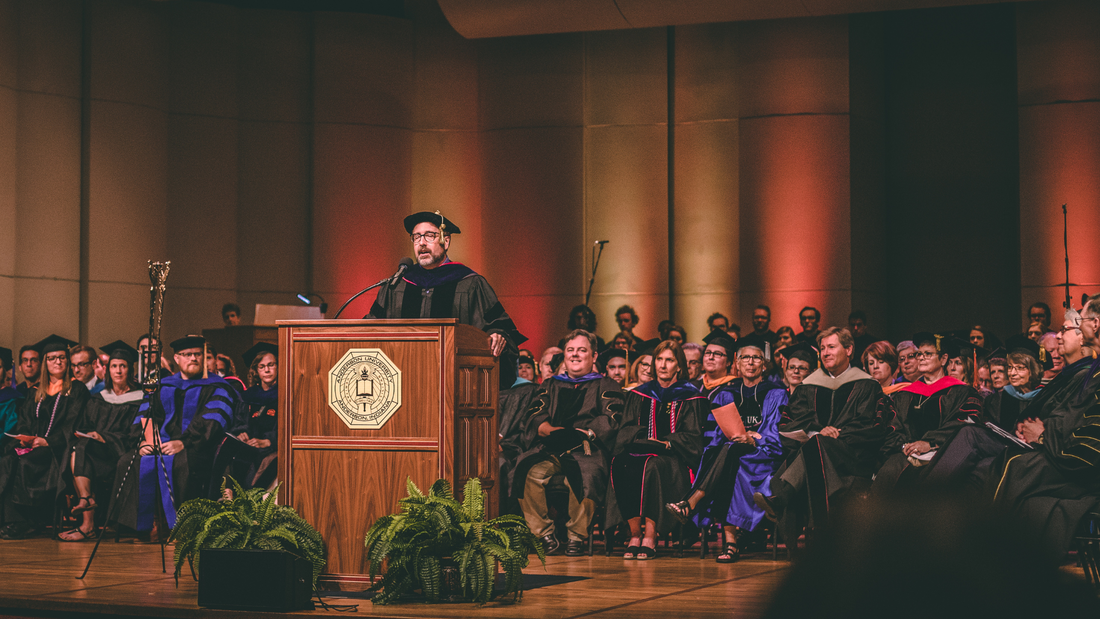 The Foundation for Individual Rights and Expression (FIRE), in conjunction with College Pulse, published its fourth annual survey on free speech at colleges and universities around the country. The survey included over 55,000 students from 254 institutions.
Bottom line: No school on the list earned an “Exceptional” or “Very Good” rating. The best earned a “Good” speech climate rating. The top five universities in the country for their speech climates were Michigan Technological University, Auburn University, the University of New Hampshire, Oregon State University, and Florida State University. At the bottom of the pack is Harvard University, followed distantly by the University of Pennsylvania, the University of South Carolina, Georgetown University, and Fordham University. The University of Chicago, which previously held the top spot in 2020 and 2023, slid in the rankings this year, but this was mostly driven by the inclusion of considerably more schools. In fact, this year’s survey is the largest ever conducted by FIRE and College Pulse, up from just 54 institutions in 2020. Other universities that consistently rank highly include George Mason University, Purdue University, the University of Virginia, and Texas A&M University. Just because a school scores highly, though, doesn’t mean that students necessarily feel safe. When asked whether they self-censor often, 18% of students at the top five schools for freedom of speech reported that they do, whereas 20% of students at the bottom five schools said the same. Fifty-four percent of students at the top five schools reported worrying about damaging their reputation because of someone misunderstanding what they have done or said, whereas 57% of students at the bottom five schools reported the same. Overall, the average score on “Comfort Expressing Ideas” at the top five schools did not differ significantly from that of the bottom five schools. Far from being safe to express one’s beliefs at the top five schools, students at these institutions may only experience a moderately less hostile environment. This insight underscores how much work still needs to be done to make even the most tolerant American universities safe for academic freedom. Other facts from the report stand out. Students at the bottom five institutions were more biased against politically diverse speakers and were more accepting of disruptive or violent protests to stop a campus speech. Consequently, deplatforming speakers at these institutions was successful 81% of the time. More students this year (45%) compared to last year (37%) reported that blocking other students from attending a speech is acceptable to some degree. While opposition to a controversial conservative speaker appearing on campus was considerably higher (57% to 72%, depending on the speaker) than a controversial liberal speaker, controversial liberal speakers were still opposed by anywhere between 29% to 43% of the student body. Hostility to a speaker of a particular political persuasion may be more akin to a numbers game, rather than the domain of one particular ideology. For example, in 2021 at Florida State University, Dr. Meghan Martinez’s class “The History of Karen: Weaponizing White Womanhood,” the title of which leaves nothing to the political imagination, received significant backlash, causing the class to be removed from the course catalog. The report contains many more fascinating insights into the state of free speech across America’s institutions of higher learning. Protect The 1st congratulates FIRE and College Pulse for another informative and thoughtful list. 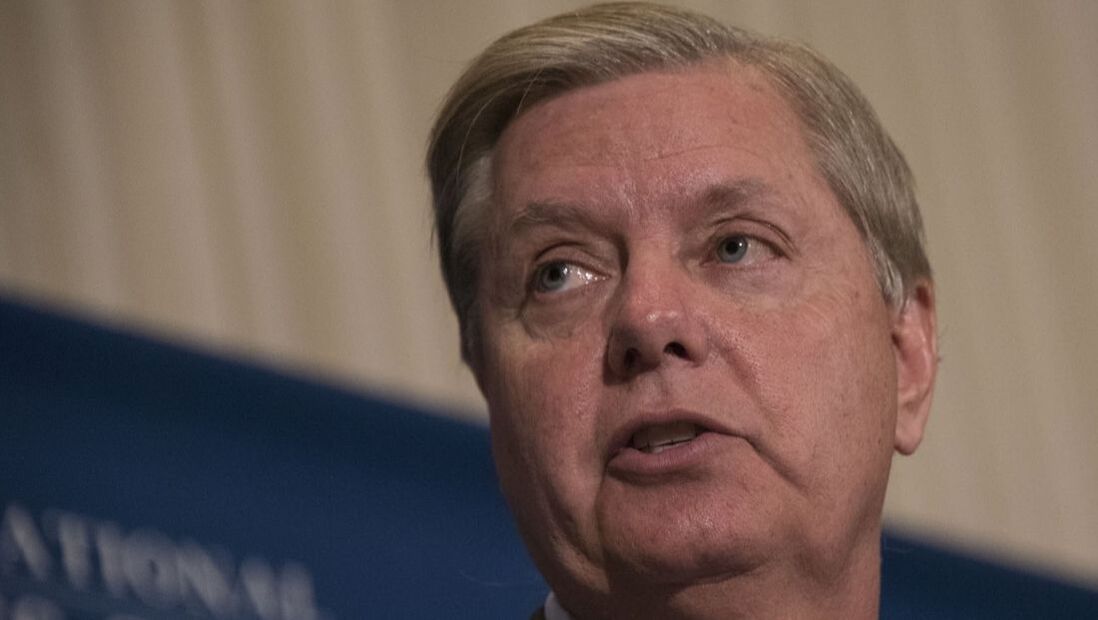 Photo Credit: Shutterstock Bipartisan support for the Protect Reporters from Exploitive State Spying (PRESS) Act just became stronger after Sen. Lindsey Graham (R-SC) signed on as a co-sponsor.
Sen. Graham and Protect The 1st’s own Senior Policy Advisor Rick Boucher – a long-time Democratic U.S. Representative from Virginia – were co-sponsors of an earlier version of the bill. In the current Congress, Reps. Kevin Kiley (R-CA) and Jamie Raskin (D-MD) are working across the aisle to secure wide support for the bill in the House, as are Sens. Dick Durbin (D-IL), Mike Lee (R-UT), and Ron Wyden (D-OR) in the Senate. The PRESS Act would provide a federal shield law protecting journalists from surveillance or compelled disclosures of source materials, except in emergency situations. Forty-nine states have such a law, but the federal government does not. The PRESS Act appeals to conservatives, who remember the Obama Administration’s targeting and spying on James Rosen of Fox News for reporting on North Korea’s nuclear program. And it appeals to liberals who want to safeguard the investigative role of reporters. Jenna Leventoff, senior policy counsel of the American Civil Liberties Union, said the “PRESS Act creates critical protections for the fearless journalists who act as government watchdogs and keep us all informed.” “The PRESS Act passed the U.S. House unanimously last year and was recently favorably reported again without dissent by the House Judiciary Committee,” said Rick Boucher. “We are heartened to see Sen. Graham join so many other leaders in both houses and both parties in standing up for a free press that enforces accountability on the government.” Bob Goodlatte, Protect The 1st Senior Policy Advisor and former Chairman of the House Judiciary Committee, also hailed Sen. Graham’s support for the PRESS Act. “When the House again passes the PRESS Act, which seems likely, it is encouraging to also see strong bipartisan support emerging in the Senate,” Goodlatte said. “Sen. Graham’s leadership on the PRESS Act is a very welcome development.” 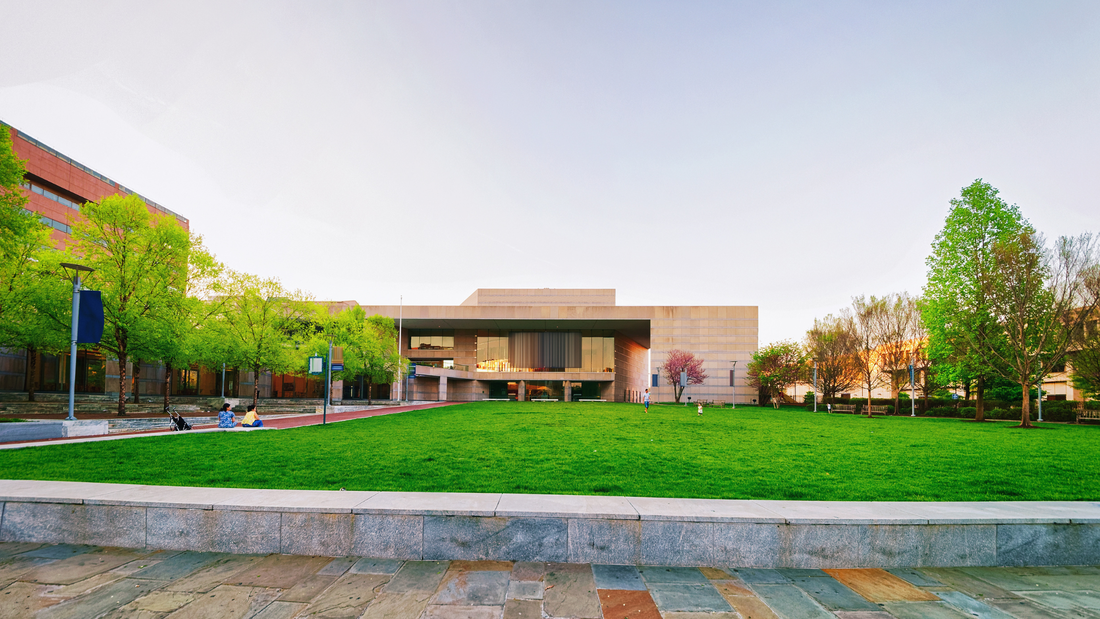 At first glance, the news that the National Constitution Center in Philadelphia has opened a gallery dedicated to the five freedoms of the First Amendment might strike producers and consumers of headline news as about as momentous as a national pie eating contest.
But take a look at Asha Prihar’s colorful blog at billypenn.com showcasing this exhibit’s depth, both historical and philosophical, and ask yourself if this exhibit isn’t well-timed and sorely needed. The gallery includes a 1789 letter from George Washington at the Constitutional Convention explaining to Quakers how the First Amendment, then awaiting ratification, would protect religious liberty. It tells the story of Elijah Lovejoy, an abolitionist who refused to quit publishing anti-slavery editorials in the face of angry mobs – and paid for his stubborn dedication to an ideal with his life. It tells the story of how the First Amendment advanced civil rights and how it relies on the good judgment of the people to tolerate vile speech upheld in the Supreme Court decision, Snyder v. Phelps (2011). As one digitally strolls through this gallery, it becomes clear that the need of 21st century America for such an exhibit is cavernous. Case in point, an eminent law professor of our acquaintance, who teaches at a highly ranked law school, told us that when he recently began to teach the rudiments of the First Amendment, students balked. One asserted that a prominent politician with a national profile said things that were “evil” and that he therefore should be silenced. The professor asked obvious questions: Who decides what is “evil”? Would you put an American – in this case, a major political figure elected by a majority of voters in his home state – in prison for saying something you regard as evil? If we outlaw speech we don’t like, does it go away – or are we investing it with the glamor of the forbidden? And what will you do when someone defines your speech as “evil” and comes after you? These are the basic questions that were once presented in high school civics classes, not heard for the first time in a law school. In the face of these questions, this one law school student persisted –“but we just can’t let this guy go around saying things that are evil.” None of the professor’s questions penetrated. There is a level of senselessness in higher education, in public schools and in government – coming from both the right as well as the left – regarding the principles of free speech that approaches the satirical levels of Mike Judge’s 2006 masterpiece, Idiocracy. So yes, the opening of a First Amendment Center at the National Constitution Center is something to be celebrated. So are the daily activities of the Free Speech Center at Middle Tennessee State University, which promotes the First Amendment through ad campaigns, a YouTube channel, and instructional materials for classrooms across the nation. We cannot explain and celebrate the First Amendment often enough – the contentious, cantankerous, sometimes ugly, sometimes beautiful exercise of free speech that makes us Americans. 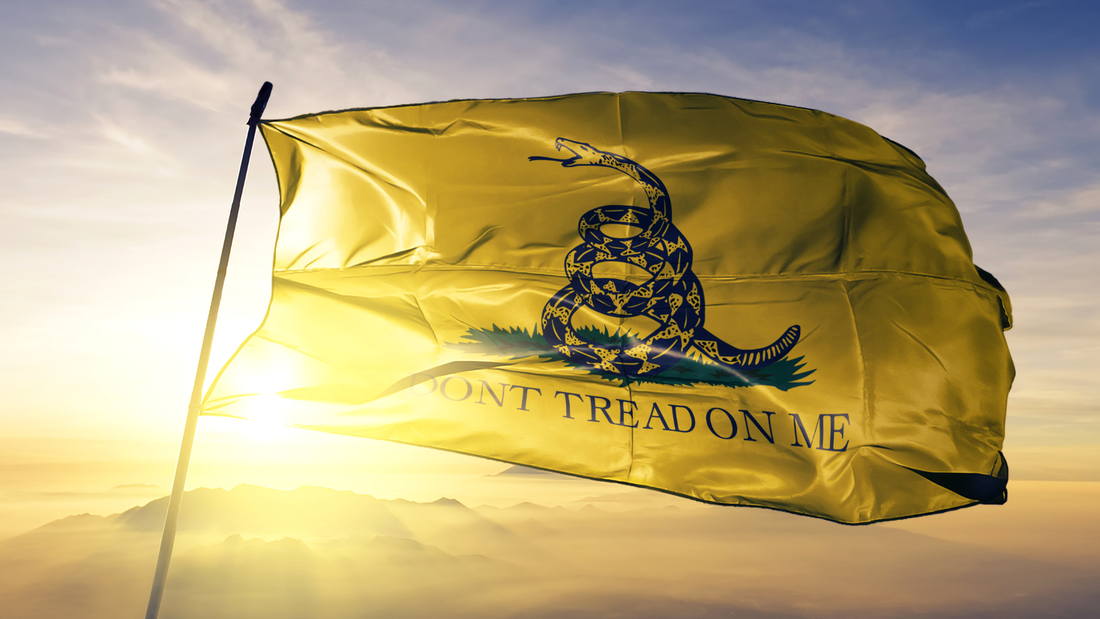 Jaiden Rodriguez, a 12-year-old, was pulled out of class last week and reprimanded by administrators at the Vanguard School, a charter school in Colorado, for displaying a Gadsden Flag patch on his backpack. The school claimed the Gadsden Flag is “considered an unacceptable symbol” because of its “origins with slavery and the slave trade.” In an email to Jaiden’s family, school administrators further claimed that the Gadsden Flag is “tied to hate groups.”
The Gadsden Flag originated in the Revolutionary War era when America’s founding generation bravely stood against British tyranny. The flag remains a symbol of liberty and resistance to oppression. That it has been adopted by all manner of groups today says nothing about its historical and enduring meaning to Americans. The school cited a rule that forbade clothing that refers to drugs, tobacco, alcohol, or weapons, yet the Gadsden Flag violated none of those rules. Colorado Gov. Jared Polis, hardly anybody’s idea of an alt-right extremist, came to Jaiden’s defense. The Democratic governor took to X, formerly known as Twitter, to state: “The Gadsden flag is a proud symbol of the American revolution and [an] iconic warning to Britain or any government not to violate the liberties of Americans.” The flag is a “great teaching moment for a history lesson!” added Polis. After Jaiden’s story went viral, the school wisely backtracked on its position. The Vanguard School Board of Directors released a statement of apology: “The Vanguard School recognizes the historical significance of the Gadsden Flag and its place in history. The incident is an occasion for us to reaffirm our deep commitment to a classical education in support of these American principles.” PT1st commends the Vanguard School for quickly reversing course. It is refreshing to see an honest admission of fault on the part of the school. We especially commend Gov. Polis for his strong comments in defense of Jaiden, American history, and student speech.  In 2000, the U.S. Supreme Court in Hill v. Colorado found that restrictions on speech-related conduct outside abortion clinics was content-neutral and thus subject only to intermediate scrutiny, a lesser degree of protection. Since that time, lower courts have upheld similar state and local restrictions on speech based on this binding precedent – and despite a raft of subsequent cases that call Hill’s reasoning into question.
The recent case of Vitagliano v. County of Westchester is a perfect exemple of these ongoing challenges. It is now up for potential review before the Court. It offers a good opportunity to overturn Hill and the unconstitutional legal trend it originated. Here are the facts of the case: Debra Vitagliano is a devout Catholic whose mission is to offer compassionate counsel to women seeking abortions at the last minute, when such counsel might be most effective. Westchester County, like many jurisdictions before it, passed a law establishing a 100-foot buffer zone around reproductive health care facilities (encompassing public sidewalks), prohibiting anyone looking to offer such assistance from getting within eight feet of another person unless they receive explicit consent. Critics of the Hill decision, including 14 states that recently filed an amicus brief, argue that Hill misapplied the legal test for determining whether a speech restriction is content-based. Specifically, they argue that the Court erroneously relied on Colorado’s references to “access” and “privacy” as justification for the statute’s purported neutrality. Since 2000, the Supreme Court has conspicuously refrained from drawing on Hill’s reasoning, and in Dobbs v. Jackson went so far as to call it a distortion of First Amendment doctrines. Whenever the government passes a speech restriction that is obviously content-based (as it is here) it must be looked at through the lens of strict scrutiny. It must be narrowly tailored to serve a compelling government interest. This means a government cannot simply abridge its citizens’ First Amendment rights because of some particular policy preference – for example, in another context, the idea that protest should not be allowed outside military recruitment facilities because it discourages young people from enlisting. It’s clear that Hill was a policy decision, and while one may agree with its intent, it also opened the door to overstepping when it comes to restricting speech in public places. The sidewalk has long been held to be a public forum. In fact, it’s arguably the place where speech about contentious political issues most belongs. As the Supreme Court wrote in McCullen v. Coakley, sidewalk speech reflects the First Amendment’s goal to “preserve an uninhibited marketplace of ideas in which truth will ultimately prevail.” Criminalizing certain speech on public sidewalks endangers that goal. And preventing Debra Vitagliano from engaging in peaceable, non-violent conversation amounts to the kind of overbreadth that seals the deal when it comes to a law’s unconstitutionality, particularly when laws already exist prohibiting assault, trespass, and blocking clinical access. Whatever your views on abortion, Hill was a bad decision that should be overturned. To quote First Amendment scholar and Harvard professor Lawrence Tribe, the case was “slam-dunk simple.” Its ruling: “slam-dunk wrong.”  The French concept of secularism – or laïcité – derives from the Enlightenment and the culminating revolutionary event that expelled, once and for all in France, the divine right of the king. Much like America’s founding principle of separation of church and state, laïcité discourages the commingling of religion and government, though the French take it a bit further (okay, a lot further). Today, even public displays of faith are frowned upon in France. The way France enforces this philosophy today has a lot to teach Americans about the value of the First Amendment and its guarantee of the free exercise of religion.
In 2004, France banned students from wearing or displaying overtly religious symbols in schools – including crucifixes, yarmulkes, and hijabs. Now, French education minister Gabriel Attal has announced that girls in state schools will no longer be permitted to wear abayas – long, robe-like garments favored by Muslim women that typically cover the body, but not the head and face, or feet and hands. Minister Attal said: “When you walk into a classroom, you shouldn’t be able to identify the pupils’ religion just by looking at them.” Attal argues that wearing abayas in school violates laïcité, which was codified into French law in 1905. Abayas are not, strictly speaking, religious. It’s true that it is Muslim women who tend to wear the garments, but it’s certainly not a prescribed uniform. Long dresses have long been popular across cultures. How do you enforce a ban against fashion? (France’s previous education minister, Pap Ndiaye, declined to ban abayas, noting the risk of having to “publish endless catalogues to specify the length of dresses.”) More to the point, even if abayas were overtly religious like a crucifix, yarmulke, or hijab – what is the danger in allowing students to express their religious identity? In the United States, most see nothing wrong with such religious expressions. Whether it’s a headscarf or a yarmulke or a bolo tie knotted in the shape of a cross, our Constitution protects the free exercise of religion. Period. But we’ve seen troubling signs in recent years of a desire among some of our fellow Americans to import the thinking behind laïcité – prohibiting people of faith from participating in public education at all. In Arizona, an elementary school district attempted to ban student-teachers from Arizona Christian University based solely on their religious affiliation. In Minnesota, the state legislature blocked religious schools from offering college credit courses to high schoolers. At Bremerton High School in Washington, the school board fired a football coach for daring to pray after games on the playing field. The ACU students, at least, were eventually vindicated (Minnesota remains pending). As for the Bremerton case, no less an authority than the Supreme Court of the United States weighed in, making it clear. In Kennedy v. Bremerton, the Court declared: “Both the Free Exercise and Free Speech Clauses of the First Amendment protect expressions like Mr. Kennedy’s. Nor does a proper understanding of the Amendment’s Establishment Clause require the government to single out private religious speech for special disfavor. The Constitution and the best of our traditions counsel mutual respect and tolerance, not censorship and suppression, for religious and nonreligious views alike.” The Court went on to underline that just because religious speech by teachers or coaches may occur within the confines of a government school, that does not necessarily make it “government speech subject to government control.” Writing for the Court, Justice Gorsuch added, “On this understanding, a school could fire a Muslim teacher for wearing a headscarf in the classroom or prohibit a Christian aide from praying quietly over her lunch in the cafeteria.” What we continue to carve out in America – through constitutionally guided policy and sound jurisprudence – is a balance between respecting religion and prohibiting the state establishment or endorsement of one. The French government’s atavistic rejection of even a whiff of the religious takes institutional secularism to troubling and prejudicial extremes. Attal, however, is unlikely to agree. “Secularism,” he said, “means the freedom to emancipate oneself through school.” The same freedom might be afforded to those who wish to emancipate themselves from censorship – and religious discrimination.  The Fourth Circuit Court of Appeals recently handed down a disappointing ruling in an important speech case, holding that a college professor who has been the target of escalating retaliation by his university for criticizing his department is not protected by the First Amendment.
North Carolina State’s Stephen Porter, a tenured professor on the NC State faculty since 2011, first got into trouble with higher-ups in 2016 when he objected to adding a question about “diversity” to student course evaluations. What followed was a mounting series of attempts by the university to rid themselves of Porter and to stifle dissent. Porter was accused of “bullying” the person who had proposed adding the question. Later, in 2018, after Porter sent an email linking an Inside Higher Ed article that alleged an NC State faculty search was slanted to favor a minority applicant, Porter was told the administration would “find ways to exclude [Porter] from critical aspects of his job.” In 2019, Porter received another email that stated that students in the department were having strong reactions to his criticism of the Association of the Study of Higher Education (ASHE). Finally, on July 5, 2019, Porter received notice that he was being removed from the Higher Education Program Area – a valued post – because the faculty could not make progress toward resolving issues with him there. After this incident and other punishments, Porter filed suit against NC State in 2021. Porter’s case was first dismissed by the district court judge, who argued he had no legal grounds. Now, the Fourth Circuit has upheld the district court’s ruling, holding that Porter’s statements were not protected by the First Amendment because they were made in his capacity as an NC State employee, nor was his “bullying” protected because it was “an unprofessional attack on a colleague.” Enter Judge Julius Richardson, the lone dissenter in this case. In his dissent, Judge Richardson persuasively argues that Porter’s comments on the ASHE are protected by the First Amendment. Porter could have remained silent about the diversity question and about the drift of ASHE into ideological activism. Porter was not required to submit his opinion as part of his job, and, therefore, he was speaking as a citizen and is protected under the First Amendment. Furthermore, Judge Richardson took issue with the majority’s assertion that because the school did not act against Porter for more than six months after the last of his controversial statements, he had not clearly established that his speech was the reason for the punitive actions taken against him. Judge Richardson argues that obviously NC State had for years been ratcheting up its threats against Porter because his statements frustrated the department’s activist objectives. It strains credulity to think that Porter’s criticism of the department wasn’t the motivating reason. In the last instance, however, Judge Richardson noted that “bullying” does not push Porter’s speech outside of First Amendment protection. Even if that characterization were true, the First Amendment would be toothless if it didn’t cover offensive speech. (Porter did in one conversation use a four-letter word.) Contrast this treatment to Georgetown University’s acceptance of a professor who tweeted that sitting Supreme Court Justices should suffer miserable deaths and have their corpses castrated. We commend Judge Richardson for his valiant stand in defense of the First Amendment. The issues at stake make this case ripe for SCOTUS review. If Porter’s case is left as-is, his situation would provide a dangerous roadmap for censorious administrators around the country on how to micromanage dissenting faculty until they either quit in frustration or can be fired. We look forward to further developments in this case.  In April, Protect The 1st reported on two pending cases before the Supreme Court, O’Connor-Ratcliff v. Garnier and Lindke v. Freed, addressing the question of what constitutes a public forum on Facebook. In both lawsuits, public officials blocked criticism from constituents on their social media sites; in both instances, the constituents sued.
Now, the U.S. Supreme Court is set to deliberate the urgent question: When does a personal account become public? This is the first time the Court will address the difference between public and private fora against the backdrop of the digital age. In our Protect The First Foundation amicus brief in O’Connor-Ratcliff, we write: “The state action question in this case implicates two vital First Amendment rights: that of citizens to access government fora, and that of public officials to control with whom and how they communicate when they speak in their private capacities. As this case demonstrates, those rights are in tension when it is not immediately apparent whether a government representative is operating a social media account in her public or private capacity.” The petitioners argue that they should be able to block constituents from their social media profiles, on which they discussed government business, as long as their actions aren’t affirmatively required as one of their government duties and they don’t explicitly invoke state authority. In short, they wish to summon their own First Amendment rights to silence their critics in a public forum. For many years now, Members of Congress have segregated their personal and public accounts. They are correct in doing so, and this situation shows why. The legal issue is at what point does a public official’s actions constitute “state action.” And here, the officials’ social media pages are draped in their status as public servants – even though they began as personal campaign pages. With great regularity, they post about official government business and use their accounts to facilitate their government duties. As such, they cannot then claim that when they operate those accounts they are private actors. Government officials, like everyone else, have First Amendment rights. But they cannot have their cake and eat it too by speaking with the authority of government while erasing the access of their critics to that speech. The fact is that we must – now – delineate the limits and boundaries of social media’s power in the context of public service. If you are a public official, you cannot – must not – be able to silence your critics in a public forum under the auspices of your own First Amendment rights. Sorry. Sometimes you just have to take the heat. When Will States Finally Adhere to Supreme Court Guidance on Religious Schools?  Two Catholic parishes recently filed a lawsuit seeking to challenge a Colorado law that excludes faith-based preschools from participating in the state’s “universal” preschool funding program. Created in 2022, Colorado’s Universal Preschool Program was designed to provide all children access to a free, quality preschool education. Schools are ineligible to participate, however, if they prioritize the admission of families who share their faith or have religious expectations of their teachers.
Both stipulations are obviously essential components of faith-based education. Yet the Colorado law would unfairly force religious parents to choose between paying out of pocket for the cost of faith-based preschool or receiving a free preschool education at any secular private school. The law amounts to a legislated burden on the state’s millions of religious families and their free exercise of religion. The lawsuit, St. Mary Catholic Parish v. Roy, could be taken as a hopeful response to the U.S. Supreme Court’s recent receptivity to religious liberty arguments. This lawsuit has some wind at its back, coming on the heels of successful litigation challenging similarly restrictive laws in other states. In 2022, the Supreme Court ruled 6-3 in Carson v. Makin that parents who wish to send their children to religious schools in Maine have the right to enjoy the same access to state-sponsored tuition assistance programs as parents sending their children to secular private schools. Maine had defended its exclusion of religious schools by claiming it did not discriminate against religious schools per se, only schools with “sectarian” religious teachings and practices. The Court saw through Maine’s illogical standard – that a school could be Catholic in name but could not hold a Bible class or administer communion. In 2017 in Trinity Lutheran Church of Columbia, Inc., v. Comer, the Court struck down a Missouri program that excluded religious organizations from a grant for nonprofits that installed cushioning playground surfaces made from recycled rubber tires. In 2020, in Espinoza v. Montana Dep’t of Revenue, the Supreme Court held that the Montana Constitution’s “no-aid” provision to a state program providing tuition assistance to parents discriminated against religious schools and families. Despite a clear line of Court precedent invalidating restrictions on religious schools, state governments continue to plug their ears to Court rulings. Earlier this year, a lawsuit in California had to be filed challenging a state law that prohibits federal and state special education funding for disabled children at religious private schools while allowing it for secular private schools. The case, Loffman v. California Department of Education, seeks to argue that such a restriction is a violation of the First and Fourteenth Amendments. And in Minnesota, the state legislature recently passed a bill banning Christian colleges and universities from participating in the state’s Post-Secondary Enrollment Options (PSEO) program. The program allows high school students to earn college credit at the institution of their choice. The law effectively bans some of the largest providers which account for over 20 percent of PSEO enrollment hours. Why does the Court have to further reiterate its position that restrictions on religious education providers or religious families will not be tolerated? Protect The 1st looks forward to the day when the Court’s rulings will be heard and respected in the states. “Their Faith Is Not Supportive”  The latest insult to religious liberty comes from a case in the Commonwealth of Massachusetts, where state agencies have determined that devout religious families should not foster children. The state upholds this position despite an ongoing foster care crisis resulting in more than 1,500 vulnerable minors living unplaced, often in state agencies and even in hospital rooms for indeterminate periods.
By all accounts, Mike and Kitty Burke are an upstanding couple. Mike is an Iraq war veteran and Kitty has worked with special-needs children. Both are practicing Catholics, regularly attend church and perform as musicians during services. The pair long wanted to be parents but, like so many others, found themselves unable to conceive. Willing to open their home to children of all racial backgrounds and needs, they contacted the Massachusetts Department of Children and Families to begin the foster parent application process. In October 2022, the Burkes underwent home interviews – a standard procedure in which a License and Training Social Worker assesses whether a family can provide “loving child-specific environments while helping to facilitate permanency for the child through reunification or adoption.” In these circumstances, a social worker subjectively evaluates a prospective parent’s fitness based on DCF’s “Standards for Licensure as a Foster/Pre-adoptive Parent.” Following that assessment, a License Review Team makes a final licensure decision based on its own understanding of a family’s fitness. According to court documents, the Burkes’ interview focused disproportionately on their religious beliefs about gender and sexuality. The couple made it clear – they would love and support a child under their care regardless of that child’s sexual orientation or gender identity. They also maintained they would continue to uphold their personal beliefs on marriage and sexuality as traditionally understood by the Catholic Church. Their response apparently didn’t satisfy the social worker. As she wrote in her report, “their faith is not supportive and neither are they.” The DCF subsequently denied the Burkes’ application, destroying the couple’s hopes of becoming foster parents and helping children who desperately need a home instead of a hospital bed. Such pointless government attacks on conventional religions are increasingly common. These attacks continue despite the fact that the underlying issue is well-trodden ground in the courts. As recently as 2021, the U.S. Supreme Court held that Catholic charities cannot be excluded from state foster care systems on the basis of their beliefs. Massachusetts’ Foster Parent Bill of Rights prohibits the denial of prospective foster families on the basis of religion (protecting “prospective foster … parents during the application process” from discrimination “on the basis of religion”) – as do DCF’s own policies. Yet, the agency’s requirement that foster parents support and respect “a child’s sexual orientation or gender identity” has now been interpreted as an immutable ban against any religious person who holds traditional beliefs – be they Muslim, Orthodox Jew, Catholic, or Protestant – from becoming a foster parent. It’s a clear-cut violation of the Free Exercise Clause as well as First Amendment prohibitions against compelled speech. DCF’s social workers are free to have their own preferred views on gender and sexuality. They are free to place children in homes with parents with more progressive views. But they are constitutionally and statutorily prohibited from requiring people of faith to choose between violating their beliefs or losing access to a program to do good. Will Outrage Prompt Congress to Pass the PRESS Act?  National outrage over a rural Kansas police department’s ransacking of a newspaper, the Marion County Record, will almost certainly result in a massive legal reckoning. But will its larger implications prompt Congress to move to protect journalists from similar interference by federal authorities?
Here’s the background: On Friday, the Marion police department launched simultaneous raids on the homes of a reporter, an 80-year-old councilwoman, and The Record’s 98-year-old co-owner, Joan Meyer, mother of editor Eric Meyer. According to the account in The Record, the trauma left Joan Meyer “stressed beyond her limits,” prompting her to quit eating, and to collapse and die the next day. And for what? The Marion police launched this extreme execution of a search warrant to track down an informant who revealed a letter from a state agency about a local restauranteur’s DUI to a Record reporter. The newspaper ultimately chose not to print this story out of concern that the informant acted maliciously in revealing the restauranteur’s personal information. “The police confiscation of virtually all of the equipment of a 4,000-circulation newspaper will be one for the textbooks in both law and journalism schools,” said Rick Boucher, Senior Policy Advisor to Protect The 1st and a former U.S. Representative from Virginia and Member of the House Judiciary Committee. “The seizure of a newsroom is an outrage that demonstrates that absent proper legal restraints, and sometimes even with them, some in officialdom will use a petty excuse to pry open a reporter’s notebooks. “These events triggered a raid in which the police seized computers, servers and snatched cellphones,” he said. “The Record reports that one reporter’s hand was reinjured by having her phone forcibly jerked out of her hand. The police took so much equipment that the staff is scrambling to find a way to publish the newspaper’s next edition. “The police did not just raid The Record, they potentially put it out of print. And as a result, the police – and the politicians they work for – now have ready access to vast amounts of confidential interviews, official contacts, and other investigations that any local paper customarily conducts into city hall.” Boucher noted that the raid is likely a violation of the federal Privacy Protection Act of 1980, opening the door to significant liability for the town. “The larger takeaway from this event is the appetite that some in authority have to bully a sometimes nettlesome press,” Boucher said. “Kansas, like most states, has a shield law that protects journalists and their sources,” he said. “Rather than taking the extreme step of raiding the newspaper’s office and seizing all of its records, if the police had probable cause to believe that stolen property was in the possession of the paper, a subpoena for the record in question would have put in motion a court proceeding at which a judge could have decided whether the Kansas shield law applies. It will be instructive to read the probable cause affidavit behind the search warrant that was issued.” Boucher noted that the federal government, with its huge apparatus of prosecutors and surveillance, is restrained by no such law. While lawmakers and journalists in Kansas sort out how to avoid events like this, Congress should take this opportunity to pass the Protect Reporters from Exploitive State Spying (PRESS) Act to give journalists at least some protection from official intimidation. The PRESS Act passed the U.S. House unanimously last year and was recently favorably reported again without dissent by the House Judiciary Committee. “The House should schedule a full vote when it returns in September,” Boucher said. “Action in the Senate should swiftly follow.”  Should Salesforce.com be held liable as a participant in sex trafficking because it sold customer relationship management software to the now-defunct Backpage.com?
Such a ruling would run smack into Twitter v. Taamneh, in which the U.S. Supreme Court made it clear that despite the fact that ISIS terrorists used that popular social media platform to communicate, Twitter could not be held liable as an aider and abettor of terrorism. Holding Salesforce liable for Backpage’s misdeeds would also contradict rulings with similar principles from the 9th Circuit Court of Appeals and the DC Circuit Court of Appeals. These courts, writes Mike Masnick of TechDirt, found that it “would be ridiculous to hold out every service provider for liability just because a drug trafficking, sex trafficking, or terrorist organization used those tools to improve their reach.” But the Seventh Circuit Court of Appeals found otherwise. Backpage was a classified advertising site that was shuttered and began a long saga in the courts after being hit with 100 counts involving prostitution and sex trafficking in 2018. Salesforce, according to the Seventh Circuit, should have somehow known as early as 2013 that it was involved in sex trafficking by selling operational software to this client. Every decent person deplores sex trafficking, just as every decent person condemns terrorism. But it is bad logic and morally confused to extend liability for sex trafficking from bad actors to vendors – people lacking in investigative skills and precognitive ability to see how the law will treat a customer years later. There are clear First Amendment implications in conflating the speech and actions of a customer with those of a vendor. We agree with Masnick – “it would be nice if the Supreme Court told the 7th Circuit to knock it off.” |
Archives
June 2024
Categories
All
|
 RSS Feed